
Archaeological evidence suggests that the first true …
Years: 1485BCE - 1342BCE
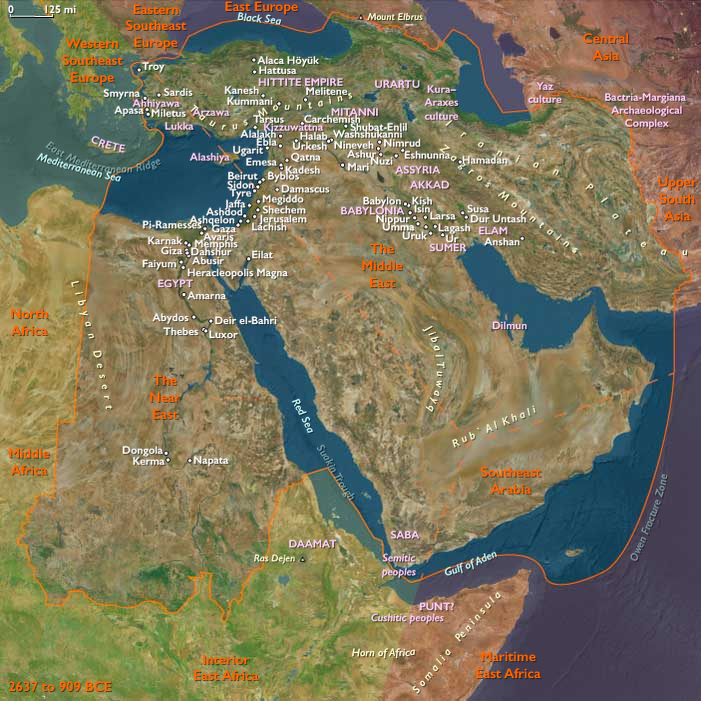
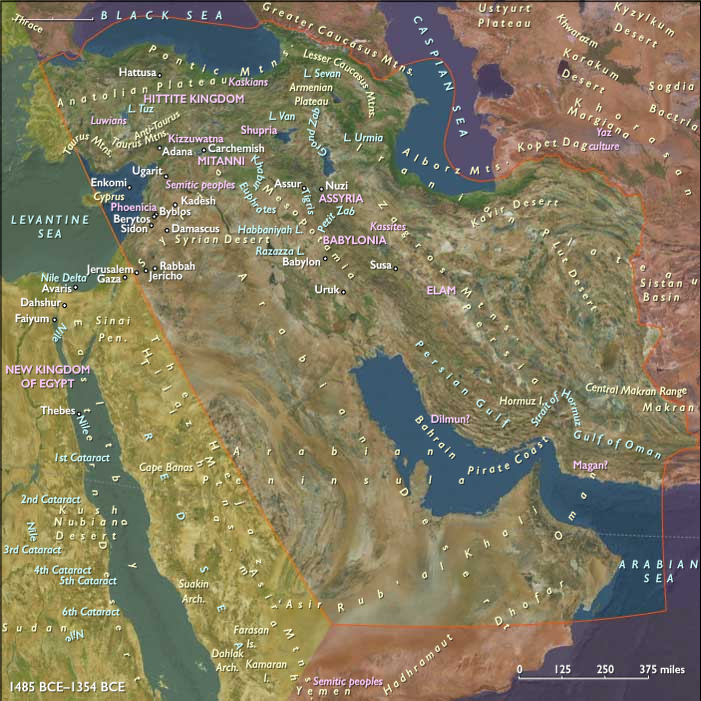
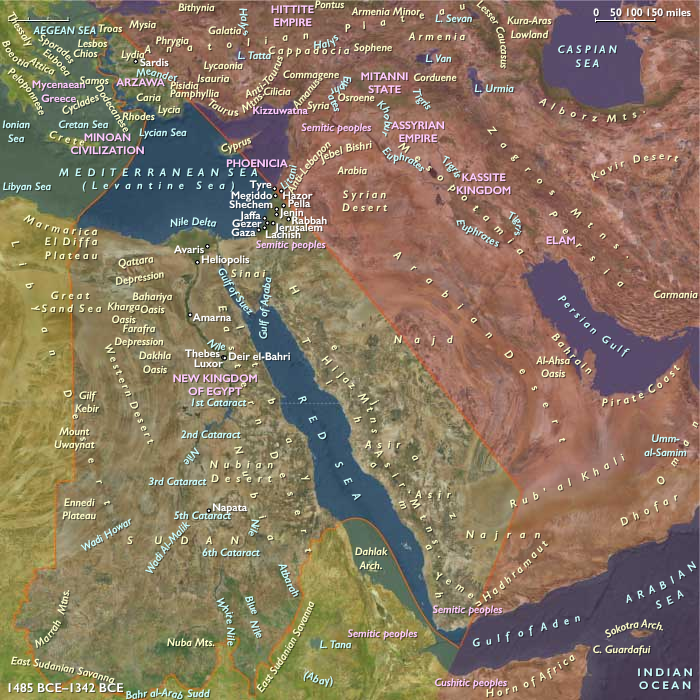
Archaeological evidence suggests that the first true glass was made in Mesopotamia.
The majority of well-studied early glass is found in Egypt, due to its preferable environment for preservation, although some of this is likely to have been imported.
The earliest known glass objects are beads, accidental byproducts of metal working slags or perhaps created during the production of faience, a pre-glass vitreous material made by a process similar to glazing (although true glazing over a ceramic body will not be used until many centuries after the production of the first glass).
There is an explosion in glass making technology during the Late Bronze Age in Egypt and Western Asia from roughly 1600 to 1100 BCE, and extensive glass production is occurring in these regions by the fifteenth century BCE.
Archaeological finds from this period include colored glass ingots, vessels (often colored and shaped in imitation of highly prized stone ware) and the ubiquitous beads.
Dark blue glass, made by adding cobalt, is extensively used and traded during this period and it is thought that the color was associated with the concept of eternity.
It is thought the techniques and recipes required for the initial fusing of glass from raw materials was a closely guarded technological secret reserved for the large palace industries of the time.
Glass workers in other areas therefore rely on imports of pre-formed glass, often in the form of cast ingots such as those found on the Ulu Burun ship wreck off the coast of Turkey, dated from the late fourteenth century.
Groups
- Anatolia, archaic
- Ashur, or “Assyria, (Old) Kingdom of”
- Phoenicia
- Egypt (Ancient), New Kingdom of
- Babylonian Kingdom of the Kassites
- Mitanni (Hanigalbat), Kingdom of
- Hittites (Middle) Kingdom of the
- Arzawa
- Hittites (Hittite Empire), (New) Kingdom of the
- Assyria, (Middle) Kingdom of
Topics
Commodoties
Subjects
Regions
Subregions
Years: 1485BCE - 1342BCE
Groups
- Anatolia, archaic
- Ashur, or “Assyria, (Old) Kingdom of”
- Phoenicia
- Egypt (Ancient), New Kingdom of
- Babylonian Kingdom of the Kassites
- Mitanni (Hanigalbat), Kingdom of
- Hittites (Middle) Kingdom of the
- Arzawa
- Hittites (Hittite Empire), (New) Kingdom of the
- Assyria, (Middle) Kingdom of
Topics
Commodoties
Subjects
Regions
Subregions