
Napoleon, living in British-imposed exile with his …
Years: 1821 - 1821
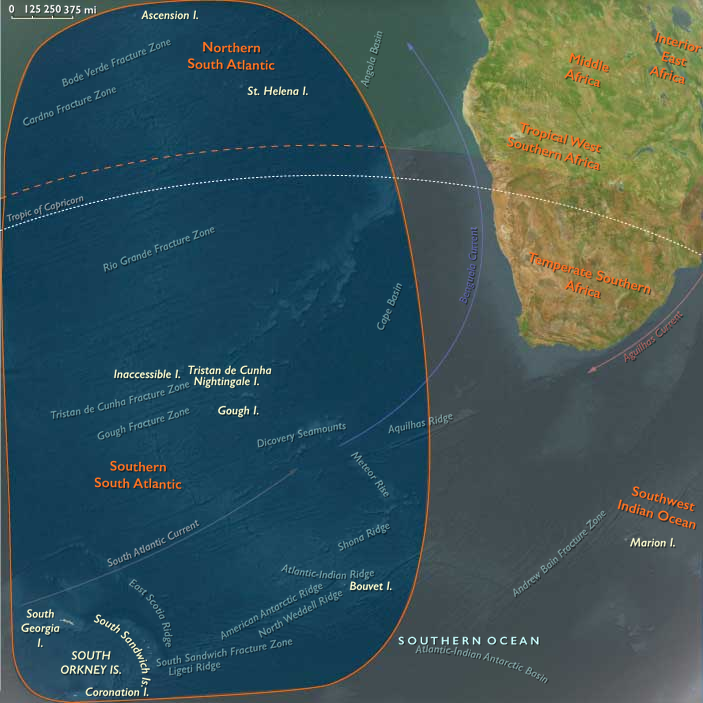
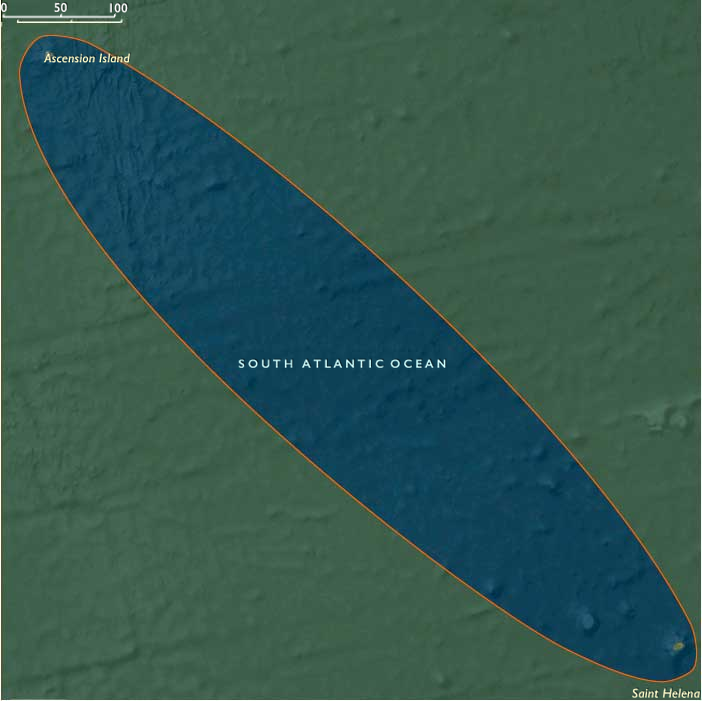
Napoleon, living in British-imposed exile with his secretary and a few loyal friends in Saint Helena, dies of stomach cancer on May 5, 1821.
Many French people suspect arsenic poisoning; later DNA tests of his hair will indicate this to be so.
Locations
People
Groups
Commodoties
Regions
Subregions
Related Events
Filter results
Showing 10 events out of 20353 total
Lachlan Macquarie, during his time as governor of New South Wales, has commissioned the construction of roads, wharves, churches and public buildings, sent explorers out from Sydney and employed a planner to design the street layout of Sydney.
Macquarie's legacy is still evident today.
Leaders of the free settler community have complained to London about Macquarie's policies, and in 1819 the government had appointed an English judge, John Bigge, to visit New South Wales and report on its administration.
Bigge generally agrees with the settlers' criticisms, and his reports on the colony lead to Macquarie's resignation in 1821; he has, however, served longer than any other governor.
In Semarang, Java, twelve hundred and twenty-five people die in eleven days in April 1821.
Friedrich Buschmann invents the accordion in 1821, supplying the bellows-powered wind instrument with right-hand buttons for producing treble pitches.
The German musical instrument maker also invents the harmonica, based on the Chinese sheng, a bowl-based mouth organ dating from 1100 BCE that had arrived in Vienna in the mid-seventeenth century.
The General Treaty of Peace of 1820 between the East India Company and the sheikhs of the coastal area—which becomes known as the Trucial Coast because of the series of treaties between the sheikhs and the British—is a way of ensuring safe passage for East India Company.
The agreement acknowledges British authority in the gulf and seeks to end piracy and the kidnapping of slaves.
Bahrain also becomes a party to the treaty, and both British and Bahraini leaders assume that Qatar, as a dependency, is also a party to it.
However, when, as punishment for piracy, an East India Company vessel bombards Doha in 1821, destroying the town and forcing hundreds to flee, the residents have no idea why they are being attacked.
The situation in Qatar remains unsettled.
Egypt first unifies the small, independent Sudanese states in 1820—21.
Fazogli, established by the Funj after their conquest of the kingdom of Fazughli in 1685, lies between the Blue Nile and the Sobat River, and includes the mountains in the modern Asosa Zone of the Ethiopian Benishangul-Gumuz Region.
The west slope of the hills drains the White Nile.
The area is believed to be rich in gold deposits, which leads to an Egyptian military expedition under the leadership of Ismail bin Muhammad Ali, son of Muhammad Ali Pasha, the nominally Ottoman khedive of Egypt, into the area in part to determine the truth of this belief, as well as to capture some thirty thousand inhabitants to be slaves.
The last Funj sultan, Badi VI, surrenders to Ismail on June 12 and the Egyptians occupy Sennar without a fight the next day.
Using Sennar as a base, the Egyptians move upstream along the Blue Nile searching for what they believed to be rich sources of gold—although they are disappointed—and capture Fazogli, marking the furthest extent of their conquests in this region, before they turn back.
Ismail is accompanied by Frédéric Cailliaud, George Waddington, and George Bethune English, all of whom will later write accounts of the expedition.
Pasha Mohammad Ali will later organize Fazogli into a number of sheikhdoms to govern its inhabitants.
Later geologists who survey the area for gold include Josef von Russegger.
Although Caillaud fails to find any sizeable deposits of gold in the mountains along the modern Sudan-Ethiopia border, he does make a sufficiently detailed survey of the area to be published after his return to France in 1827.
Greece meets three major requirements for a successful revolution in 1821: material conditions among the populace are adverse enough to stimulate mass support for action; an ideological framework gives direction to the movement; and an organizational structure is present to coordinate the movement.
Greek intellectuals have provided the language and ideas necessary for a nationalist struggle, and episodes such as the Orlov Rebellion have provided a collective memory of violent resistance that make action feasible.
The other two conditions had developed during the 1810s; all three converge in the early 1820s.
The conservative reaction in Spain develops in the north around the regency set up at Seo de Urgel.
Spain’s King Ferdinand VII secretly plots with royal insurgents and appeals for help from abroad.
Spain's liberal system fails once more because it is a minority creed sustained by a section of the army—the military radicals such as Rafael de Riego—against a mounting conservative reaction that has been fed once more by an attack on the church, especially the monasteries.
The liberals themselves split.
The more conservative wing (led by Francisco Martínez de la Rosa, a dramatist) seeks a more moderate constitution, based on the French Charter of 1814, which would give better representation to the upper classes and would not be totally unacceptable to the king, as was the “prison” of the Constitution of 1812.
Ferdinand gives no support whatsoever to this movement and, in a cowardly fashion, disowns a rising of the guards' regiments that backs it.
Thus the extreme radicals (exaltados) gain control by means of demonstrations in the streets, organized by clubs run on the lines of the Jacobins of the French Revolution.
King Ferdinand I of the Two Sicilies restores absolutist rule in 1821 with help from Austria.
