
Filters:
The rise of Prussia during the 1860s …
Years: 1864 - 1875
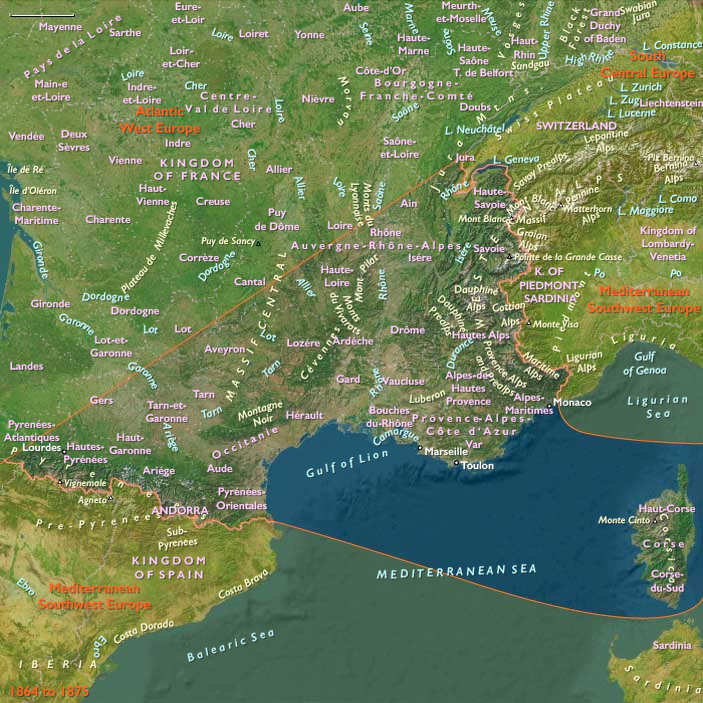
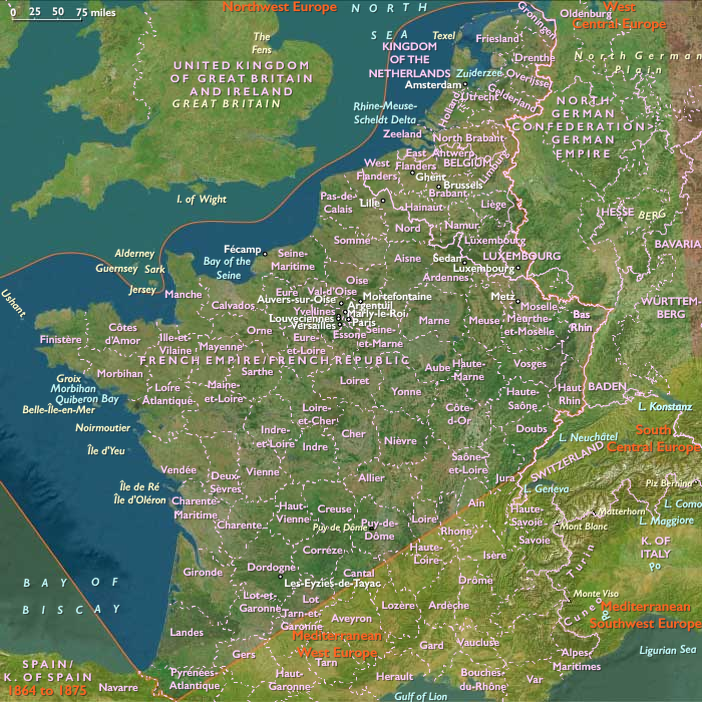
The rise of Prussia during the 1860s threatens the supremacy of its neighbor France in western Europe.
Napoleon III, growing steadily weaker in body and mind, has badly mishandled the situation, and eventually finds himself in a war without allies.
Britain is afraid of French militarism and refuses to help.
Russia is highly annoyed about French interference in supporting Polish rebels in the 1863 uprising.
Napoleon had given strong support to Italy, but had refused the demand for Rome, and keeps French troops in Rome to protect the Pope from the new Italian government, thus leading to Italian refusal to help.
The United States remains alienated because of the fiasco in Mexico.
Napoleon does not know what he wants or what to do, but the reverse is true for Prussian Prime Minister Otto von Bismarck, who plans to create a great new German nation, based on Prussian power, as well as resurgent German nationalism based on the systematic humiliation of France.
The immediate issue is a trivial controversy regarding control of the Spanish throne.
France is actually successful in the diplomatic standoff, but Napoleon wants to humiliate the Prussian king, Wilhelm I.
Bismarck in turn manipulates the situation such that France declares war against Prussia on July 15, 1870, thus sparking the Franco-Prussian War.
The smaller German states rallied behind Prussia, while the large French army proves to be poorly armed, poorly trained, and, led by the Emperor himself, very poorly commanded.
In a matter of weeks the French army is surrounded and forced to surrender after the Battle of Sedan.
Napoleon himself becomes a prisoner and Republican forces quickly take control of Paris.
France under the leadership of Léon Gambetta declares the establishment of the Third French Republic.
Napoleon and Eugénie go into exile in England.
Victory produces an onrush of German nationalism upon which Bismarck immediately seizes to unite all of the German states (except Austria), thereby creating the German Empire, with the Prussian king as its Emperor and Bismarck as Chancellor.
The new Germany is now continental Europe's dominant military force.
Additionally, France is forced to give up the two border provinces of Alsace and Lorraine, and its humiliation will last for generations.
Napoleon III, growing steadily weaker in body and mind, has badly mishandled the situation, and eventually finds himself in a war without allies.
Britain is afraid of French militarism and refuses to help.
Russia is highly annoyed about French interference in supporting Polish rebels in the 1863 uprising.
Napoleon had given strong support to Italy, but had refused the demand for Rome, and keeps French troops in Rome to protect the Pope from the new Italian government, thus leading to Italian refusal to help.
The United States remains alienated because of the fiasco in Mexico.
Napoleon does not know what he wants or what to do, but the reverse is true for Prussian Prime Minister Otto von Bismarck, who plans to create a great new German nation, based on Prussian power, as well as resurgent German nationalism based on the systematic humiliation of France.
The immediate issue is a trivial controversy regarding control of the Spanish throne.
France is actually successful in the diplomatic standoff, but Napoleon wants to humiliate the Prussian king, Wilhelm I.
Bismarck in turn manipulates the situation such that France declares war against Prussia on July 15, 1870, thus sparking the Franco-Prussian War.
The smaller German states rallied behind Prussia, while the large French army proves to be poorly armed, poorly trained, and, led by the Emperor himself, very poorly commanded.
In a matter of weeks the French army is surrounded and forced to surrender after the Battle of Sedan.
Napoleon himself becomes a prisoner and Republican forces quickly take control of Paris.
France under the leadership of Léon Gambetta declares the establishment of the Third French Republic.
Napoleon and Eugénie go into exile in England.
Victory produces an onrush of German nationalism upon which Bismarck immediately seizes to unite all of the German states (except Austria), thereby creating the German Empire, with the Prussian king as its Emperor and Bismarck as Chancellor.
The new Germany is now continental Europe's dominant military force.
Additionally, France is forced to give up the two border provinces of Alsace and Lorraine, and its humiliation will last for generations.
Locations
People
Groups
- Prussia, Kingdom of
- Russian Empire
- United States of America (US, USA) (Washington DC)
- Britain (United Kingdom of Great Britain and Ireland)
- France, Second Empire of
- Italy, Kingdom of
- France (French republic); the Third Republic
- German Empire (“Second Reich”)
Topics
Commodoties
Subjects
Regions

Subregions
Years: 1864 - 1875
Locations
People
Groups
- Prussia, Kingdom of
- Russian Empire
- United States of America (US, USA) (Washington DC)
- Britain (United Kingdom of Great Britain and Ireland)
- France, Second Empire of
- Italy, Kingdom of
- France (French republic); the Third Republic
- German Empire (“Second Reich”)
Topics
Commodoties
Subjects
Regions
Subregions