
Napoleon’s Consolidation of Power in Western Europe …
Years: 1800 - 1800
Napoleon’s Consolidation of Power in Western Europe
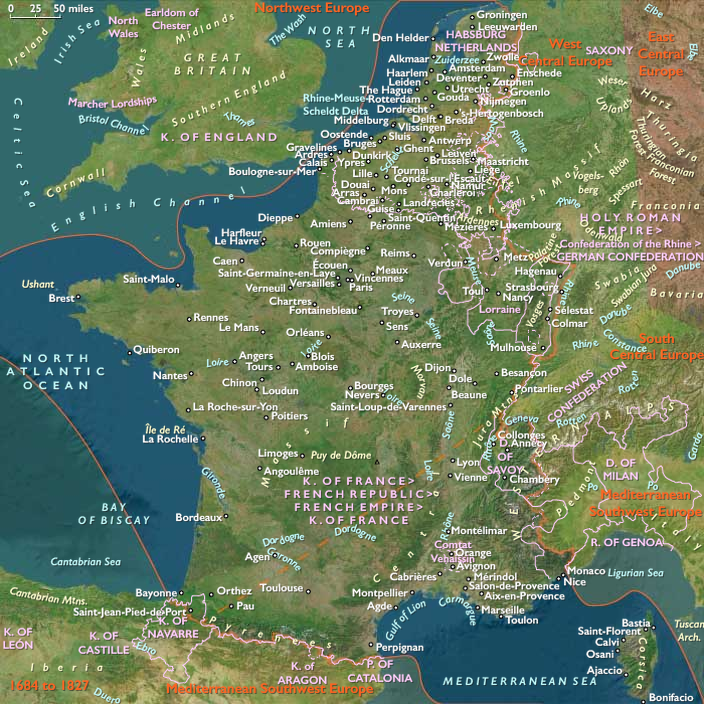
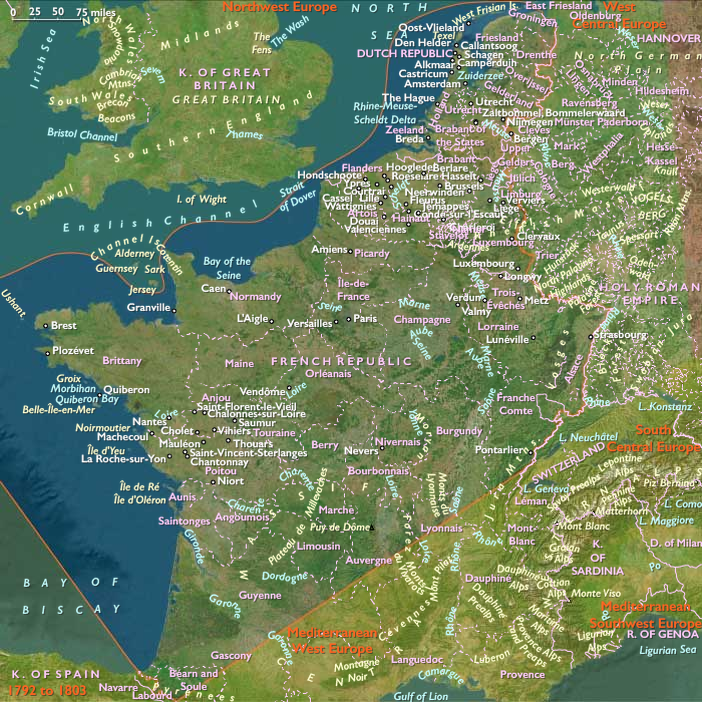
Following his coup d’état in November 1799, Napoleon Bonaparte rapidly moved to consolidate military and political control over France and, eventually, Western Europe as a whole. His rule, initially as First Consul and later as Emperor, saw the transformation of France into a dominant European power, reshaping the continent through military conquest, legal reforms, and strategic alliances.
1. Establishing Authority in France (1799–1804)
After seizing power, Napoleon focused on stabilizing France and securing his leadership:
- 1799 – As First Consul, he centralized authority, dismantling the ineffective Directory and establishing the Consulate.
- 1801 – Signed the Concordat with the Catholic Church, reconciling relations between France and the Papacy, reducing religious tensions.
- 1802 – Declared First Consul for Life, solidifying his personal control of the state.
- 1804 – Introduced the Napoleonic Code, a legal framework that standardized laws across France and later much of Europe.
- December 2, 1804 – Crowned Emperor of the French, officially transforming France into an empire under his rule.
2. Military Expansion and Control of Western Europe (1800–1810)
Napoleon combined military brilliance with political strategy, conquering and reorganizing Western Europe into a Napoleonic order:
Key Military Campaigns
- 1800 – The Italian Campaign: Napoleon defeated Austria at Marengo, securing French control over northern Italy.
- 1805 – War of the Third Coalition:
- Defeated Austria and Russia at Austerlitz, one of his greatest victories.
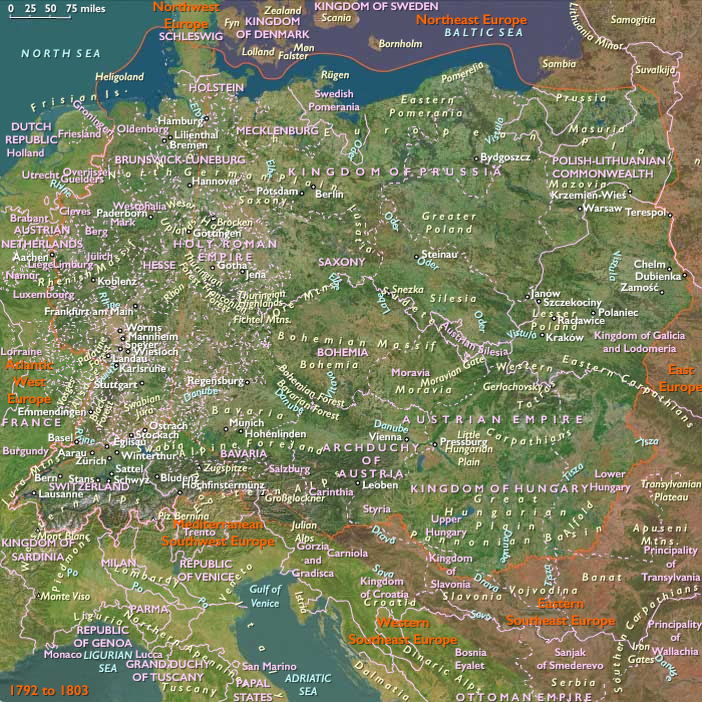
- Eliminated the Holy Roman Empire, replacing it with the Confederation of the Rhine.
- Lost the naval Battle of Trafalgar, ensuring British naval supremacy but still dominating the European continent.
- 1806–1807 – War of the Fourth Coalition:
- Destroyed the Prussian army at Jena-Auerstedt and occupied Berlin.
- Defeated Russia at Friedland, forcing the Treaty of Tilsit (1807), aligning Russia with France.
- 1808–1814 – The Peninsular War:
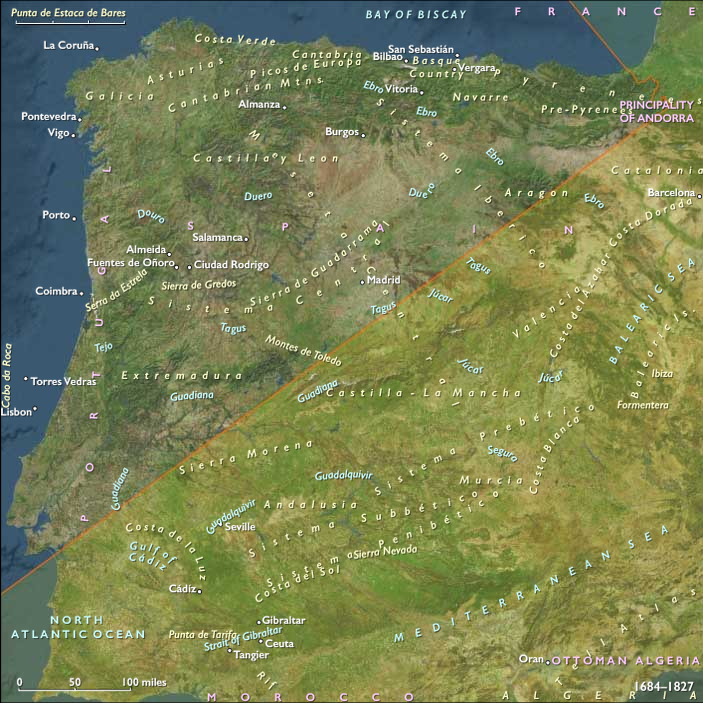
- Attempted to control Spain and Portugal, placing his brother Joseph on the Spanish throne.
- Faced resistance from Spanish and Portuguese guerrillas, supported by Britain, leading to his first prolonged struggle.
Key Political Reorganizations
- Reorganized the German states into the Confederation of the Rhine, dismantling the Holy Roman Empire.
- Placed family members on European thrones:
- Joseph Bonaparte as King of Spain.
- Louis Bonaparte as King of Holland.
- Jerome Bonaparte as King of Westphalia.
- Eugène de Beauharnais as Viceroy of Italy.
- Introduced the Continental System (1806) to blockade Britain, attempting to cripple British trade by closing European ports to British goods.
3. The Height of Napoleon’s Power (1810–1812)
By 1810, Napoleon controlled most of Western Europe, having defeated major continental rivals:
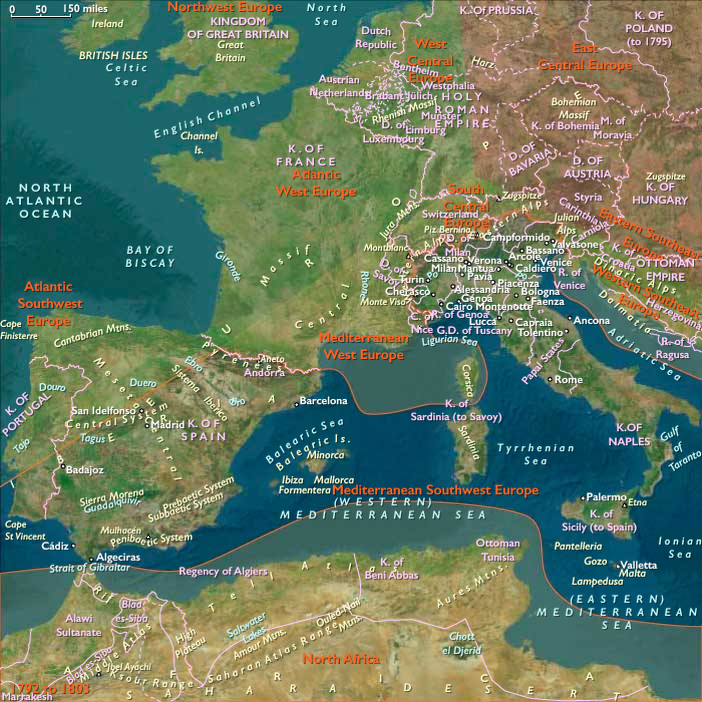
- France was at its territorial peak, extending from Spain to the borders of Russia.
- Britain remained the only major European power still resisting him, due to its naval dominance.
- Marriage to Marie Louise of Austria (1810) strengthened his dynastic legitimacy and relations with Austria.
However, growing resistance in Spain, Portugal, and Russia, along with dissatisfaction among occupied territories, would soon challenge his dominance.
Conclusion – The Napoleonic Order in Western Europe
Napoleon’s consolidation of power transformed Western Europe:
- Legal Reforms: The Napoleonic Code influenced legal systems across Europe.
- Political Reorganization: Ancient kingdoms and empires collapsed, replaced by Napoleon’s client states.
- Military Dominance: France became the undisputed land power of Europe, but naval weakness against Britain remained a key vulnerability.
Although he had reshaped Europe in his image, Napoleon’s control would soon be tested by rising nationalist movements, prolonged wars, and the disastrous Russian campaign of 1812.
People
Subjects
Regions
Subregions

Years: 1800 - 1800
People
Subjects
Regions
Subregions