
Maximilian's Struggles in Flanders and the Peace …
Years: 1487 - 1487
Maximilian's Struggles in Flanders and the Peace of Bruges (1486–1488)
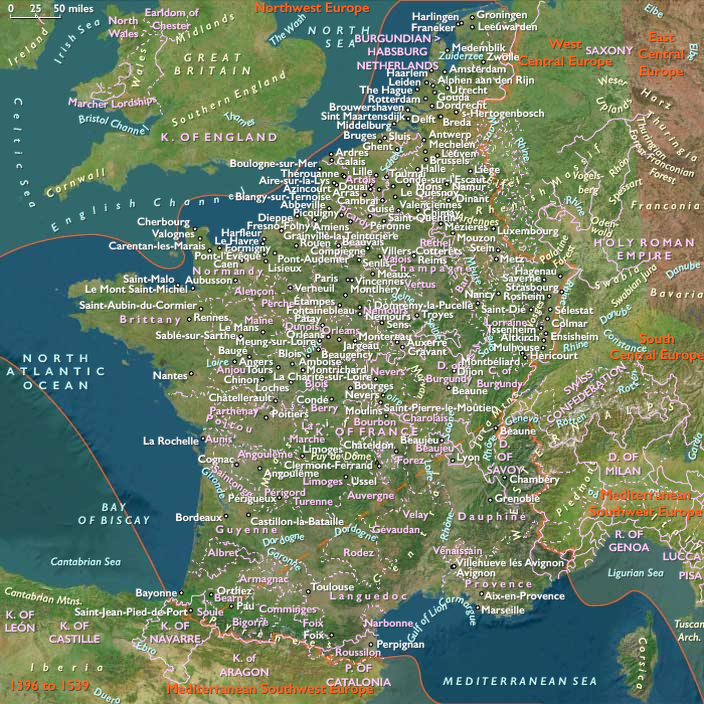
In 1486, Archduke Maximilian of Austria, already struggling to maintain control over the Burgundian Netherlands, was elected King of the Romans, making him Holy Roman Emperor-elect. However, his elevation did little to strengthen his tenuous grasp on the restive Flemish provinces. Despite successfully occupying the city of St. Omer in Flanders, Maximilian's position in the Low Countries remained precarious. His mishandling of two Austrian invasions of France (1486–1487) further weakened his standing among his subjects in the Netherlands, setting the stage for political conflict and instability.
Missteps and Resistance in Flanders
In 1488, Maximilian summoned the Flemish legislature to convene in Bruges, intending to solidify his authority by bringing a contingent of German mercenaries to the meeting. Bruges, fiercely protective of its traditional civic liberties and suspicious of Maximilian’s intentions, reacted by closing its gates and barring the entry of his mercenaries. Tensions quickly escalated into open rebellion, and Maximilian found himself effectively trapped inside the city, held captive by the very citizens he had intended to control.
Bruges Imprisonment and Humiliation (1488)
Maximilian’s imprisonment in Bruges, lasting from February 1488, constituted a humiliating blow to his authority. The city authorities took advantage of his vulnerability, demanding significant political concessions. Bruges, a wealthy and influential commercial hub, capitalized on Maximilian's desperate situation, pressing for a restoration of their traditional autonomy and freedom from intrusive Habsburg control.
To secure his freedom, Maximilian had no choice but to accept humiliating terms. In a major concession that underscored his weakened position, Maximilian agreed to sign the Peace of Bruges (May 16, 1488), promising that future Habsburg rule would respect local rights and privileges. The treaty effectively imposed strict limitations on Maximilian’s centralizing ambitions in the Netherlands.
The Peace of Bruges: Terms and Implications
The Peace of Bruges had profound implications for Maximilian’s authority. Under its terms, Maximilian was forced to dismiss foreign (primarily German) mercenary troops, which had been a major source of contention. He also promised to uphold Flemish autonomy by ruling only through local councils and assemblies. This agreement represented a significant political concession and a landmark in the region's ongoing struggle between local autonomy and centralized authority.
Political and Administrative Consequences
The humiliating terms of the Peace of Bruges temporarily halted Maximilian’s centralizing policies, compelling him to recognize traditional liberties and privileges in the Netherlands. Although Maximilian would later find ways to circumvent some restrictions, his forced concession permanently marked Flemish political memory and fueled resentment against Habsburg rule, planting seeds of future rebellion.
Long-Term Historical Significance
The episode at Bruges symbolized the profound difficulties that early Habsburg rulers faced in their efforts to impose centralized control over the fiercely independent towns and provinces of the Burgundian Netherlands. Maximilian’s humiliation underscored the challenges inherent in balancing central authority with traditional regional autonomy—an ongoing tension that ultimately contributed to the fragmentation and political instability in the region throughout the late medieval and early modern periods.
This confrontation foreshadowed the later intensified struggles between local liberties and central Habsburg power, laying crucial foundations for the future resistance that exploded in the Dutch Revolt of the 16th century. Thus, the events surrounding Maximilian’s imprisonment and the Peace of Bruges carried enduring historical significance, exemplifying pivotal moments of political tension shaping the trajectory of late medieval and early modern Atlantic West Europe.
Locations
People
Groups
Topics
Commodoties
Subjects
Regions
Subregions
Related Events
Showing 10 events out of 20 total
Years: 1487 - 1487
Locations
People
Groups
Topics
Commodoties
Subjects
Regions
Subregions