
Nagy-Várad, the settlement that will become the …
Years: 1427 - 1427
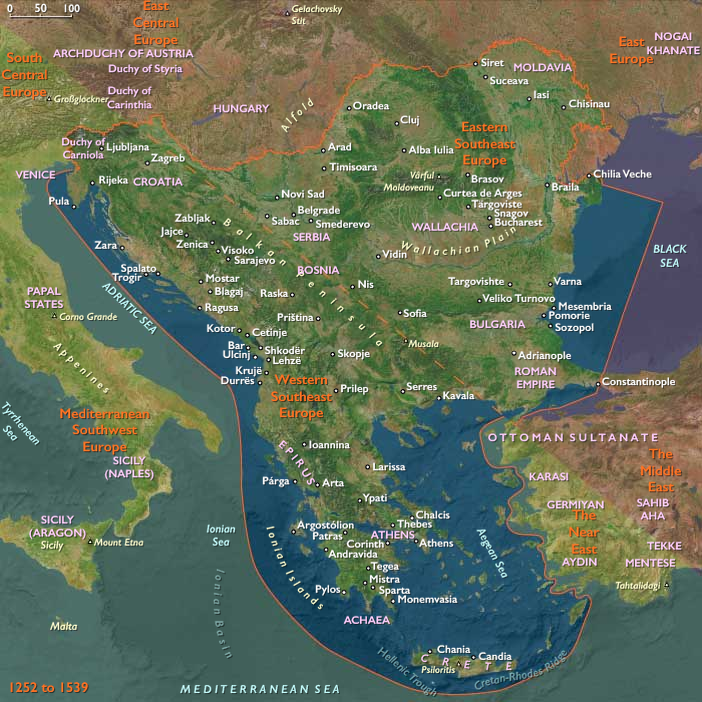
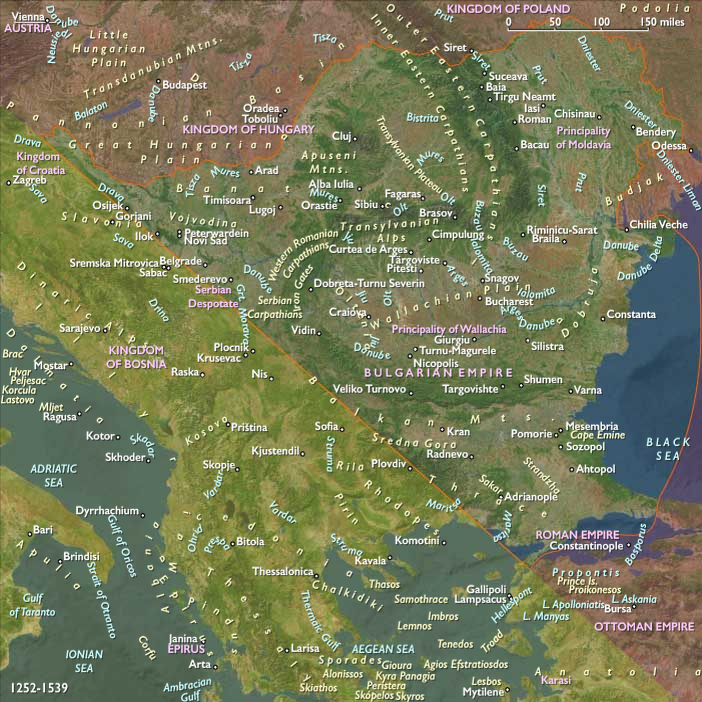
Nagy-Várad, the settlement that will become the city of Oradea is considered to have been relatively unimportant until the eleventh century when King Ladislaus I of Hungary founded a bishopric near it, the present Roman Catholic Diocese of Oradea.
The city flourished both economically and culturally during the thirteenth century, when the Citadel of Oradea, first mentioned in 1241 during the Mongol invasion, was first built.
It will be destroyed and rebuilt several times over the course of following centuries.
The fourteenth century had proved to be of the most prosperous periods in the city's history up to that point.
Many works of art have been added to the city, including statues of St. Stephen, Emeric and Ladislaus, all erected before 1372, and the equestrian sculpture of St. Ladislaus in 1390.
St. Ladislaus' fabled equestrian statue is the first such in a European public square.
Bishop Andreas Báthori, Bisop from 1329 to 1345, rebuilt the cathedral in Gothic style.
From that age date also the Hermes, now preserved at Györ, which contains the skull of King Ladislaus, and which is a masterpiece of the Hungarian goldsmith's art.
Sigismund dies on December 9, 1437 at Znojmo (German: Znaim), Moravia (now Czech Republic), and as ordered in life, he is buried at Nagyvárad next to the tomb of the king Saint Ladislaus I, who is the ideal of the perfect monarch, warrior and Christian for this time and was deeply venerated by Sigismund.
By his second wife, Barbara of Celje, he leaves an only daughter, Elisabeth of Luxembourg, who is married to Albert V, duke of Austria (later German king as Albert II) whom Sigismund names as his successor.
As he leaves no sons, his line of the House of Luxembourg becomes extinct on his death.
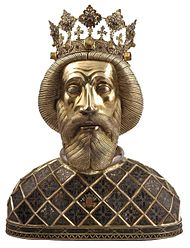
Medieval reliquary of Saint Ladislaus in the cathedral of Győr. (Photo taken on September 9, 2010, by Asybaris01)
Locations
People
Groups
Topics
Commodoties
Subjects
- Commerce
- Sculpture
- Painting and Drawing
- Labor and Service
- Decorative arts
- Style
- Conflict
- Faith
- Government
- Technology
Regions
Subregions
Years: 1427 - 1427
Medieval reliquary of Saint Ladislaus in the cathedral of Győr. (Photo taken on September 9, 2010, by Asybaris01)
Locations
People
Groups
Topics
Commodoties
Subjects
- Commerce
- Sculpture
- Painting and Drawing
- Labor and Service
- Decorative arts
- Style
- Conflict
- Faith
- Government
- Technology
Regions
Subregions