
The Fourth Fitna or Great Abbasid Civil …
Years: 808 - 819
The Fourth Fitna or Great Abbasid Civil War is a conflict between the brothers al-Amin and al-Ma'mun over the succession to the Abbasid Caliphate's throne.
Their father, Harun al-Rashid, had named al-Amin as the first successor, but had also named al-Ma'mun as the second, with Khorasan granted to him as an appanage, while a third son, al-Qasim, had been designated as third successor.
After Harun dies in 809, al-Amin succeeds in Baghdad.
Encouraged by the Baghdad court, al-Amin begins trying to subvert the autonomous status of Khorasan; Qasim is quickly sidelined.
In response, al-Ma’mun seeks the support of the provincial elites of Khorasan, and makes moves to assert his own autonomy.
As the rift between the two brothers and their respective camps widens, al-Amin declares his own son Musa to be his heir, and assembles a large army.
Al-Amin's troops march towards Khorasan, but al-Ma'mun's general Tahir ibn Husayn defeats them in the Battle of Rayy, then invades Iraq and besieges Baghdad itself.
The city falls after a year, al-Amin is executed, and al-Ma'mun becomes Caliph, but he remains in Khorasan and does not come to Baghdad.
This allows the power vacuum, which the civil war had created in the Caliphate's provinces, to grow, and several local rulers spring up in Jazira, Syria and Egypt.
In addition, the pro-Khorasani policies followed by al-Ma'mun's powerful chief minister, al-Fadl ibn Sahl, and al-Ma'mun's espousal of an Alid succession, alienates the traditional Baghdad elites, who see themselves increasingly marginalized.
As a consequence, al-Ma'mun's uncle Ibrahim is proclaimed rival Caliph at Baghdad in 817, forcing al-Ma'mun to intervene personally.
Fadl ibn Sahl is assassinated and al-Ma'mun leaves Khorasan for Baghdad, which he enters in 819.
The next years will be taken up with consolidating al-Ma'mun's authority and reincorporating the western provinces, a process that will not be completed until 827.
Some local rebellions, however, notably that of the Khurramites, will drag on for far longer.
People
Groups
Topics
- Khorasan Rebellion of 806-09
- Fitna, Fourth, or Great Abbasid Civil War
- Rayy, Battle of
- Shi'ite Rebellion of 814-19
- Khurramites' Revolt
Subjects
Regions
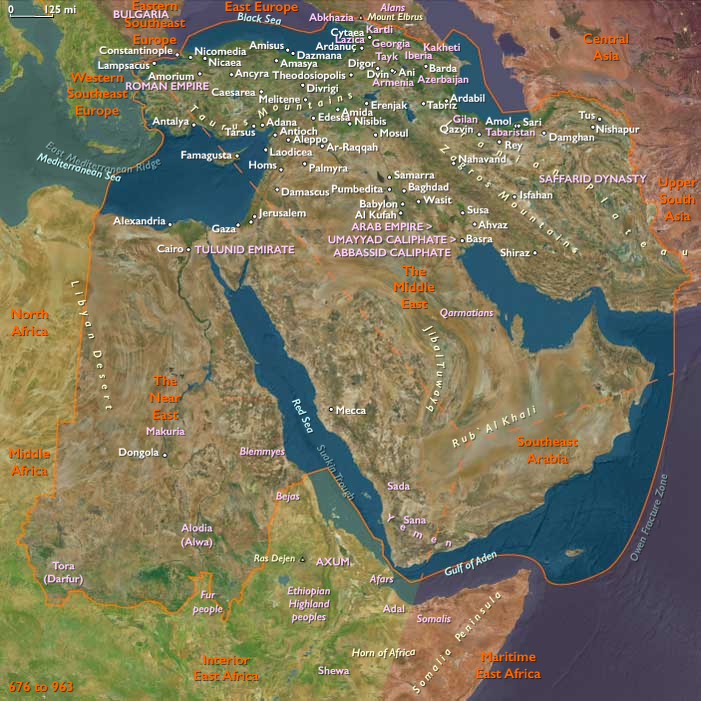
Subregions
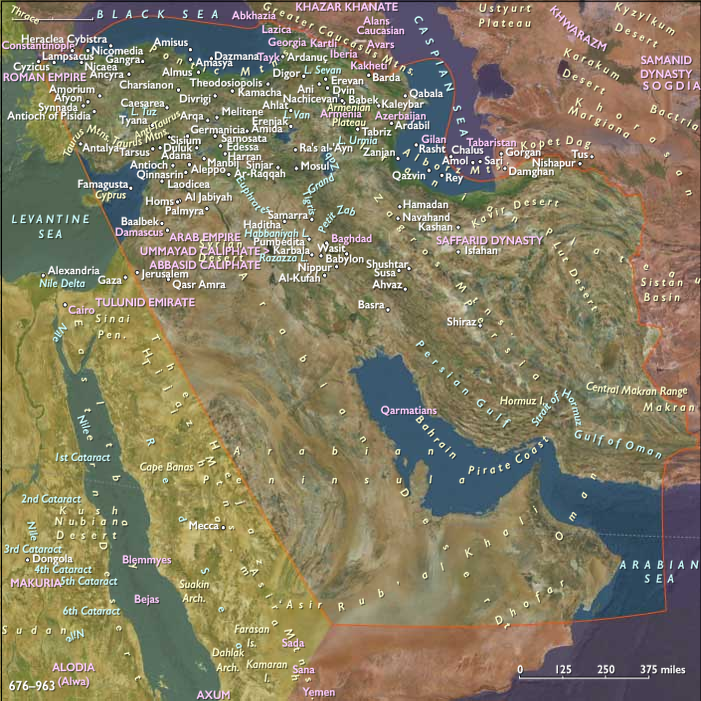
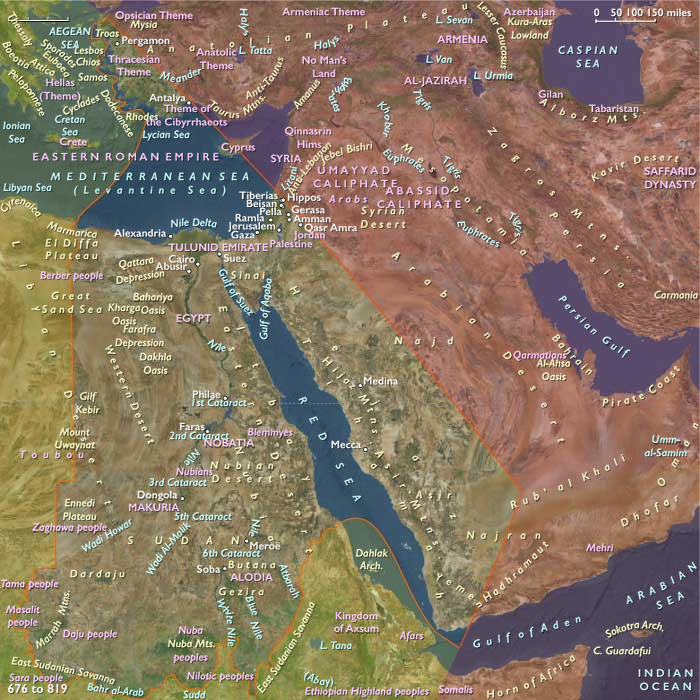
Related Events
Showing 10 events out of 54778 total
Years: 808 - 819
People
Groups
Topics
- Khorasan Rebellion of 806-09
- Fitna, Fourth, or Great Abbasid Civil War
- Rayy, Battle of
- Shi'ite Rebellion of 814-19
- Khurramites' Revolt
Subjects
Regions
Subregions