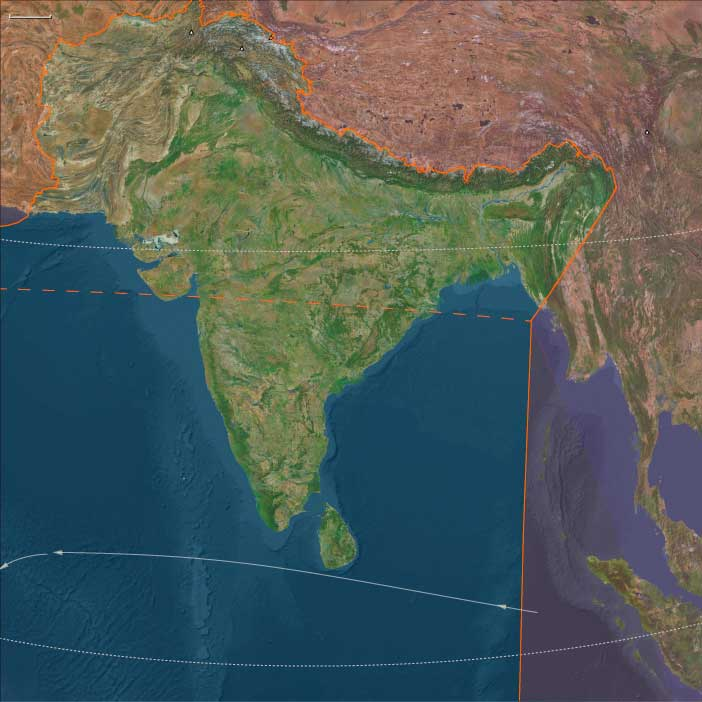
Muslim leaders from the Deoband and Aligarh …
Years: 1920 - 1920
Muslim leaders from the Deoband and Aligarh movements join Mohandas K. Gandhi in mobilizing the masses for the 1920 (and 1921) demonstrations of civil disobedience and noncooperation in response to the massacre at Amritsar.
At the same time, Gandhi endorses the Khilafat Movement, thereby placing many Hindus behind what had been solely a Muslim demand.
Despite impressive achievements, however, the Khilafat Movement fails.
Turkey rejects the caliphate and becomes a secular state.
Furthermore, the religious, mass-based aspects of the movement alienate such Western-oriented constitutional politicians as Mohammad Ali Jinnah, who resigns from Congress in the Nagpur session in December 1920.
Other Muslims also are uncomfortable with Gandhi's leadership.
The movement fails to lay a lasting foundation of Indian unity and serves only to aggravate Hindu-Muslim differences among masses that are being politicized.
As India moves closer to the self-government implied in the Montagu-Chelmsford Reforms, rivalry over what might be called the spoils of independence accentuates the differences between the communities.