
Müntzer had been able to capitalize on …
Years: 1520 - 1520
October
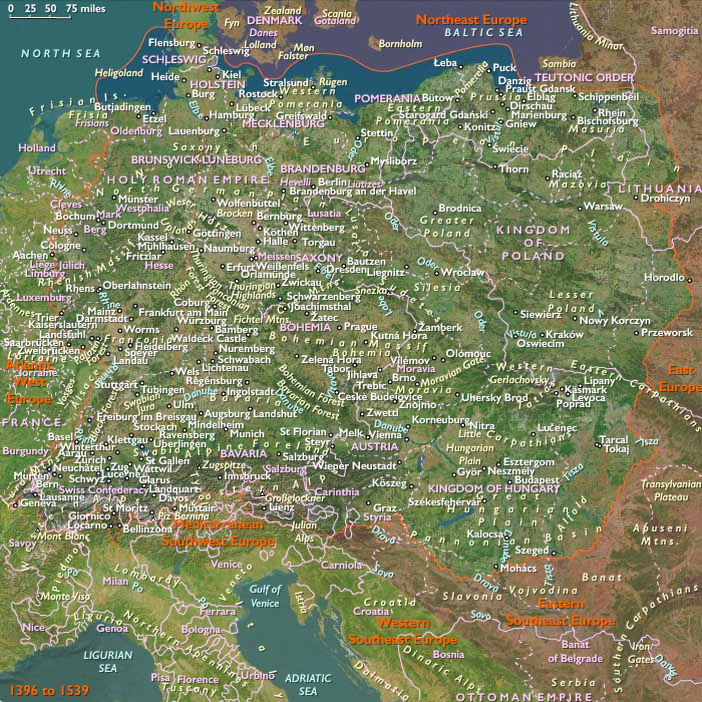
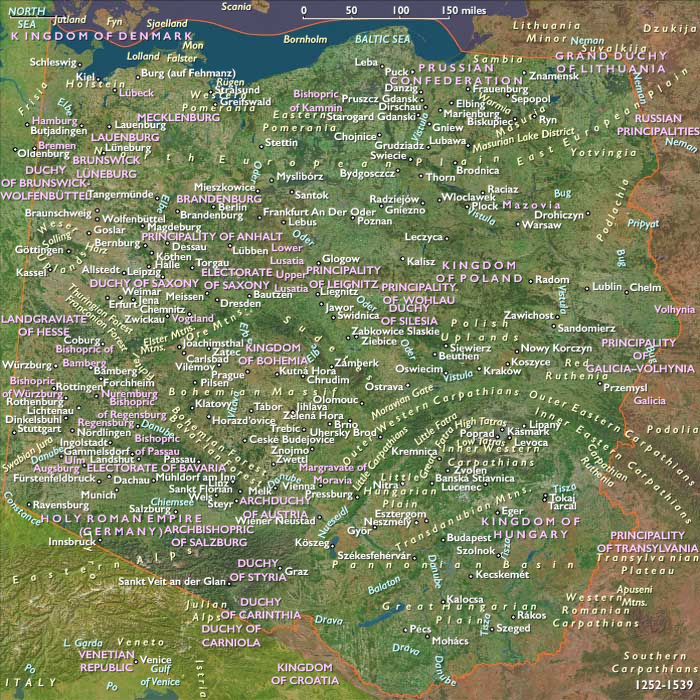
Müntzer had been able to capitalize on the recommendation made by Luther a year earlier, and in May 1520 had stood in as temporary replacement for a reformist/humanist preacher named Johann Sylvanus Egranus at St Mary’s Church in the busy town of Zwickau (population at this time around seven thousand), near the border with Bohemia.
Zwickau is in the middle of the important iron- and silver-mining area of the Erzgebirge, and is also home to a significant number of plebeians, primarily weavers.
Money from the mining operations, and from the commercial boom that mining generates, has infiltrated the town.
This has led to an increasing division between rich and poor citizens, and a parallel consolidation of larger manufacturers over small-scale craftsmen.
Social tensions run high.
It is a town that, although exceptional for the times, nurtures conditions that presage the trajectory of many towns over the following two centuries.
Müntzer at St. Mary’s carries on as he had started in Jüterbog.
This brings him into conflict with the representatives of the established Church.
He still regards himself as a follower of Luther, however, and as such he retains the support of the town council: so much so that when Egranus returns to post in October 1520, the town council appoints Müntzer to a permanent post at St Katharine’s Church.
St Katharine’s is the church of the weavers.
Even before the arrival of Lutheran doctrines, there had already in Zwickau been a reform movement inspired by the Hussite Reformation of the fifteenth century, especially in its radical, apocalyptic Taborite flavor.
This movement is particularly strong, along with spiritualism, among the Zwickau weavers.
Nikolaus Storch is active here, a self-taught weaver who places every confidence in spiritual revelation through dreams.
He and Müntzer are soon acting in concert.
Locations
People
Groups
- Christians, Roman Catholic
- Saxony, Electorate of
- Hussites
- Holy Roman Empire
- Lutheranism
- Protestantism
Topics
Commodoties
Subjects
Regions
Subregions
Years: 1520 - 1520
October
Locations
People
Groups
- Christians, Roman Catholic
- Saxony, Electorate of
- Hussites
- Holy Roman Empire
- Lutheranism
- Protestantism
Topics
Commodoties
Subjects
Regions
Subregions