
Muawiyah, ruling in Damascus as governor of …
Years: 655 - 655
Muawiyah, ruling in Damascus as governor of Syria, continues to develop the Muslims' first naval fleet, his goal the conquest of Constantinople itself.
Muawiyah undertakes an expedition in Cappadocia in 655 while his fleet, under the command of Abdullah ibn Saad, advances along the southern coast of Anatolia.
Emperor Constans II personally commands the imperial flee of five hundred ships and sets off to challenge the Arab navy.
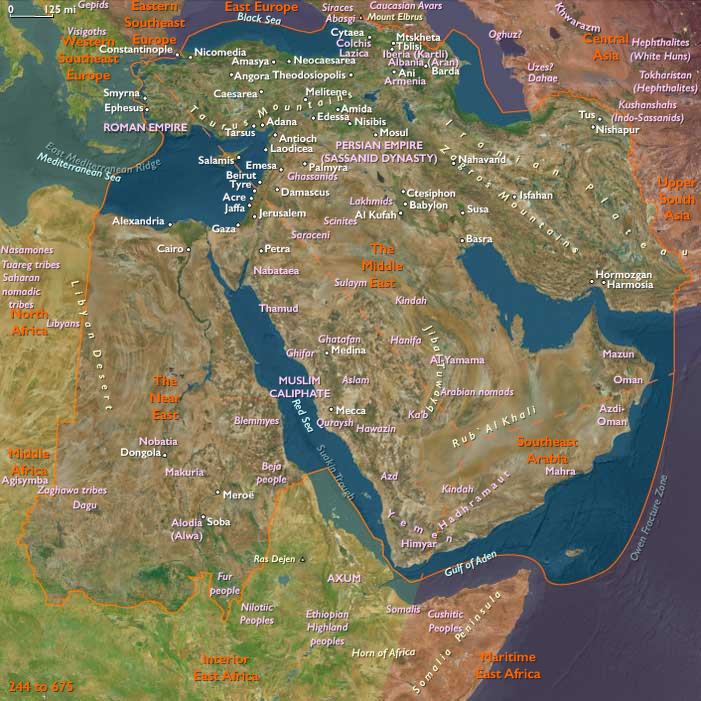
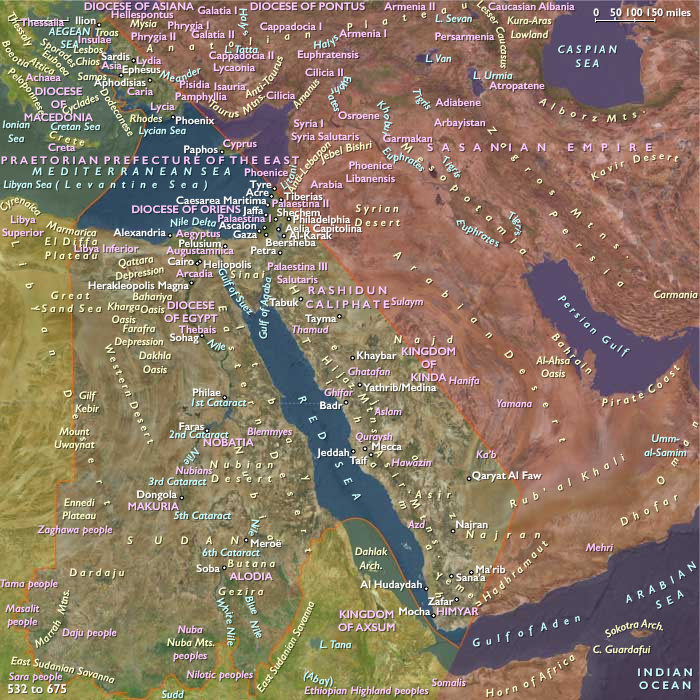
He sails to the province of Lycia in the southern region of Asia Minor.
The two forces meet off the coast of Mount Phoenix, near the harbor of Phoenix (modern Finike).
As the ships come into battle range, Constans raises the Cross and has his men sing psalms.
The Arabs respond by raising the Crescent and trying to drown out the psalms by chanting passages from the Koran.
Both the Cross and Crescent remain mounted on the masts throughout the battle, giving the naval conflict its name.
The Arabs are victorious in battle, although losses are heavy for both sides.
Constans barely escapes to Constantinople, having managed to make his escape, according to Theophanes, by exchanging uniforms with one of his officers.
The Arab fleet retreats after its victory, but the Battle of the Masts is a significant milestone in the history of the Mediterranean, Islam and the Empire, as it establishes the superiority of the Muslims at sea as well as on land.
The Mediterranean for the next four centuries will be a battleground between Constantinople and the Caliphate.
The imperial forces in the aftermath of this disaster are soon granted a respite, however, due to the outbreak of a civil war among the Muslims.
Locations
People
Groups
- Arab people
- Christianity, Chalcedonian
- Greeks, Medieval (Byzantines)
- Roman Empire, Eastern: Heraclian dynasty
- Islam
- Rashidun Caliphate
- Christians, Monotheletist
Topics
Commodoties
Subjects
Regions
Subregions
Related Events
Showing 10 events out of 56356 total
Years: 655 - 655
Locations
People
Groups
- Arab people
- Christianity, Chalcedonian
- Greeks, Medieval (Byzantines)
- Roman Empire, Eastern: Heraclian dynasty
- Islam
- Rashidun Caliphate
- Christians, Monotheletist
Topics
Commodoties
Subjects
Regions
Subregions