
Most of the residents of Batavia are …
Years: 1688 - 1688
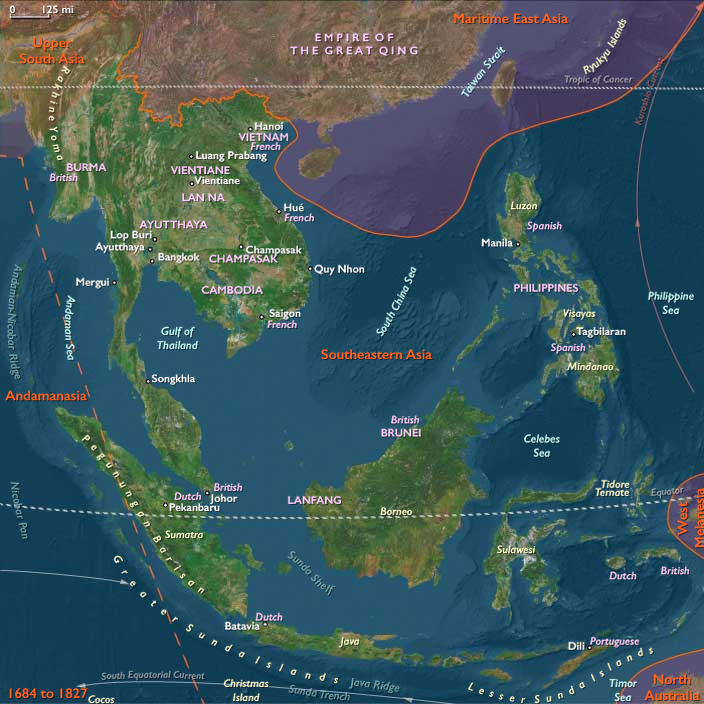
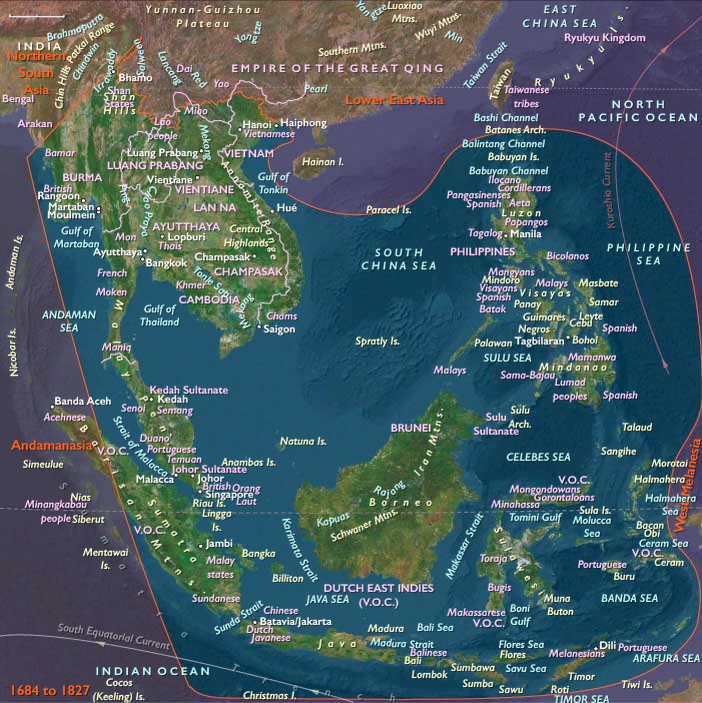
Most of the residents of Batavia are of Asian descent.
Thousands of slaves have been brought from India and Arakan, and, later, from Bali and Sulawesi.
To avoid uprisings, it had been decided by the Directors of the VOC that the Javanese should not be kept as slaves.
Chinese people, who make up the largest group in Batavia, most of them merchants and laborers, are the most decisive group in the development of the city.
There is also a large group of freed slaves, usually Portuguese-speaking Asian Christians who were formerly slaves to the Portuguese, made prisoners by the VOC in the many conflicts with the Portuguese.
Portuguese will remain the dominant language in Batavia until late eighteenth century, when the language will slowly be replaced with Dutch and Malay.
Additionally, there are also Muslim and Hindu merchants from India and Malays.
Initially, these different ethnic groups had lived side by side, but in 1688 complete segregation is enacted upon the indigenous population: each ethnic group has to live in their own established village outside the city wall.
There are Javanese villages for Javanese people, Moluccan villages for the Moluccans, and so on.
Each people is tagged with a lead identity tag to identify them with their own ethnic group.
This identity tag will later be replaced with a parchment.
Intermarriage between different ethnic groups has to be reported.
Locations
Groups
- Hinduism
- Indian people
- Malays, Ethnic
- Javanese people
- Chinese (Han) people
- Muslims, Sunni
- Portuguese people
- Rakhine (Arakanese) people
- Christians, Roman Catholic
- Portuguese Empire
- Netherlands, United Provinces of the (Dutch Republic)
- Dutch East India Company in Indonesia
- Dutch East India Company (Vereenigde Oostindische Compagnie or VOC in Dutch, literally "United East Indies Company")
- Portugal, Bragança Kingdom of
Topics
Commodoties
Subjects
Regions
Subregions
Related Events
Showing 10 events out of 29391 total
Years: 1688 - 1688
Locations
Groups
- Hinduism
- Indian people
- Malays, Ethnic
- Javanese people
- Chinese (Han) people
- Muslims, Sunni
- Portuguese people
- Rakhine (Arakanese) people
- Christians, Roman Catholic
- Portuguese Empire
- Netherlands, United Provinces of the (Dutch Republic)
- Dutch East India Company in Indonesia
- Dutch East India Company (Vereenigde Oostindische Compagnie or VOC in Dutch, literally "United East Indies Company")
- Portugal, Bragança Kingdom of
Topics
Commodoties
Subjects
Regions
Subregions