
Most Filipinos had converted to Roman Catholicism …
Years: 1607 - 1607
Most Filipinos had converted to Roman Catholicism by around 1605.
San Agustin Church in Manila, officially completed on January 19, 1607, is currently the oldest church in the Philippines.
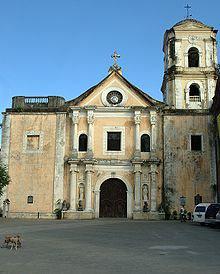
San Augustin Church, Manila (photo by Anyo Niminus, 2008)
Locations
Groups
- Christians, Roman Catholic
- Dominicans, or Order of St. Dominic
- Jesuits, or Order of the Society of Jesus
- Spain, Habsburg Kingdom of
- Philippines, Spanish colony of the
- Spanish East Indies
Topics
Commodoties
Subjects
Regions
Subregions
Related Events
Showing 10 events out of 33608 total
Years: 1607 - 1607
San Augustin Church, Manila (photo by Anyo Niminus, 2008)
Locations
Groups
- Christians, Roman Catholic
- Dominicans, or Order of St. Dominic
- Jesuits, or Order of the Society of Jesus
- Spain, Habsburg Kingdom of
- Philippines, Spanish colony of the
- Spanish East Indies
Topics
Commodoties
Subjects
Regions
Subregions