
The szlachta, in its periodic opportunities …
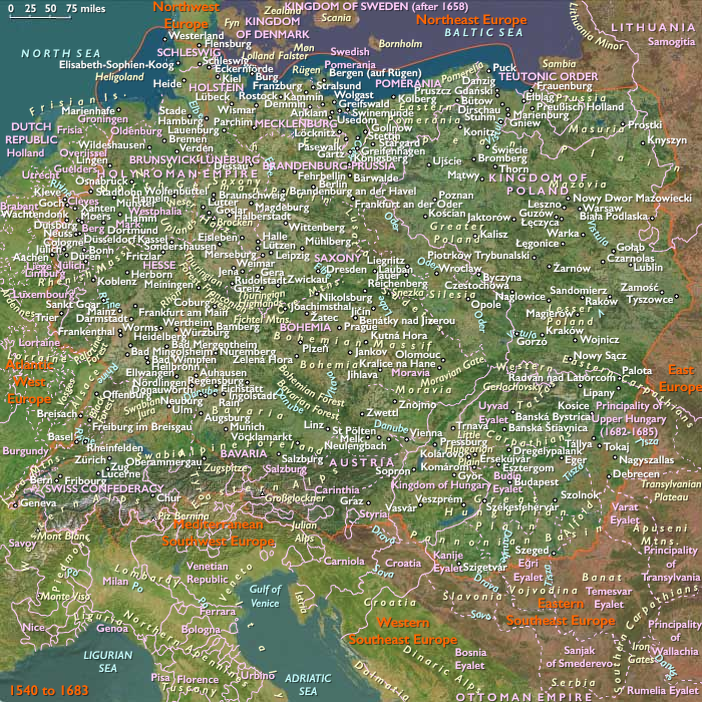
Years: 1540 - 1683
The szlachta, in its periodic opportunities to fill the throne, exhibits a preference for foreign candidates who will not found another strong dynasty.
This policy produces monarchs who are either totally ineffective or in constant debilitating conflict with the nobility.
Furthermore, aside from notable exceptions such as the able Transylvanian Stefan Batory (r. 1576-86), the kings of alien origin are inclined to subordinate the interests of the commonwealth to those of their own country and ruling house.
This tendency is most obvious in the prolonged military adventures waged by Sigismund III Vasa (r. 1587-1632) against Russia and his native Sweden.
On occasion, these campaigns bring Poland near to conquest of Muscovy and the Baltic coast, but they compound the military burden imposed by the ongoing rivalry with the Turks, and the Swedes and Russians will extract heavy repayment a few decades later.
Locations
People
Groups
- Jews
- Lithuanians (Eastern Balts)
- Germans
- Rus' people
- Poles (West Slavs)
- Swedes (Scandinavians)
- Russians (East Slavs)
- Turkish people
- Ottoman Empire
- Sweden, (second) Kingdom of
- Russia, Tsardom of
- Polish-Lithuanian Commonwealth (Commonwealth of the Two Nations)
Topics
- Polish-Swedish War for Livonia, First
- Polish-Muscovite War, or Russo-Polish War of 1605–1618
- Polish-Turkish War of 1614-21
- Polish-Swedish War (1617-18)
- Polish-Ottoman War of 1620–1621, or First Polish-Ottoman War
- Polish-Swedish War of 1621-25
- Polish-Swedish War of 1626–1629
- Polish-Ottoman War of 1633–1634
- Polish-Ottoman War of 1672-76 (or Second Polish-Ottoman War)
- Polish-Ottoman War (1683–1699)
Subjects
Regions
Subregions
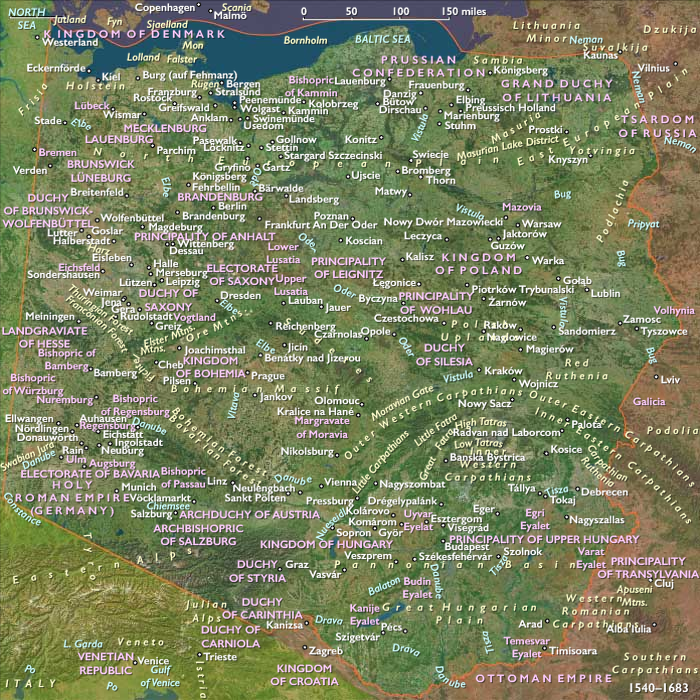
Years: 1540 - 1683
Locations
People
Groups
- Jews
- Lithuanians (Eastern Balts)
- Germans
- Rus' people
- Poles (West Slavs)
- Swedes (Scandinavians)
- Russians (East Slavs)
- Turkish people
- Ottoman Empire
- Sweden, (second) Kingdom of
- Russia, Tsardom of
- Polish-Lithuanian Commonwealth (Commonwealth of the Two Nations)
Topics
- Polish-Swedish War for Livonia, First
- Polish-Muscovite War, or Russo-Polish War of 1605–1618
- Polish-Turkish War of 1614-21
- Polish-Swedish War (1617-18)
- Polish-Ottoman War of 1620–1621, or First Polish-Ottoman War
- Polish-Swedish War of 1621-25
- Polish-Swedish War of 1626–1629
- Polish-Ottoman War of 1633–1634
- Polish-Ottoman War of 1672-76 (or Second Polish-Ottoman War)
- Polish-Ottoman War (1683–1699)
Subjects
Regions
Subregions