
More than a thousand years have elapsed …
Years: 189BCE - 189BCE
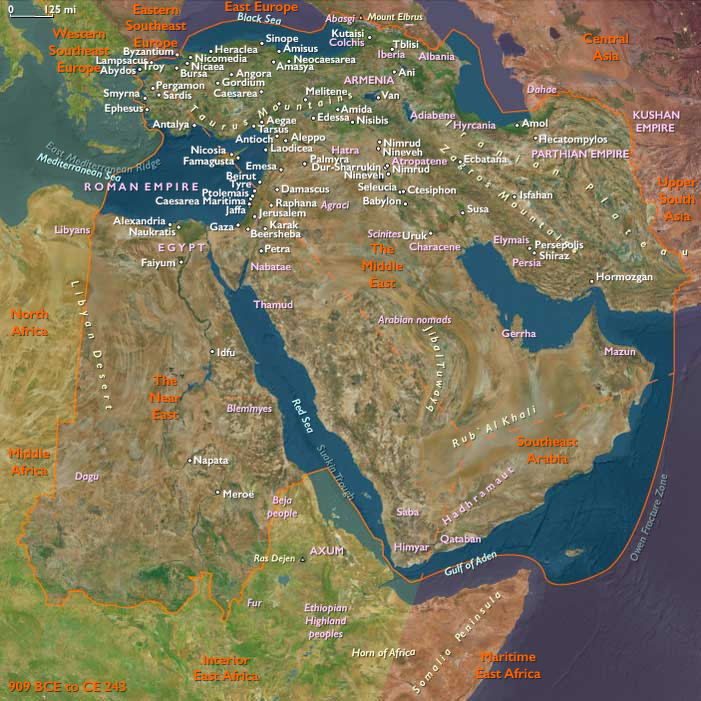
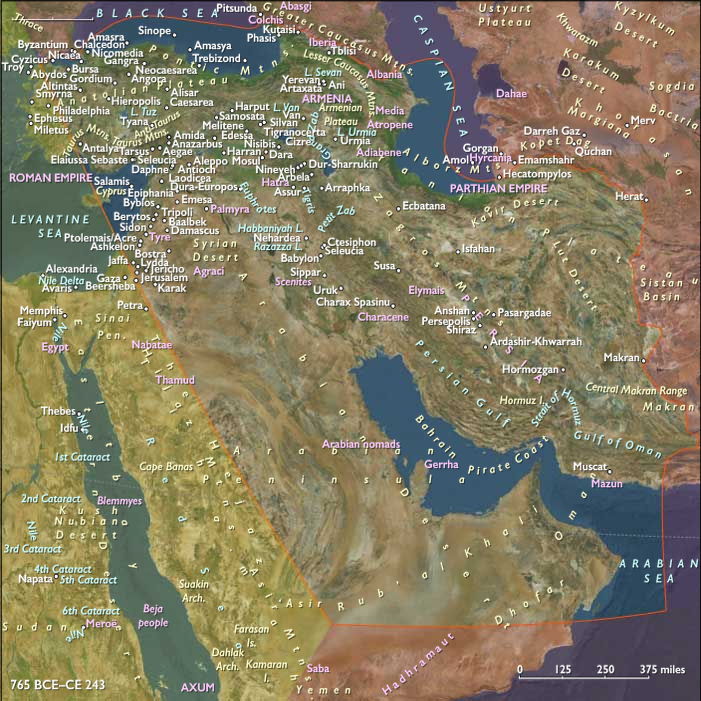
More than a thousand years have elapsed between the time of the Bronze Age state of Hayasa-Azzi until that of Artaxias I, during which time the Hayasas, the Armens, the people of Nairi and other ethnic elements have integrated, become one nation, speak a common language, and live together in the country that had become known, from the sixth century BCE, as Armenia.
The kingdom of Armenia by the end of the third century BCE comprised around one hundred and twentydynastic domains ruled by nakharars, loosely united under the Orontid kings of Greater and Lesser Armenia.
Even though Alexander the Great had not conquered Armenia, Hellenistic culture has strongly impacted Armenian society.
When Antiochus the Great wrestled Armenia from Orontid rule, he appointed Artaxias as strategos.
Following his monarch's defeat by the Romans at the Battle of Magnesia in 190 BCE, Artaxias and his co-strategos Zariadres revolt and, with Roman consent, begin to reign autonomously with the title of king; Zariadres over Sophene/Lesser Armenia and Artaxias over Greater Armenia and According to Strabo and Plutarch, Artaxias also founds the Armenian capital Artashat (Artaxata) with the aid of the Carthaginian general Hannibal, who was being sheltered from the Romans within Artaxias’ court when Antiochus III could no longer protect him.
The population of the previous Yervanduni (Orontid) capital of Yervandashat is transferred to Artashat (Artaxata) on the Araks River near Lake Sevan.
Over a dozen stone boundary markers have been discovered on the territory of modern Armenia from the time of the reign of Artashes with Aramaic inscriptions; before their discovery, the existence of these stones was attested by Moses of Chorene.
In these inscriptions, Artaxias claims descent from the Yervanduni (Orontid) Dynasty: King Artaxias, the son of Orontid Zariadres.
Locations
People
Groups
- Armenian people
- Armenia, Satrapy of
- Roman Republic
- Seleucid Empire
- Armenia, Kingdom of Greater
- Sophene, Kingdom of
Topics
Commodoties
Subjects
Regions
Subregions
Related Events
Showing 10 events out of 10 total
Years: 189BCE - 189BCE
Locations
People
Groups
- Armenian people
- Armenia, Satrapy of
- Roman Republic
- Seleucid Empire
- Armenia, Kingdom of Greater
- Sophene, Kingdom of
Topics
Commodoties
Subjects
Regions
Subregions