
Möngke has conducted a census of the …
Years: 1259 - 1259
Möngke has conducted a census of the Mongol Empire from 1252–1259.
While that of China had been completed in 1252, Novgorod in the far northwest is not counted until winter 1258–59.
The Novgorod Republic had managed to escape the horrors of the Mongol invasion, not through any feat of arms, but because the Mongol commanders probably had not wanted to get bogged down in the marshlands surrounding the city and had turned back one hundred kilometers from Novogorod.
Despite never having been formally conquered, the Republic has begun to pay tribute to the khans of the Blue Horde.
Mongol tax-collectors and census-takers arrive in the city in 1259, leading to political disturbances in the city and forcing Alexander Nevsky to punish a number of town officials (he cuts off their noses) for defying him as Grand Prince of Vladimir (soon to be the khan's tax-collector in Russia) and his Mongol overlords.
The new census counts not only households but also the number of men aged fifteen to sixty and the number of fields, livestock, vineyards, and orchards.
Within the civilian register, craftsmen are listed separately while in the military registers, auxiliary and regular households are distinguished.
Clergy of the approved religions are separated and not counted.
When the new register is completed, one copy is sent to Karakorum and one copy kept for the local administration.
Möngke tries to create a fixed poll tax collected by imperial agents, which could forward to the needy units.
Initially, the maximum rate had been fixed at ten to eleven gold dinars in the West Asia and six to seven taels of silver in China, but protests from the landlord classes had reduced this relatively low rate to six to seven dinars and taels.
Some of Möngke's officials had raised the top rate on the wealthy of five hundred dinars.
Although the reform of the taxation does not lighten the tax burden, it makes the payments more predictable.
Even so, the census and the regressive taxation it facilitated sparks popular riots and resistance in the western districts.
Alexander Nevsky, who has proved to be a cautious and far-sighted politician, dismisses the Roman Curia’s attempts to cause war between Russia and the Blue Horde, because he understands the uselessness of such war with Tatars at this time since they remain a powerful force.
Nevsky tries to strengthen his authority at the expense of the boyars and at the same time suppress any anti-Muscovite uprisings in the country, such as the Novgorod uprising of 1259.
Locations
People
Groups
- Papal States (Republic of St. Peter)
- Tatars
- Rus' people
- Christians, Roman Catholic
- Mongols
- Novgorod Republic
- Vladimir-Suzdal, Great Principality of
- Mongol Empire
- Blue Horde, Khanate of the
Topics
Commodoties
Subjects
Regions
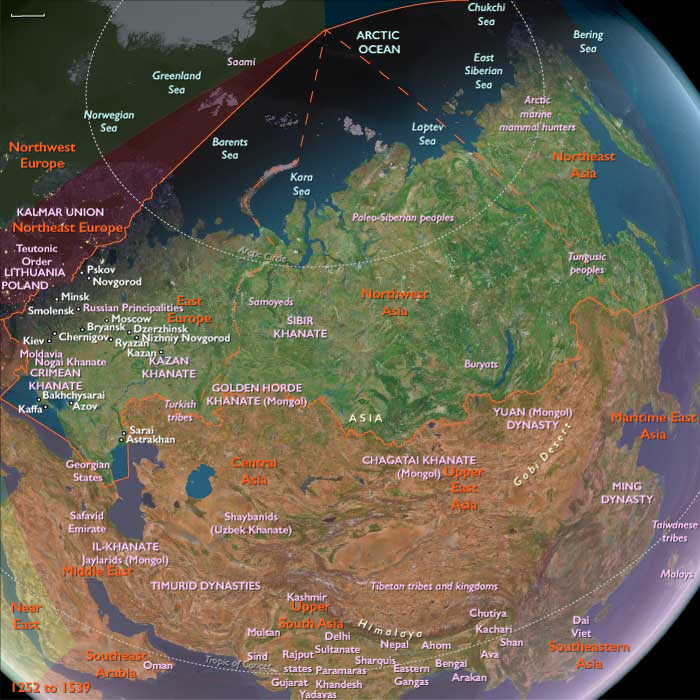
Subregions
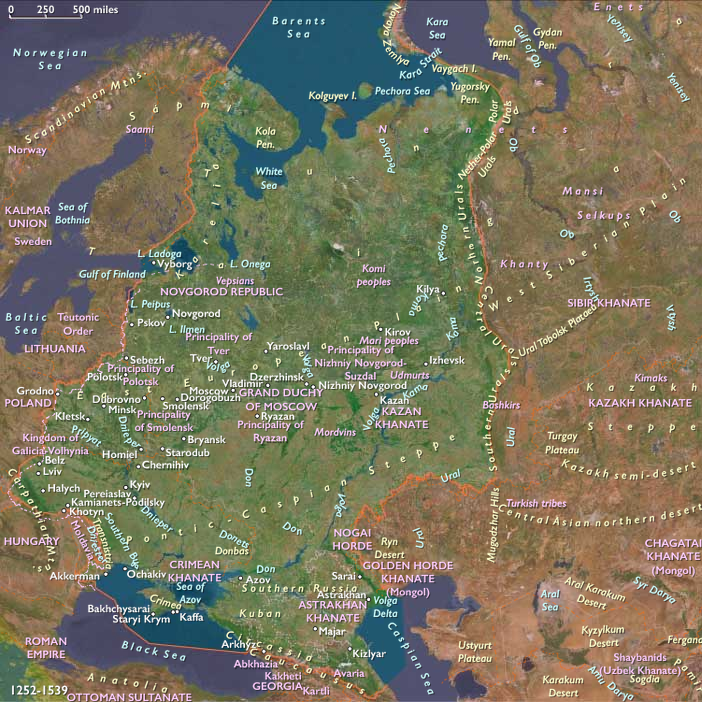
Years: 1259 - 1259
Locations
People
Groups
- Papal States (Republic of St. Peter)
- Tatars
- Rus' people
- Christians, Roman Catholic
- Mongols
- Novgorod Republic
- Vladimir-Suzdal, Great Principality of
- Mongol Empire
- Blue Horde, Khanate of the
Topics
Commodoties
Subjects
Regions
Subregions