
Filters:
Great Britain acquires Labuan from the Sultanate …
Years: 1846 - 1846
December
Great Britain acquires Labuan from the Sultanate of Brunei on December 24, 1846.
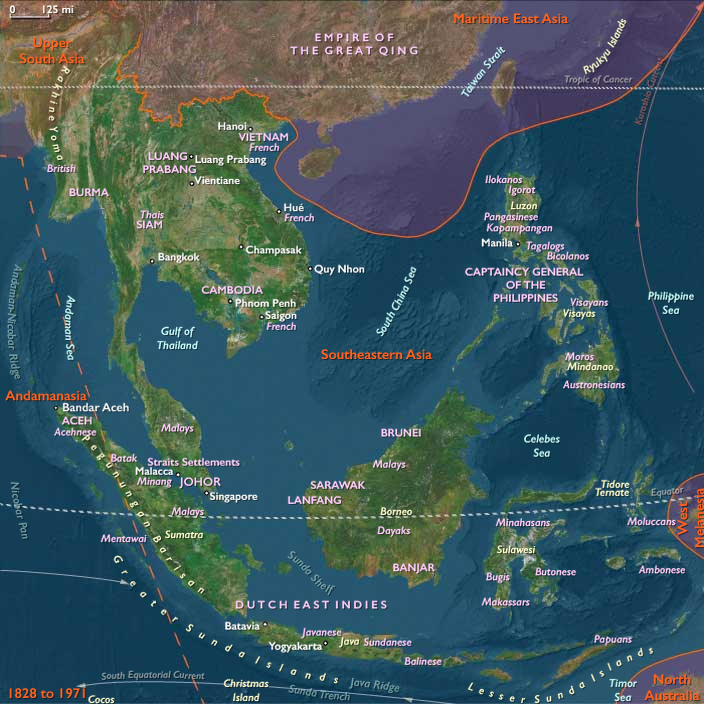
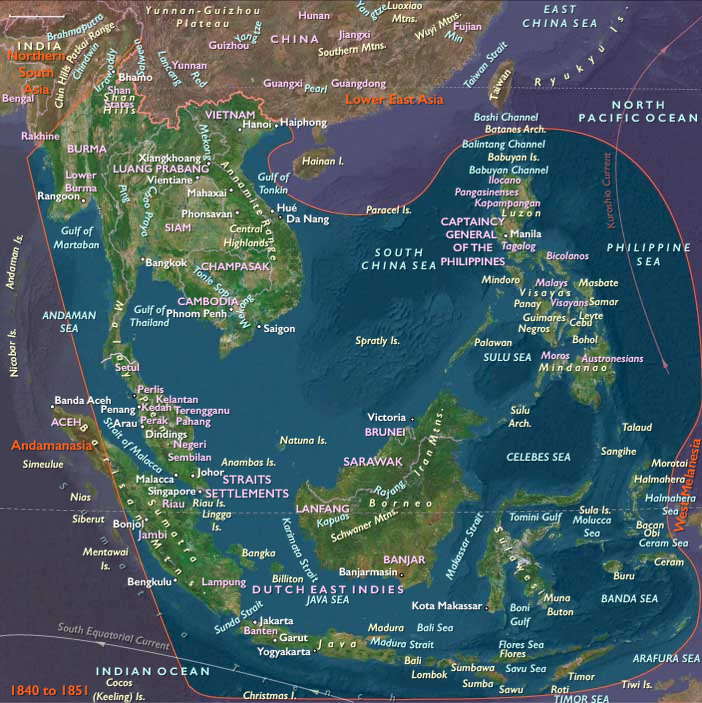
Since 1841, when James Brooke had successfully established a solid presence in northwestern Borneo with the establishment of the Kingdom of Sarawak and began to assist in the suppression of piracy along the island coast, he had persistently promoted the island of Labuan to the British government.
Brooke had urged the British to establish a naval station, colony or protectorate along the northern coast to prevent other European powers from doing so which being responded by the Admiralty with the arrival of Admiral Drinkwater Bethune to look for a site for a naval station and specifically to investigate Labuan in November 1844, along with Admiral Edward Belcher with his HMS Samarang (1822) to survey the island.
The British Foreign Office had then appointed Brooke as a diplomat to Brunei in 1845 and asked him to co-operate with Bethune.
At the same time, British Foreign Minister Lord Aberdeen had sent a letter to the Sultan of Brunei requesting the Sultan to not enter any treaties with other foreign powers while the island was under consideration as a British base.
On February 24, 1845, Admiral Bethune with his HMS Driver and several other political commissions left Hong Kong to survey the island more.
The crews found that it was the most suitable for inhabitants than any other island in the coast of Borneo, especially with its coal deposits.
The British also see the potential of the island as possibly the next Singapore.
Brooke acquires the island for Britain through the Treaty of Labuan with the Sultan of Brunei, Omar Ali Saifuddin II on December 18, 1846.
Admiral Rodney Mundy had visited Brunei with his ship HMS Iris (1840) to keep the Sultan in line until the British government made a final decision to take the island and he has taken Pengiran Mumin, the son-in-law of the Sultan, to witness the island's accession to the British Crown.
Brooke will supervise the transferring process and by 1848, the island will be made a crown colony and free port with him appointed as the first Governor.
Since 1841, when James Brooke had successfully established a solid presence in northwestern Borneo with the establishment of the Kingdom of Sarawak and began to assist in the suppression of piracy along the island coast, he had persistently promoted the island of Labuan to the British government.
Brooke had urged the British to establish a naval station, colony or protectorate along the northern coast to prevent other European powers from doing so which being responded by the Admiralty with the arrival of Admiral Drinkwater Bethune to look for a site for a naval station and specifically to investigate Labuan in November 1844, along with Admiral Edward Belcher with his HMS Samarang (1822) to survey the island.
The British Foreign Office had then appointed Brooke as a diplomat to Brunei in 1845 and asked him to co-operate with Bethune.
At the same time, British Foreign Minister Lord Aberdeen had sent a letter to the Sultan of Brunei requesting the Sultan to not enter any treaties with other foreign powers while the island was under consideration as a British base.
On February 24, 1845, Admiral Bethune with his HMS Driver and several other political commissions left Hong Kong to survey the island more.
The crews found that it was the most suitable for inhabitants than any other island in the coast of Borneo, especially with its coal deposits.
The British also see the potential of the island as possibly the next Singapore.
Brooke acquires the island for Britain through the Treaty of Labuan with the Sultan of Brunei, Omar Ali Saifuddin II on December 18, 1846.
Admiral Rodney Mundy had visited Brunei with his ship HMS Iris (1840) to keep the Sultan in line until the British government made a final decision to take the island and he has taken Pengiran Mumin, the son-in-law of the Sultan, to witness the island's accession to the British Crown.
Brooke will supervise the transferring process and by 1848, the island will be made a crown colony and free port with him appointed as the first Governor.
Locations
People
Groups
Topics
Commodoties
Subjects
Regions
Subregions
Years: 1846 - 1846
December
Locations
People
Groups
Topics
Commodoties
Subjects
Regions
Subregions