
Moldavia, the area between the Carpathians and …
Years: 1301 - 1301
Moldavia, the area between the Carpathians and the Dnister, had been part of Cumania for almost too hundred years, starting with the second half of the eleventh century, until being disrupted by the Tatar invasion in 1241 and 1242.
As the Tatars conquered the area, the Cumans, who had been previously converted to Catholicism, had fled to Hungary and Bulgaria, leaving some traces behind, including some toponyms, such as Vaslui and Comăneşti.
Apart from Cumans and Tatars (who live especially between the Prut and Dnister), Moldavia has an increasingly larger Romanian population which had immigrated from both from Transylvania and Maramureş, as well as from the south (Muntenia and Bulgaria).
Other people living in Moldavia are the Alans (or Jassi, hence the name of the city of Iaşi) who are vassals of the Tatars; as well as the Brodnici, whose ethnicity is still unclear and a matter for debate.
The foundation of Moldavia occurs sometime in the early fourteenth century, following a colonization by Vlachs (Romanians) from Maramureş.
Its nucleus is located in what is now Bukovina, around the Moldova River, which gives the name to the principality.
The exact place where the Vlachs lived during the Dark Age is under debate, the main theories being the "continuity theory" which claims they lived around the Carpathian Mountains, away from the migrating tribes and the "migration theory" which says they lived south of the Danube and colonized the current territory of Romania between ninth and twelfth century.
The Romanians have settled in the hilly and wooded areas, but there are also Germans (Saxons) and Hungarians who have colonized the Eastern slopes of the Carpathians.
A migration of Transylvanian traders had preceded the founding of the principality: for instance, the cities of Baia (later, Moldavia's first capital), Suceava and Siret had been founded by Saxons.
The Csángó now living in western Moldavia are either the descendants of these Hungarian colonists or the other Magyarized populations (such as Cumans or Pechenegs) who had converted to Catholicism in the Diocese of Cumania.
Locations
Groups
- Alans (Sarmatian tribal grouping)
- Tatars
- Romanians
- Cuman people, or Western Kipchaks, also called Polovtsy, Polovtsians)
- Christians, Eastern Orthodox
- Saxons, Transylvanian
- Hungary, Kingdom of
- Moldavia, Hungarian province of
- Wallachia, Hungarian province of
Topics
- Ostsiedlung (German: Settlement in the East), a.k.a. German eastward expansion
- Mongol Conquests
- Hungarian Civil War of 1301-48
Commodoties
Subjects
Regions
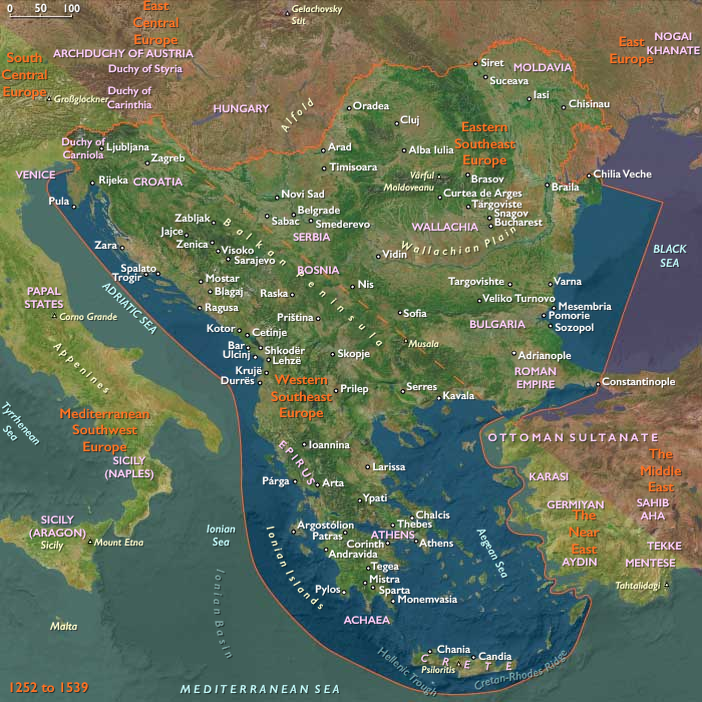
Subregions
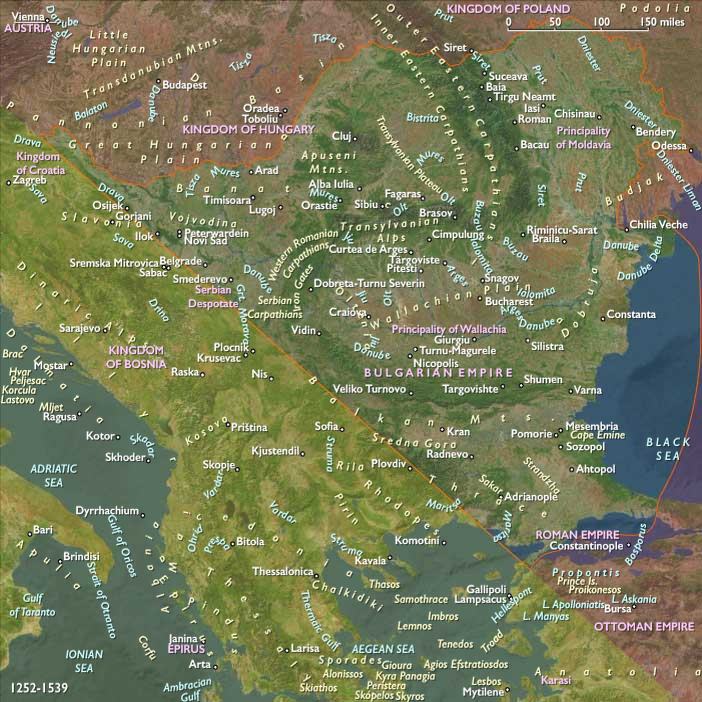
Years: 1301 - 1301
Locations
Groups
- Alans (Sarmatian tribal grouping)
- Tatars
- Romanians
- Cuman people, or Western Kipchaks, also called Polovtsy, Polovtsians)
- Christians, Eastern Orthodox
- Saxons, Transylvanian
- Hungary, Kingdom of
- Moldavia, Hungarian province of
- Wallachia, Hungarian province of
Topics
- Ostsiedlung (German: Settlement in the East), a.k.a. German eastward expansion
- Mongol Conquests
- Hungarian Civil War of 1301-48
Commodoties
Subjects
Regions
Subregions