
Modern scholars believe that the seeds of …
Years: 1864 - 1864
September
Modern scholars believe that the seeds of the Sicilian Mafia had been planted in the upheaval of Sicily's transition out of feudalism in 1812 and its later annexation by mainland Italy in 1860.
Under feudalism, the nobility had owned most of the land and enforced law and order through their private armies.
After 1812, the feudal barons had steadily sold off or rented their lands to private citizens.
Primogeniture had been abolished, land could no longer be seized to settle debts, and one fifth of the land was to become private property of the peasants.
After Italy annexed Sicily in 1860, it had redistributed a large share of public and church land to private citizens.
The result had been a huge boom in landowners: from two thousand in 1812 to twenty thousand by 1861.
The nobles had also released their private armies to let the state take over the task of law enforcement.
However, the authorities are incapable of properly enforcing property rights and contracts, largely due to their inexperience with free market capitalism.
Lack of manpower is also a problem: there are often less than 350 active policemen for the entire island.
Some towns with no permanent police force are only visited every few months by some troops to collect malcontents, leaving criminals to operate with impunity from the law in the interim.
With more property owners have come more disputes that need settling, contracts that need enforcing, and properties that need protecting.
Because the authorities are undermanned and unreliable, property owners have turned to extralegal arbitrators and protectors.
These extralegal protectors eventually organize themselves into the first Mafia clans.
Banditry is a growing problem.
Rising food prices, the loss of public and church lands, and the loss of feudal common rights push many desperate peasants to banditry.
With no police to call upon, local elites in countryside towns recruit young men into "companies-at-arms" to hunt down thieves and negotiate the return of stolen property, in exchange for a pardon for the thieves and a fee from the victims.
These companies-at-arms are often made up of former bandits and criminals, usually the most skilled and violent of them.
While this saves communities the trouble of training their own policemen, this may have made the companies-at-arms more inclined to collude with their former brethren rather than destroy them.
There is little Mafia activity in the eastern half of Sicily.
In the east, the ruling elites have been more cohesive and active during the transition from feudalism to capitalism.
They have maintained their large stables of enforcers, and have been able to absorb or suppress any emerging violent groups.
Furthermore, the land in the east is generally divided into a smaller number of large estates, so there are fewer landowners and their large estates often require full-time patrolling.
This means that guardians of such estates tend to be bound to a single employer, giving them little autonomy or leverage to demand high payments.
This does not mean there is little violence - the most violent conflicts over land take place in the east, but they do not involve mafiosi.
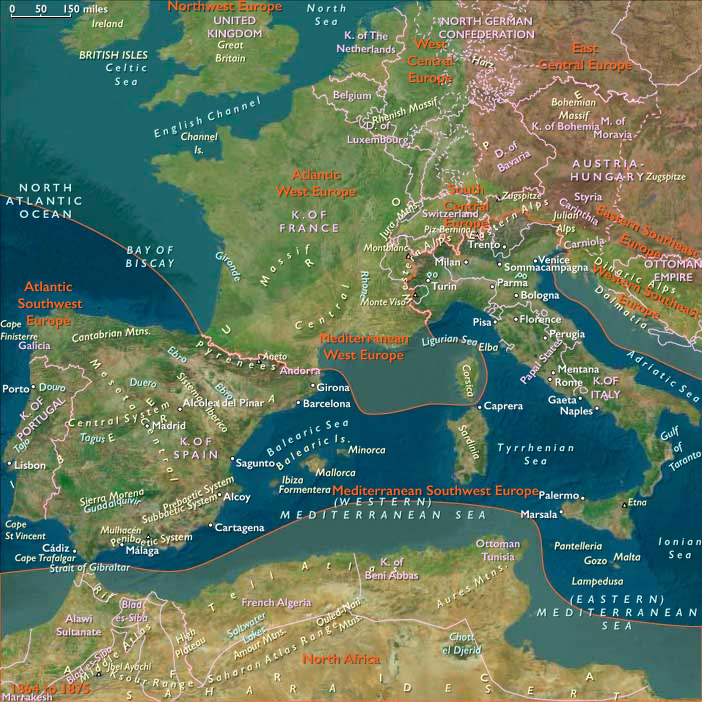
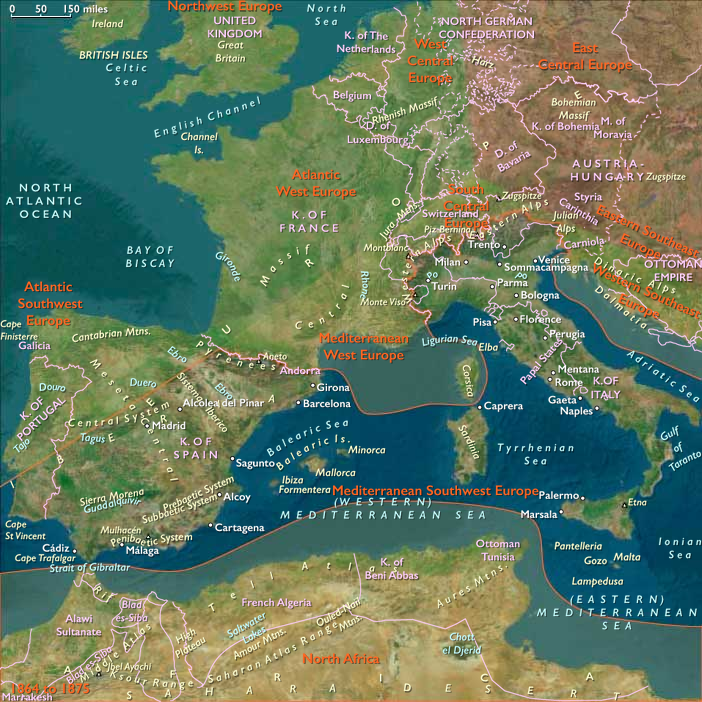
Mafia activity is most prevalent in the most prosperous areas of western Sicily, especially Palermo, where the dense concentrations of landowners and merchants offer ample opportunities for protection racketeering and extortion.
Here, a protector can serve multiple clients, giving him greater independence.
The greater number of clients demanding protection also allows him to charge high prices.
The landowners in this region are also frequently absent and cannot watch over their properties should the mafioso withdraw protection, further increasing his bargaining power.
The lucrative citrus orchards around Palermo are a favorite target of extortionists and protection racketeers, as they have a fragile production system that makes them quite vulnerable to sabotage.
Mafia clans force landowners to hire their members as custodians by scaring away unaffiliated applicants.
Cattle ranchers are also very vulnerable to thieves, and so they too need mafioso protection.
Locations
Groups
Topics
Subjects
Regions
Subregions
Related Events
Showing 10 events out of 14241 total
Years: 1864 - 1864
September
Locations
Groups
Topics
Subjects
Regions
Subregions