
…Milan). He was instigated to revolt, …
Years: 1093 - 1093
…Milan).
He was instigated to revolt, according to Ekkehard of Aura, by "one of his father's ministeriales, who was likewise named Conrad".
This is perhaps the same person as the Count Conrad sent by the young king as an envoy to King Roger II of Sicily, according to Geoffrey Malaterra.
Ekkehard otherwise gives positive account of Conrad's motivation, describing him as "a thoroughly catholic man, most devoted to the apostolic see, inclining to religion rather than government or war ... well enough furnished with courage and boldness [yet] preferr[ing] to occupy his time with reading rather than with sports" (Robinson, Ian S. (2000). Henry IV of Germany. New York: Cambridge University Press., p. 288).
Other sources favorable to Conrad include the Annales sancti Disibodi and the Casus monasterii Petrishusensis.
Among sources unfavorable to him are the Annales Augustani and Henry IV's anonymous biography, the Vita Heinrici IV, which describes Conrad as a pawn in hands of Matilda of Tuscany.
Bernold of Sankt Blasien records that Henry was so abject after Conrad's rebellion that he attempted suicide, but this may be a hyperbole allusive to the suicide of the biblical King Saul. (Robinson 2000, p. 288.)
Conrad is captured in mid-March by his father through a ruse, but soon escapes.
Otho de Lagery, named cardinal-bishop of Ostia around 1080 by Pope Gregory VII, has been one of the most prominent and active supporters of the Gregorian reforms, especially as legate in Germany in 1084 and is among the few whom Gregory VII had nominated as papabile (possible successors).
After Desiderous’s short reign as Victor III, Otho had been elected Pope Urban II by acclamation at a small meeting of cardinals and other prelates held in Terracina on March 12, 1088.
He has taken up the policies of Pope Gregory VII, and while pursuing them with determination, shows greater flexibility and diplomatic finesse.
At the outset, he has to reckon with the presence of the powerful antipope Clement III in Rome, but a series of well-attended synods held in Rome, Amalfi, Benevento, and Troia support him in renewed declarations against simony, lay investiture, clerical marriages (partly via the cullagium tax), and in continued opposition to Emperor Henry IV.
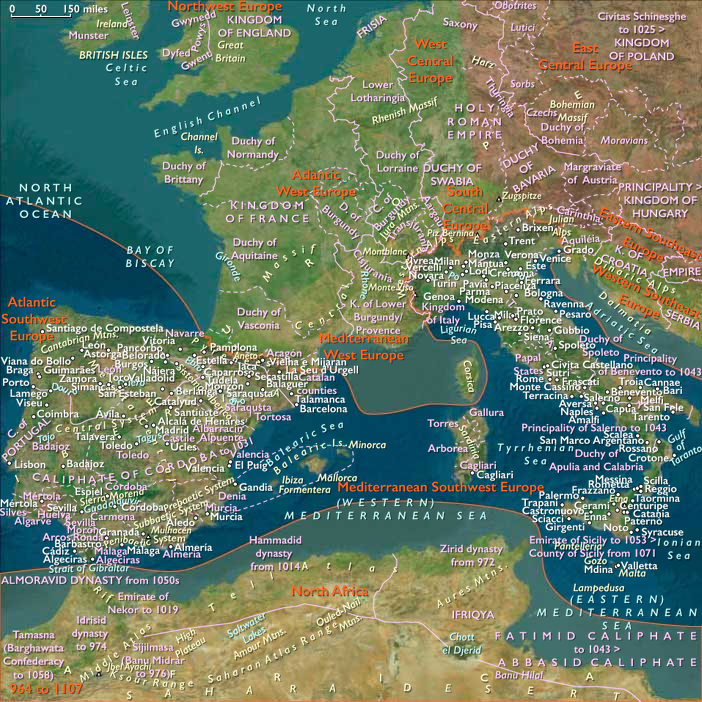
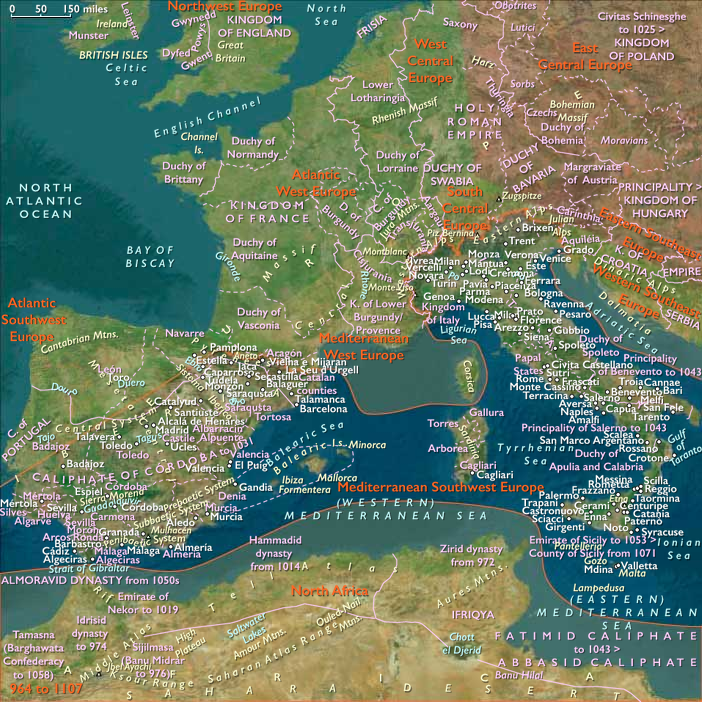
In accordance with this last policy, the marriage of the Countess Matilda of Tuscany with Welf, or Guelph, of Bavaria is promoted; Prince Conrad of Italy is assisted in his rebellion against his father and crowned King of the Romans at Milan in late July 1093 by Archbishop Anselm III; and Henry IV's wife, the Empress (Adelaide), is encouraged in her charges of sexual coercion against her husband.
According to the historian Landulf Junior, he is also crowned at Monza, where the Iron Crown is being kept.
After Conrad's coronation, Anselm dies and the new king invests his successor, Arnulf II, on December 6, 1093, although many of the bishops present to celebrate his coronation refuse to attend the simoniacal investiture of Arnulf.
The papal legate who is present, probably to speak with Conrad, immediately declares Arnulf deposed.
The accusation might have been that Arnulf had performed undue service to Conrad to secure his investiture, or that he had been too obeisant, a charge of simony ab obsequio.
Locations
People
Groups
- Lombards (West Germanic tribe)
- Saxons
- Milan, Archdiocese of
- Saxony, Duchy of
- Tuscany, Margravate of
- Normans
- German, or Ottonian (Roman) Empire
- Italy, Kingdom of (Holy Roman Empire)
- Pataria
- Christians, Roman Catholic
- Bavaria, Welf Duchy of
Topics
Commodoties
Subjects
Regions
Subregions
Related Events
Showing 4 events out of 4 total
Years: 1093 - 1093
Locations
People
Groups
- Lombards (West Germanic tribe)
- Saxons
- Milan, Archdiocese of
- Saxony, Duchy of
- Tuscany, Margravate of
- Normans
- German, or Ottonian (Roman) Empire
- Italy, Kingdom of (Holy Roman Empire)
- Pataria
- Christians, Roman Catholic
- Bavaria, Welf Duchy of
Topics
Commodoties
Subjects
Regions
Subregions