
Mii-dera, formally called Onjō-ji, is a Buddhist …
Years: 1117 - 1117
Mii-dera, formally called Onjō-ji, is a Buddhist temple located at the foot of Mount Hiei, in the city of Ōtsu, in Shiga Prefecture.
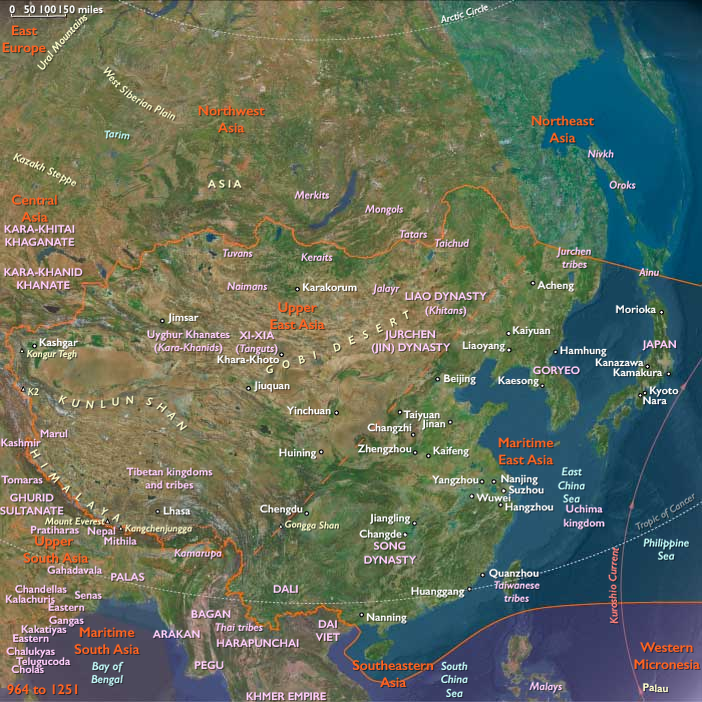
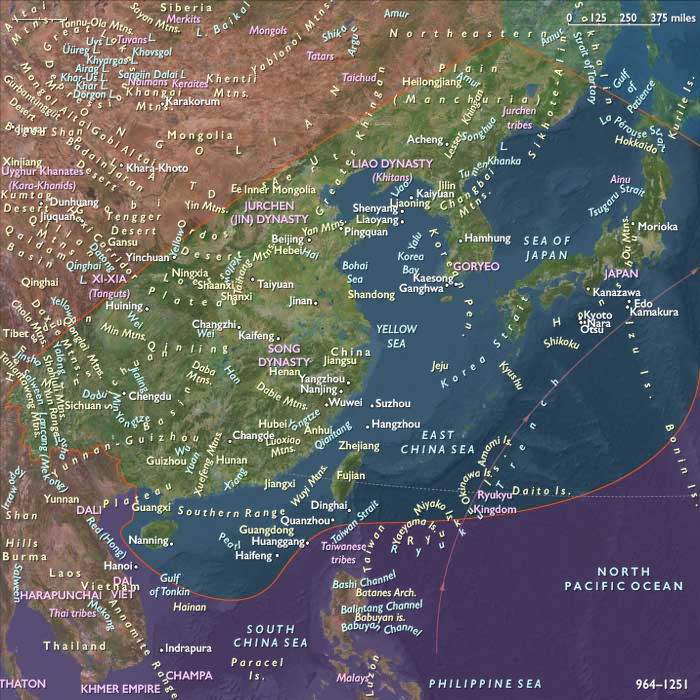
It is only a short distance from both Kyoto, and Lake Biwa, Japan's largest lake.
The head temple of the Tendai Jimon sect, it is something of a sister temple to Enryaku-ji, at the top of the mountain.
Onjō-ji was founded in 672, during the early Heian period, following a dispute over Imperial succession.
Emperor Tenji had died, and his son had been killed by Tenji's brother, who was then enthroned as Emperor Temmu.
Temmu founded Onjō-ji in honor and memory of his brother.
The name "Mii-dera," literally 'Temple of Three Wells,' was given this name in the ninth century by Enchin, one of the earliest abbots of the Tendai Sect.
The name comes from the springs at the temple which were used for the ritual bathing of newborns, and in honor of Emperors Emperor Tenji and Emperor Temmu, and Empress Jitō, who contributed to the founding of the temple.
Today, the Kondo, or Main Hall, houses a spring of sacred water.
Under Enchin's guidance, from 859 to his death in 891, Mii-dera gained power and importance, eventually becoming (along with Tōdai-ji, Kōfuku-ji, and Enryaku-ji) one of the four chief temples charged with the spiritual guidance and protection of the capital.
It was during this time also that Enryaku-ji and Mii-dera split away from one another, developing two branches of the Tendai sect, called Jimon and Sammon.
For the most part, this was more a geographic rivalry than an ideological schism, but it was an intense one nonetheless, and only grew more severe after Enchin's death.
The rivalry had turned violent in the second half of the tenth century, over a series of official appointments to other temples, and similar slights.
The zasu of Enryaku-ji in 970 formed the first permanent standing army to be recruited by a religious body.
Mii-dera can be assumed to have established one very soon afterwards.
In 989, a former abbot of Mii-dera by the name of Yokei was to become abbot of Enryaku-ji; but none of the monks of Enryaku-ji would perform services under his direction.
He soon resigned.
But in 993, the monks of Mii-dera took revenge, destroying a temple where Ennin, founder of Enryaku-ji's Sammon sect, had once lived.
The monks from Enryaku-ji retaliated, destroying more than forty places associated with Enchin.
In the end, over one thousand monks of Enchin's Jimon sect fled permanently to Mii-dera, cementing the split between the two sects.
Over the course of the tenth, eleventh and twelfth centuries, there will continue to be similar incidents, over the appointment of abbots (zasu), involving many sōhei, or warrior monks.
Mii-dera had been burned to the ground by the sōhei of Enryaku-ji four times in the eleventh century alone.
There are, however, times that the two unite against a common enemy, including an attack on the Kōfuku-ji in Nara in 1081 (avenging the burning of the Mii-dera by Kōfuku-ji monks that same year), and a united attack on Nara once more in 1117.
Locations
Groups
Commodoties
Subjects
Regions
Subregions
Related Events
Showing 10 events out of 49424 total
Years: 1117 - 1117
Locations
Groups
Commodoties
Subjects
Regions
Subregions