
Filters:
The Portuguese Civil War (1828–1834) – The …
Years: 1828 - 1839
The Portuguese Civil War (1828–1834) – The Liberal Victory and the Restoration of the Constitutional Charter
Following Pedro I’s abdication of the Brazilian throne in 1831, tensions in Portugal erupted into full-scale civil war between liberal constitutionalists, led by Pedro, Duke of Braganza, and absolutists (Miguelists), who supported Dom Miguel's claim to the throne. The war ended with a liberal victory in 1834, leading to the restoration of the Constitutional Charter.
Pedro’s Return to the Fight for Portugal (1831–1832)
- Pedro abdicated the Brazilian throne in favor of his son, Pedro II, in 1831 and sailed for Britain before organizing a military expedition to reclaim Portugal for liberal rule.
- By March 1831, he established a government-in-exile in the Azores, a key liberal stronghold.
The Siege of Porto (July 1832 – August 1833)
- In July 1832, Pedro’s forces landed in Porto, which soon became the center of liberal resistance.
- The absolutists (Miguelists) besieged Porto, attempting to crush the liberal stronghold.
- Despite being encircled for over a year, the liberals held their position, waiting for an opportunity to break the stalemate.
The Turning Point – The Capture of Lisbon (1833)
- In June 1833, still surrounded in Porto, the liberals launched a bold counteroffensive:
- The Duke of Terceira led a force to the Algarve, a key absolutist-controlled region.
- At the same time, a liberal naval squadron defeated the Miguelist fleet near Cabo São Vicente, securing naval superiority.
- Terceira landed at Faro and marched north through the Alentejo, capturing Lisbon on July 24, 1833.
Final Campaign and the End of the War (1834)
- With Lisbon in liberal hands, the Miguelists lifted their siege of Porto and marched south in a final attempt to defeat Pedro’s forces.
- However, they were decisively defeated at Évora-Monte.
- On May 26, 1834, peace was declared:
- Dom Miguel was exiled permanently from Portugal, never to return.
- Pedro restored the Constitutional Charter, reestablishing constitutional monarchy in Portugal.
Conclusion – Liberalism Triumphs in Portugal
- The Portuguese Civil War (1828–1834) ended absolutist rule, ensuring that Portugal would be governed by a constitutional monarchy.
- Pedro’s victory secured the throne for Queen Maria II, his daughter, under the principles of the Constitutional Charter.
- The war reflected the larger 19th-century struggle between absolutism and liberalism in Europe, marking a decisive moment in Portuguese history.
Pedro’s final triumph over Miguel ensured that Portugal remained on a liberal constitutional path, shaping the country’s political development for decades to come.
Locations
People
Groups
Topics
Subjects
Regions
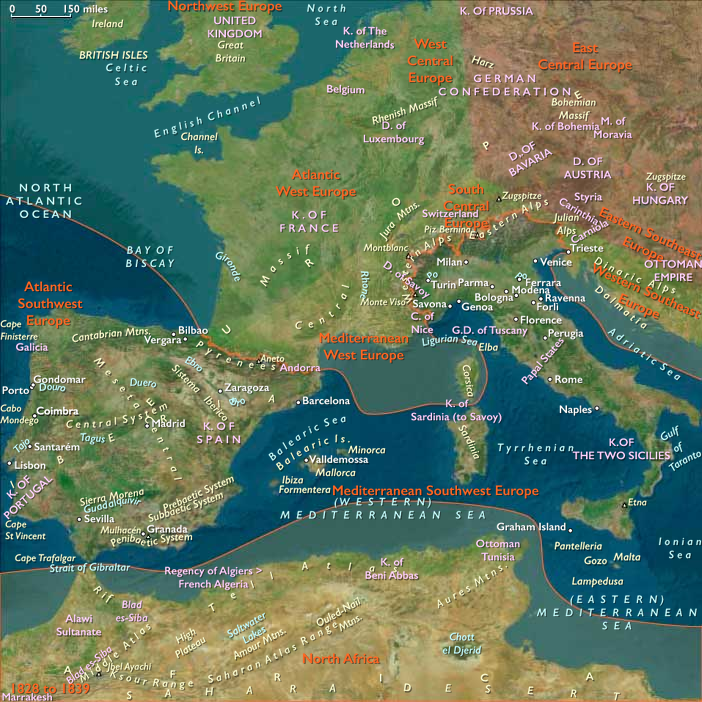
Subregions
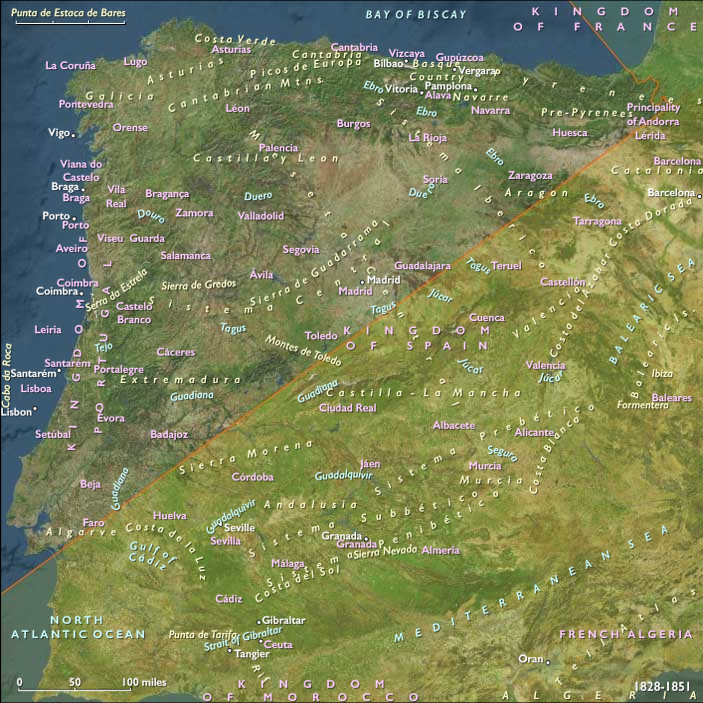
Years: 1828 - 1839
Locations
People
Groups
Topics
Subjects
Regions
Subregions