
The building of the Polish state continues …
Years: 964 - 1107
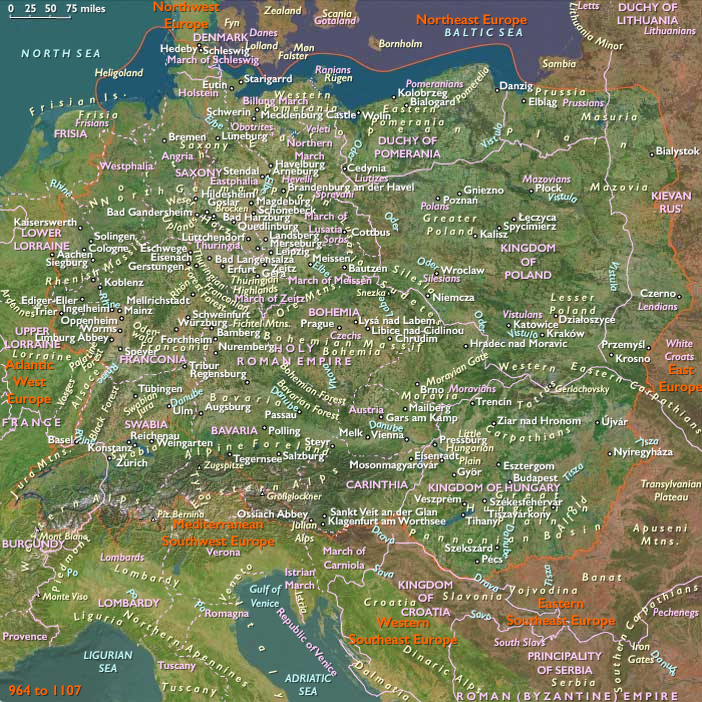
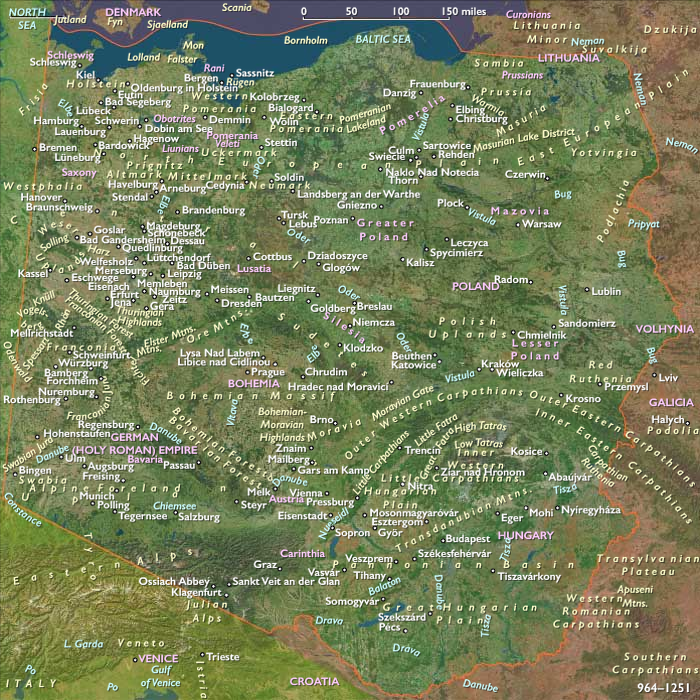
The building of the Polish state continues during the eleventh century and the first half of the twelfth century under a series of successors to Boleslaw I, but by 1150, the state will be divided among the sons of Boleslaw III, beginning two centuries of fragmentation that will bring Poland to the brink of dissolution.
The most fabled event of the period is the murder in 1079 of Stanislaw, the bishop of Krakow.
A participant in uprisings by the aristocracy against King Boleslaw II, Stanislaw is killed by order of the king.
This incident, which leads to open rebellion and ends the reign of Boleslaw, is a Polish counterpart to the later, more famous assassination of Thomas á Becket on behalf of King Henry II of England.
Although historians still debate the circumstances of the death, after his canonization the martyred St. Stanislaw will enter national lore as a potent symbol of resistance to illegitimate state authority—an allegorical weapon that will prove especially effective against the communist regime in the post-Second World War era.
Locations
People
Groups
- Germans
- Papal States (Republic of St. Peter)
- Kievan Rus', or Kiev, Great Principality of
- Germany, Kingdom of (within the Holy Roman Empire)
- German, or Ottonian (Roman) Empire
- Poland, Principality of
- Poles (West Slavs)
- Czechs [formerly Bohemians] (West Slavs)
- Slovaks (West Slavs)
- Poland of the first Piasts, Kingdom of
- Poland of the first Piasts, Kingdom of
- Christians, Roman Catholic
Topics
Subjects
Regions
Subregions
Years: 964 - 1107
Locations
People
Groups
- Germans
- Papal States (Republic of St. Peter)
- Kievan Rus', or Kiev, Great Principality of
- Germany, Kingdom of (within the Holy Roman Empire)
- German, or Ottonian (Roman) Empire
- Poland, Principality of
- Poles (West Slavs)
- Czechs [formerly Bohemians] (West Slavs)
- Slovaks (West Slavs)
- Poland of the first Piasts, Kingdom of
- Poland of the first Piasts, Kingdom of
- Christians, Roman Catholic
Topics
Subjects
Regions
Subregions