
Middle Africa (2008–2019 CE): Conflict Resolution, Persistent …
Years: 2008 - 2019
Middle Africa (2008–2019 CE): Conflict Resolution, Persistent Instability, and Democratic Challenges
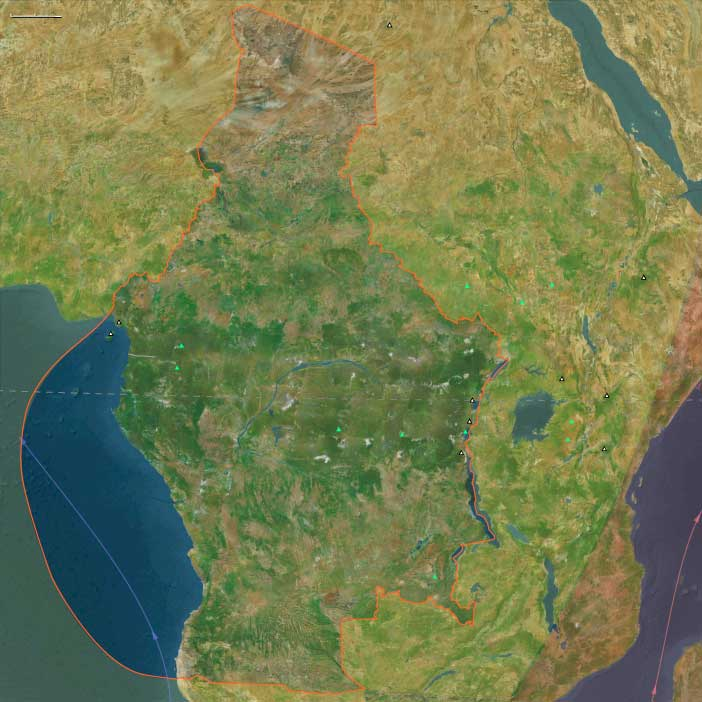
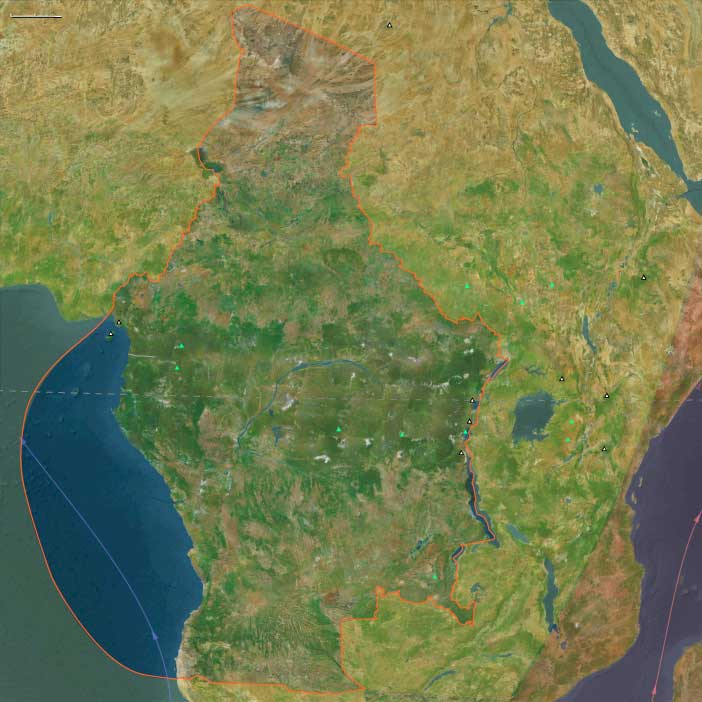
Between 2008 and 2019 CE, Middle Africa—comprising Chad, Cameroon, the Central African Republic, Equatorial Guinea, São Tomé and Príncipe, Gabon, the Republic of the Congo, the Democratic Republic of the Congo (DRC), and Angola (including its Cabinda enclave)—experiences periods of significant conflict resolution alongside persistent instability, democratic struggles, and economic challenges.
Chad and Sudan: Restoring Peace after Prolonged Conflict
An agreement for the restoration of harmony between Chad and Sudan, signed on January 15, 2010, marks the end of a destructive five-year war. The conflict, largely driven by mutual accusations of supporting rebel groups, had deeply destabilized eastern Chad and western Sudan, fueling regional insecurity and humanitarian crises. Following the accord, cross-border tensions ease significantly, and diplomatic relations gradually improve.
Central African Republic: Ongoing Crisis and International Intervention
The Central African Republic (CAR) endures ongoing instability and violence throughout this period. After years of intermittent violence and governmental fragility, a significant escalation occurs in 2012, with the outbreak of the civil war involving predominantly Muslim Séléka rebels and largely Christian Anti-Balaka militias. The conflict triggers a severe humanitarian crisis, prompting international peacekeeping missions under the auspices of the United Nations (MINUSCA) and France’s Operation Sangaris.
Despite the 2016 election of Faustin-Archange Touadéra, persistent clashes and widespread displacement continue to destabilize the nation, reflecting deep-rooted communal divisions and governance failures.
Democratic Republic of the Congo: Persistent Conflict and Political Uncertainty
The Democratic Republic of the Congo (DRC) faces continuous political and security turmoil. President Joseph Kabila, in power since 2001, delays elections originally scheduled for 2016, sparking significant political unrest, protests, and violence. Pressure from domestic and international actors ultimately leads to a tense election in December 2018, resulting in the contested victory of opposition leader Félix Tshisekedi, inaugurating the country's first peaceful transition of power.
Nevertheless, ongoing violence persists in the country's eastern provinces, notably involving armed militias, ethnic conflicts, and a prolonged Ebola outbreak starting in 2018, creating significant humanitarian and security challenges.
Cameroon: Anglophone Crisis and Humanitarian Concerns
In Cameroon, long-standing grievances in the English-speaking Northwest and Southwest regions erupt into a full-scale insurgency beginning in 2016, known as the Anglophone Crisis. Separatist militias advocating for the independence of "Ambazonia" clash with government forces, resulting in widespread displacement, human rights abuses, and a severe humanitarian emergency.
President Paul Biya, in office since 1982, continues to rule amid accusations of authoritarianism, electoral manipulation, and human rights violations, further complicating Cameroon’s internal stability and relations with international partners.
Angola: Political Transition and Economic Challenges
In Angola, José Eduardo dos Santos ends nearly four decades in power in 2017, succeeded by João Lourenço, who initiates a significant anti-corruption campaign targeting figures linked to the former regime, including dos Santos’s family. Lourenço seeks to diversify Angola’s economy, traditionally dependent on oil revenues, while navigating significant economic downturns exacerbated by falling oil prices and endemic corruption.
Equatorial Guinea and Gabon: Persistent Autocracy and Limited Reform
Equatorial Guinea, under long-time ruler Teodoro Obiang Nguema Mbasogo, and Gabon, led by the Bongo family since 1967 (with Ali Bongo Ondimba succeeding his father Omar in 2009), both continue to face criticism for authoritarian governance, limited political freedom, and widespread corruption. Gabon experiences a brief attempted coup in 2019, underscoring mounting domestic frustrations and political tensions despite its comparative stability.
São Tomé and Príncipe and Republic of the Congo: Political Stability amid Economic Fragility
São Tomé and Príncipe, despite political stability and democratic elections, continues to struggle economically, heavily reliant on foreign aid and vulnerable to fluctuations in international markets. The Republic of the Congo faces persistent economic and governance challenges, with President Denis Sassou Nguesso maintaining tight political control amid accusations of electoral irregularities and limited democratic freedoms.
Regional Integration Efforts and Future Prospects
Throughout this era, Middle Africa confronts significant internal and cross-border challenges. While some nations, like Chad and Angola, demonstrate cautious progress toward stability and reform, others, such as CAR, Cameroon, and the DRC, remain embroiled in deep-seated conflicts. Persistent governance issues, combined with humanitarian crises and uneven economic development, highlight the complexities facing this diverse region, underscoring the ongoing need for strengthened regional cooperation, effective governance, and sustainable development policies.
People
- Ali Bongo
- Denis Sassou Nguesso
- Faustin-Archange Touadéra
- François Bozizé
- Félix Tshisekedi
- Joseph Kabila
- José Eduardo dos Santos
- João Lourenço
- Omar Bongo
- Paul Biya
- Teodoro Obiang Nguema Mbasogo
Groups
- United States of America (US, USA) (Washington DC)
- Belgium, Kingdom of
- Cuba
- South Africa, Union of (British Dominion)
- Union of Soviet Socialist Republics (USSR), or Soviet Union
- Portugal, (Second) Republic of
- Britain (United Kingdom of Great Britain and Northern Ireland)
- United Nations, The (U.N.)
- FNLA (National Liberation Front of Angola)
- Sudan, Republic of The
- MPLA (People's Movement for the Liberation of Angola)
- France (French republic); the Fifth Republic
- Chad, Republic of
- Central African Republic
- Cameroon, Republic of
- Congo, Democratic Republic of the
- UNITA (National Union for the Total Independence of Angola)
- Equatorial Guinea, Republic of
- Zaire, Republic of
- Angola, Republic of
- São Tomé and Principe, Democratic Republic of
Topics
Subjects
Regions
Subregions
Years: 2008 - 2019
People
- Ali Bongo
- Denis Sassou Nguesso
- Faustin-Archange Touadéra
- François Bozizé
- Félix Tshisekedi
- Joseph Kabila
- José Eduardo dos Santos
- João Lourenço
- Omar Bongo
- Paul Biya
- Teodoro Obiang Nguema Mbasogo
Groups
- United States of America (US, USA) (Washington DC)
- Belgium, Kingdom of
- Cuba
- South Africa, Union of (British Dominion)
- Union of Soviet Socialist Republics (USSR), or Soviet Union
- Portugal, (Second) Republic of
- Britain (United Kingdom of Great Britain and Northern Ireland)
- United Nations, The (U.N.)
- FNLA (National Liberation Front of Angola)
- Sudan, Republic of The
- MPLA (People's Movement for the Liberation of Angola)
- France (French republic); the Fifth Republic
- Chad, Republic of
- Central African Republic
- Cameroon, Republic of
- Congo, Democratic Republic of the
- UNITA (National Union for the Total Independence of Angola)
- Equatorial Guinea, Republic of
- Zaire, Republic of
- Angola, Republic of
- São Tomé and Principe, Democratic Republic of
Topics
Subjects
Regions
Subregions