
Middle Africa (1996–2007 CE): Regional Instability, Cross-border …
Years: 1996 - 2007
Middle Africa (1996–2007 CE): Regional Instability, Cross-border Conflict, and Humanitarian Crisis
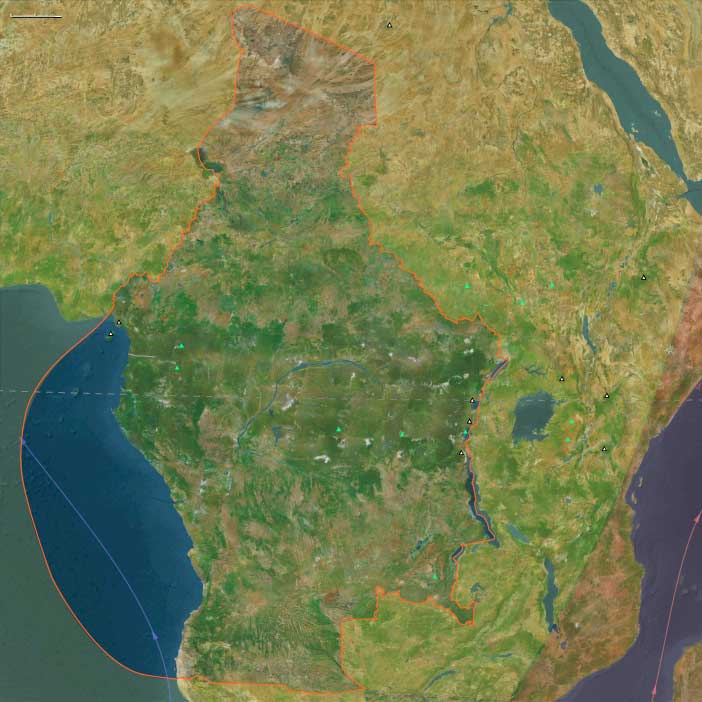
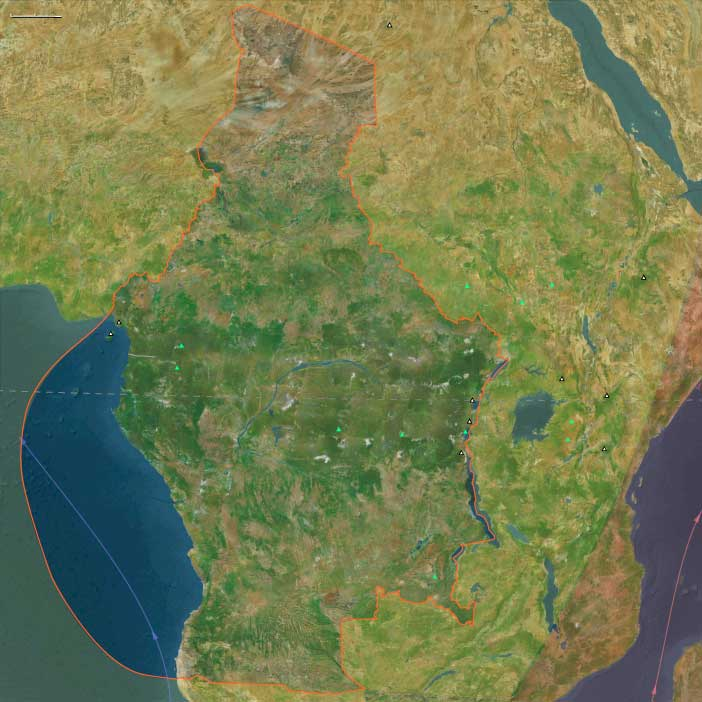
Between 1996 and 2007 CE, Middle Africa—comprising modern-day Chad, Cameroon, Central African Republic, Equatorial Guinea, São Tomé and Príncipe, Gabon, Republic of the Congo, Democratic Republic of the Congo, and Angola (including its Cabinda enclave)—is marked by intense regional instability, renewed warfare, and significant humanitarian crises. The period witnesses the escalation of cross-border conflicts, especially between Chad and Sudan, internal political upheavals, and ongoing challenges to post-conflict reconstruction.
Chad and the Chadian-Sudanese Conflict
The most prominent conflict during this era is the Chadian-Sudanese conflict, officially beginning on December 23, 2004. The government of Chad, under President Idriss Déby, declares a state of war against Sudan, mobilizing the Chadian population against the Rally for Democracy and Liberty (RDL) militants—Chadian rebels who are receiving substantial backing from the Sudanese government—and Sudanese militiamen. These armed groups launch devastating attacks on villages and towns across eastern Chad, stealing cattle, murdering civilians, and burning homes, causing severe humanitarian emergencies and widespread displacement.
The crisis in Chad is closely intertwined with the Darfur conflict in Sudan, as rebel groups and militias frequently cross the porous border, intensifying insecurity in both nations and prompting international intervention efforts.
Democratic Republic of the Congo: Continued Turmoil and the Second Congo War
In the Democratic Republic of the Congo, the late 1990s and early 2000s witness catastrophic violence during the Second Congo War (1998–2003), sometimes referred to as Africa’s World War, involving multiple African nations, rebel factions, and local militias. The war leaves millions dead through combat, disease, and starvation, while deeply destabilizing the region. Although a formal peace agreement—the Sun City Agreement—is signed in 2002, violence continues, particularly in eastern Congo, where militias vie for control of mineral-rich territories, fueling further conflict and humanitarian distress.
Angola: End of Civil War and Reconstruction Efforts
In Angola, a turning point occurs with the death of UNITA leader Jonas Savimbi in 2002, which finally brings an end to the country's decades-long civil war. Subsequently, Angola embarks on a slow and arduous reconstruction process, funded significantly by oil revenues, but corruption and uneven development remain substantial obstacles.
Central African Republic: Instability and Military Coups
The Central African Republic continues to face political instability and military unrest, punctuated by frequent coups and rebellions. President Ange-Félix Patassé is ousted by General François Bozizé in a military coup in 2003, continuing a cycle of political instability and armed violence that exacerbates humanitarian crises and stifles economic recovery.
Equatorial Guinea and Gabon: Resource Wealth Amid Political Repression
In Equatorial Guinea, the discovery and extraction of significant oil reserves dramatically increases the nation's wealth during this period, but President Teodoro Obiang Nguema Mbasogo maintains strict authoritarian control, fostering corruption and profound inequality. Similarly, in Gabon, President Omar Bongo consolidates his long-standing regime through oil revenues and patronage, stifling meaningful democratic progress despite rising international scrutiny.
Cameroon and São Tomé and Príncipe: Stability and Political Continuity
Cameroon under President Paul Biya maintains relative stability, though persistent ethnic tensions and economic challenges continue to simmer beneath the surface. Meanwhile, São Tomé and Príncipe preserves its democratic framework, despite experiencing frequent political turnovers and difficulties arising from economic dependency on external aid.
Republic of the Congo: Fragile Peace and Post-Conflict Challenges
The Republic of the Congo experiences fragile peace following earlier civil wars in the late 1990s and early 2000s, yet political tension remains high, with President Denis Sassou Nguesso navigating delicate post-conflict politics and reconstruction. Economic difficulties, corruption, and governance challenges undermine progress and fuel ongoing instability.
By 2007, Middle Africa remains vulnerable, with fragile political institutions, ongoing conflicts, and humanitarian emergencies continuing to undermine regional stability. The interconnectedness of cross-border conflicts, particularly between Chad and Sudan, highlights the complexity of achieving lasting peace in this troubled region.
People
- Ange-Félix Patassé
- Denis Sassou Nguesso
- François Bozizé
- Idriss Déby
- Jonas Savimbi
- Omar Bongo
- Paul Biya
- Teodoro Obiang Nguema Mbasogo
Groups
- United States of America (US, USA) (Washington DC)
- Belgium, Kingdom of
- Cuba
- South Africa, Union of (British Dominion)
- Union of Soviet Socialist Republics (USSR), or Soviet Union
- Portugal, (Second) Republic of
- Britain (United Kingdom of Great Britain and Northern Ireland)
- FNLA (National Liberation Front of Angola)
- Sudan, Republic of The
- MPLA (People's Movement for the Liberation of Angola)
- France (French republic); the Fifth Republic
- Cameroon, Republic of
- Chad, Republic of
- Central African Republic
- Congo, Democratic Republic of the
- UNITA (National Union for the Total Independence of Angola)
- Equatorial Guinea, Republic of
- Zaire, Republic of
- São Tomé and Principe, Democratic Republic of
- Angola, Republic of
Topics
Subjects
Regions
Subregions
Years: 1996 - 2007
People
- Ange-Félix Patassé
- Denis Sassou Nguesso
- François Bozizé
- Idriss Déby
- Jonas Savimbi
- Omar Bongo
- Paul Biya
- Teodoro Obiang Nguema Mbasogo
Groups
- United States of America (US, USA) (Washington DC)
- Belgium, Kingdom of
- Cuba
- South Africa, Union of (British Dominion)
- Union of Soviet Socialist Republics (USSR), or Soviet Union
- Portugal, (Second) Republic of
- Britain (United Kingdom of Great Britain and Northern Ireland)
- FNLA (National Liberation Front of Angola)
- Sudan, Republic of The
- MPLA (People's Movement for the Liberation of Angola)
- France (French republic); the Fifth Republic
- Cameroon, Republic of
- Chad, Republic of
- Central African Republic
- Congo, Democratic Republic of the
- UNITA (National Union for the Total Independence of Angola)
- Equatorial Guinea, Republic of
- Zaire, Republic of
- São Tomé and Principe, Democratic Republic of
- Angola, Republic of
Topics
Subjects
Regions
Subregions