
Filters:
The Emergence of Black Letter Script (c. …
Years: 1144 - 1155
The Emergence of Black Letter Script (c. 1150 CE)
Around 1150 CE, a new style of writing known as Black Letter (also called Gothic script or Textura) emerged in northern Europe. This small, highly condensed script was characterized by dense, angular, and tightly spaced letters, giving an entire page a distinctly dark, textured appearance, which led to its name.
Characteristics of Black Letter Script
-
Condensed Letterforms
- The letters were narrow and compact, reducing the amount of parchment or vellum needed.
- Vertical strokes (minims) were elongated, while rounded letters were sharply angular, creating a dense, rigid texture.
-
Heavy, Dark Appearance
- The thick strokes and tight spacing made the script appear almost black when viewed as a whole.
- This made it easier to fit more text on a page, helping to conserve expensive manuscript materials.
-
Legibility and Ornamentation
- While highly decorative, Black Letter was not as easy to read as earlier Carolingian minuscule.
- Some versions incorporated flourishes and elaborate ligatures, making the text even more ornate.
Origins and Spread
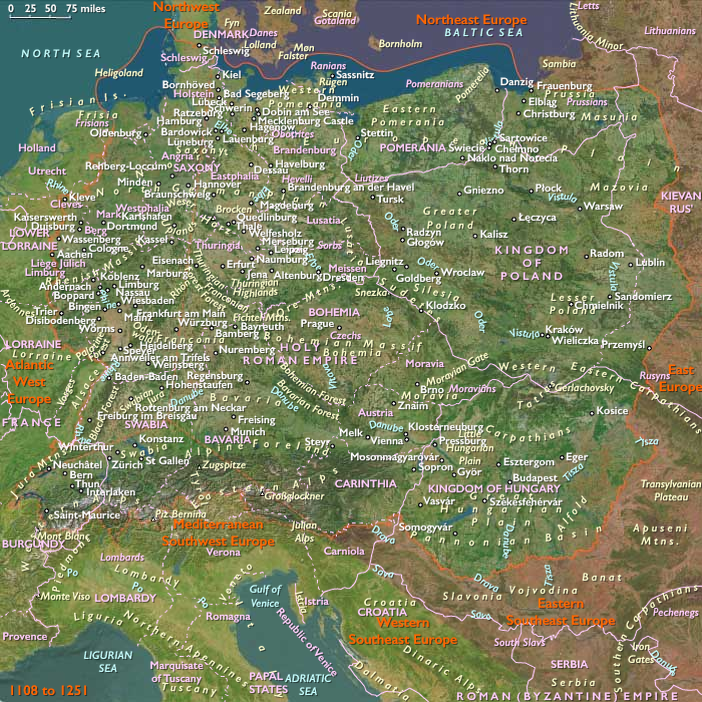
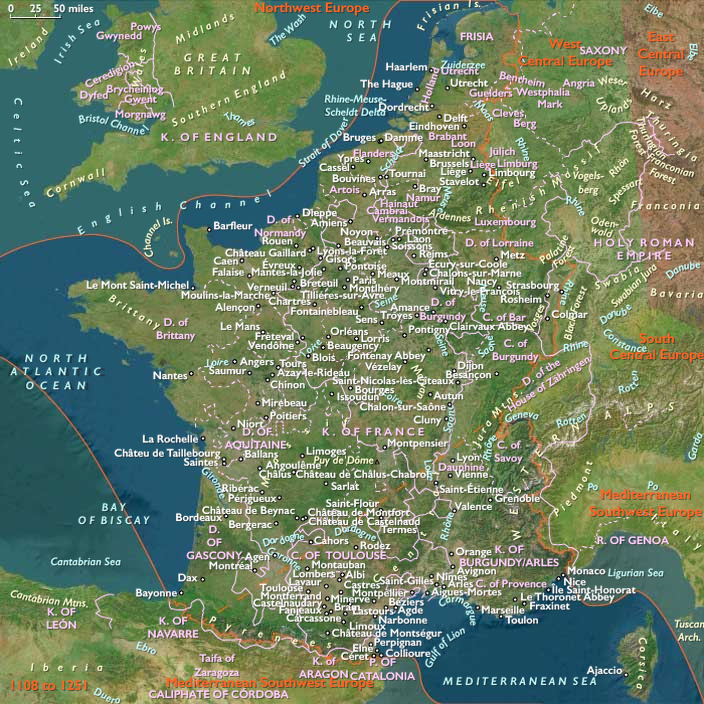
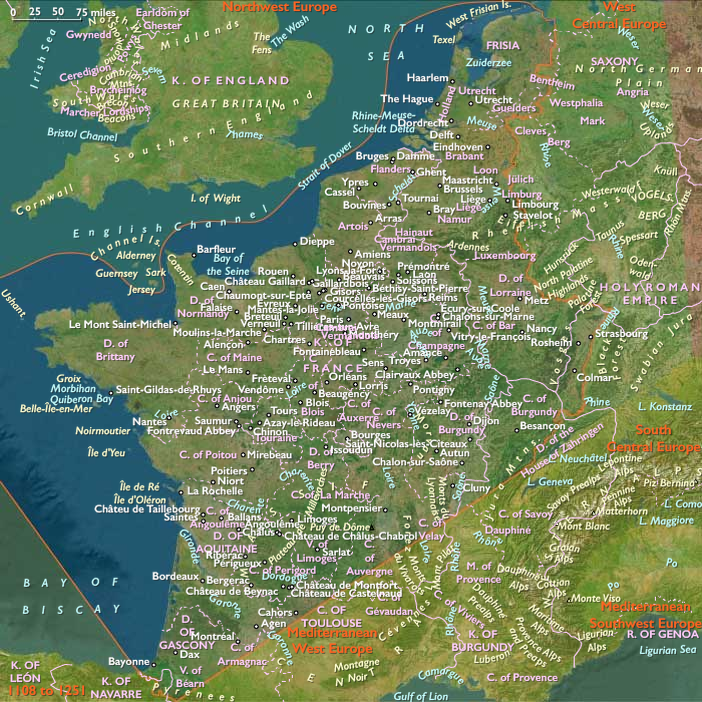
- The script first developed in monastic scriptoria in France and the Low Countries before spreading to England, Germany, and Italy.
- It replaced Carolingian minuscule as the dominant script for religious and legal texts.
- By the 13th and 14th centuries, Black Letter became the standard for medieval manuscripts, particularly Bibles, liturgical books, and legal documents.
Legacy of Black Letter
- The script became the foundation of early printing typefaces, as Johannes Gutenberg used a Black Letter type for the first printed Bible (c. 1455).
- It remained in use in Germany well into the 17th and 18th centuries, influencing Fraktur typefaces.
- Today, Black Letter is associated with medieval calligraphy, Gothic aesthetics, and traditional printing styles.
The emergence of Black Letter in 1150 CE marked a significant shift in medieval script traditions, reflecting both artistic refinement and practical necessity in manuscript production.
Topics
Subjects
Regions
Subregions
Years: 1144 - 1155
Topics
Subjects
Regions
Subregions