
Michael begins to reestablish domestic order in …
Years: 1617 - 1617
February
Michael begins to reestablish domestic order in Russia and seeks peace with Sweden.
After nearly two months of negotiations, representatives from Sweden and Russia meet on February 27, 1617, at the village of Stolbovo (now derelict), south of Lake Ladoga.
Sweden had from the outset entered into negotiations with very high ambitions, with the hopes of fulfilling the old dream of making all Russian trade pass through Swedish territory.
As a consequence of this ambition, the Swedes had originally demanded far-reaching territorial gains into western Russia, including the important northern port of Arkhangelsk.
At this point, however, James I of England had sent a delegation to mediate, as did the Dutch, mostly to make sure Arkhangelsk does not fall into Swedish hands, which would make the extensive trade between Western Europe and Russia far more difficult.
Arkhangelsk does not change hands in the resulting treaty, partly because of the Dutch and English efforts, but mostly because Russia finally has managed to unite under one tsar.
As word reaches Russia that the Swedish war against Poland might soon be over, the Russians are quick to get negotiations going for real —knowing that they cannot afford Sweden's renewal of the war effort on just one front.
In the resulting peace treaty, the Russian tsar and the Swedish king agree to the following terms:
• Sweden gains the province and fortress of Kexholm (Käkisalmi) (now Priozersk) and the province of Ingria
—including the fortress of Nöteborg, known as "the key to Finland" (now Shlisselburg, Russia)
• Members of the upper classes in these conquered areas are allowed to migrate within fourteen days, if they wish to, a right not granted to regular priests and farmers
• Russia renounces all claims to Estonia and Livonia
• Russia will pay Sweden war indemnities of twenty thousand rubles
• Novgorod and other Swedish territorial gains during the war will be returned to Russia
• Sweden has the right to keep all spoils of war collected before November 20, 1616
• The Russian city of Gdov is to remain in Swedish hands until the peace has been confirmed and the borders fully established
• Sweden recognizes Michael Romanov as the rightful tsar of Russia, putting an end to further Swedish claims in Russia
• Russia is allowed free trade at normal trade tariffs, making sure Sweden cannot cripple Russia completely
• Russia is allowed to establish merchant houses in Stockholm, Reval (Tallinn) and Vyborg in exchange for Sweden being allowed to establish merchant houses in Novgorod, Pskov, and Moscow.
Gustavus Adolphus is known to have said about this treaty, which granted Sweden natural borders to Russia, partly in the form of Lake Ladoga and Lake Peipus: jag hoppas att det skall bliva svårt för ryssen att hoppa över den bäcken — "I hope it will be hard for the Russians to jump across that creek".
England is officially credited with brokering this peace, through their mediator John Mericke, though the Dutch efforts are also of great importance.
After the war, the leader of the Dutch delegation, Reinoud van Brederode, is granted the title Baron and given the barony of Wesenberg (Rakvere) in Estonia by Gustavus Adolphus.
Russia will manage to gain back the lost territories as well as to acquire further Swedish lands in the Great Northern War of 1700-1721, putting an end to the Swedish status of a great regional power.
Locations
People
Groups
- Sweden, (second) Kingdom of
- Russia, Tsardom of
- Polish-Lithuanian Commonwealth (Commonwealth of the Two Nations)
- Netherlands, United Provinces of the (Dutch Republic)
- England, (Stuart) Kingdom of
Topics
Commodoties
Subjects
Regions
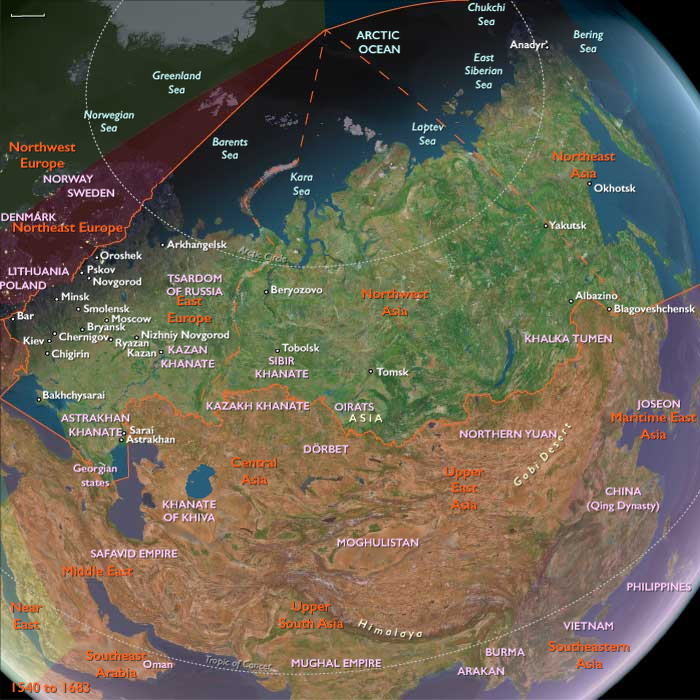
Subregions
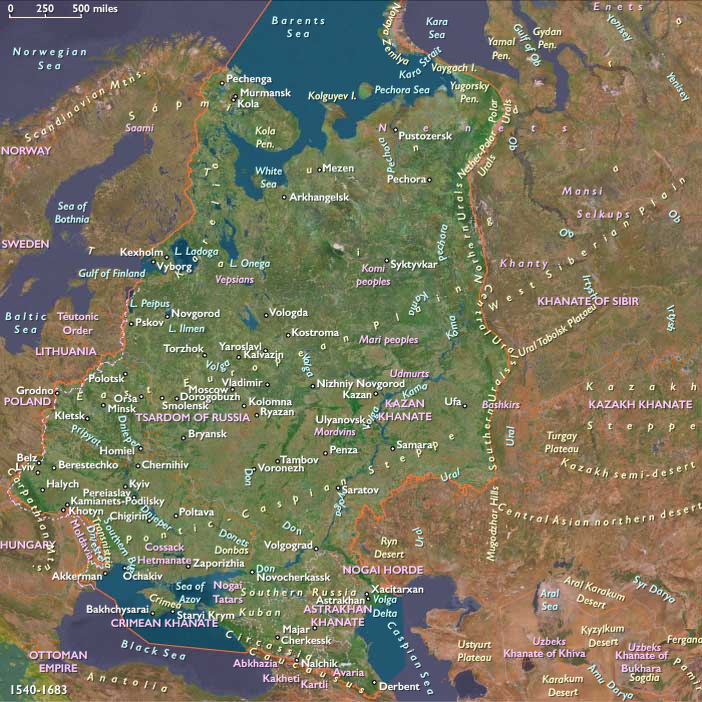
Related Events
Showing 10 events out of 33109 total
Years: 1617 - 1617
February
Locations
People
Groups
- Sweden, (second) Kingdom of
- Russia, Tsardom of
- Polish-Lithuanian Commonwealth (Commonwealth of the Two Nations)
- Netherlands, United Provinces of the (Dutch Republic)
- England, (Stuart) Kingdom of
Topics
Commodoties
Subjects
Regions
Subregions