
The situation in Lithuania becomes inflamed again …
Years: 1700 - 1700
February
The situation in Lithuania becomes inflamed again in early 1700 when an anti-Sapieha noble, Sebastian Cedrowski, fires a pistol at the carriage of Hetman Sapieha in February.
Karol Radziwill is chosen soon after, as the Marshall of the 1700 Lithuanian Tribunal, which the Sapiehas take as a personal affront.
Members of the Sapieha family had gained control of many offices of the Grand Duchy of Lithuania in the late seventeenth century; in 1700, Jan Kazimierz Sapieha the Younger is the Lithuanian Grand Hetman, Aleksander Paweł Sapieha the Lithuanian Grand Marshal and Benedykt Paweł Sapieha, the Lithuanian Deputy Treasurer (podskarbi).
The Sapieha family has much influence at the royal court, and is able to issue and execute decrees damaging the other families.
This has led to the formation of anti-Sapieha coalition among the lesser magnates and the common nobles (szlachta).
Jan Kazimierz Sapieha, instead of paying his soldiers their wages in 1694, had quartered them in the estates of the Bishop of Wilno, Brzostowski, who had excommunicated him in response.
The Sapiehas in 1697 had supported François Louis, Prince of Conti, for the Polish throne while most of the Lithuanian nobility and the Oginski family had supported Augustus II the Strong.
The Oginskis, together with the Kociell family, had convinced the nobility to rebel against the Sapiehas, but their forces had been defeated in the battles of Brzesc and Jurbork.
A compromise had been signed in Warsaw but none of the parties are satisfied with it, which had been Augustus' intention.
Further rebellions occur, ended by a treaty signed at Puzenice and the presence of Saxon troops in the Grand Duchy.
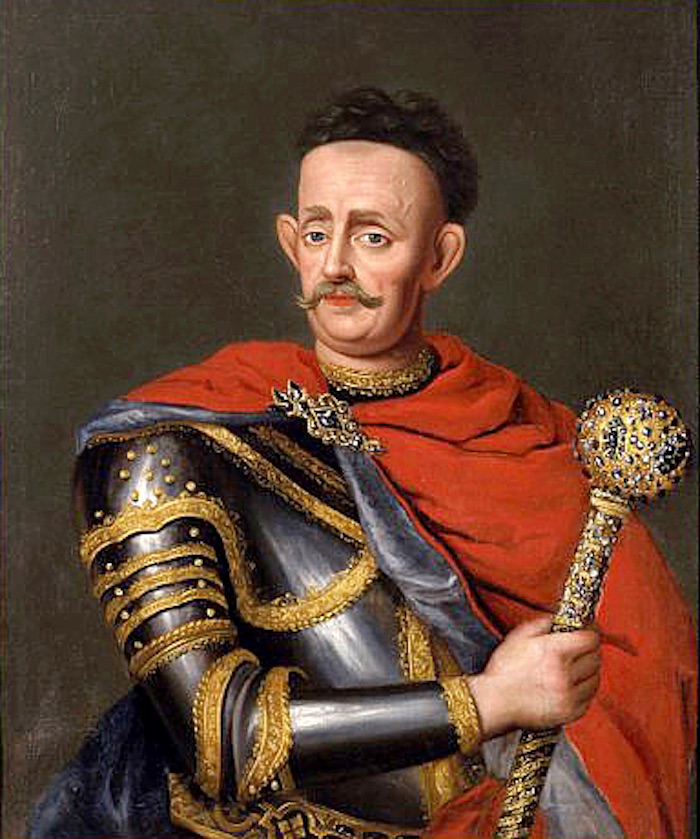
Jan Kazimierz Sapieha the Younger , anonymous painting
Locations
People
- Augustus II the Strong
- Charles XII of Sweden
- François Louis, Prince de Conti
- Jan Kazimierz Sapieha the Younger
- Peter the Great
Groups
- Saxony, Electorate of
- Sweden, (second) Kingdom of
- Russia, Tsardom of
- Swedish Empire
- Polish-Lithuanian Commonwealth (Commonwealth of the Two Nations)
Topics
Subjects
Regions
Subregions
Related Events
Showing 10 events out of 28916 total
Years: 1700 - 1700
February
Jan Kazimierz Sapieha the Younger , anonymous painting
Locations
People
- Augustus II the Strong
- Charles XII of Sweden
- François Louis, Prince de Conti
- Jan Kazimierz Sapieha the Younger
- Peter the Great
Groups
- Saxony, Electorate of
- Sweden, (second) Kingdom of
- Russia, Tsardom of
- Swedish Empire
- Polish-Lithuanian Commonwealth (Commonwealth of the Two Nations)
Topics
Subjects
Regions
Subregions