
…Meissen, including …
Years: 1007 - 1007
…Meissen, including …
Locations
People
Groups
- Polytheism (“paganism”)
- Prussians, Old, or Baltic (Western Balts)
- Hungarian people
- Polabian Slavs (West Slavs)
- Christianity, Chalcedonian
- Papal States (Republic of St. Peter)
- Lusatia, Margraviate of
- German, or Ottonian (Roman) Empire
- Poland, Principality of
- Lutici (West Slavic Polabian tribe)
- Poles (West Slavs)
- Meissen, March of
- Magdeburg, Archbishopric of
- Hungary, Kingdom of
Topics
Commodoties
Subjects
Regions
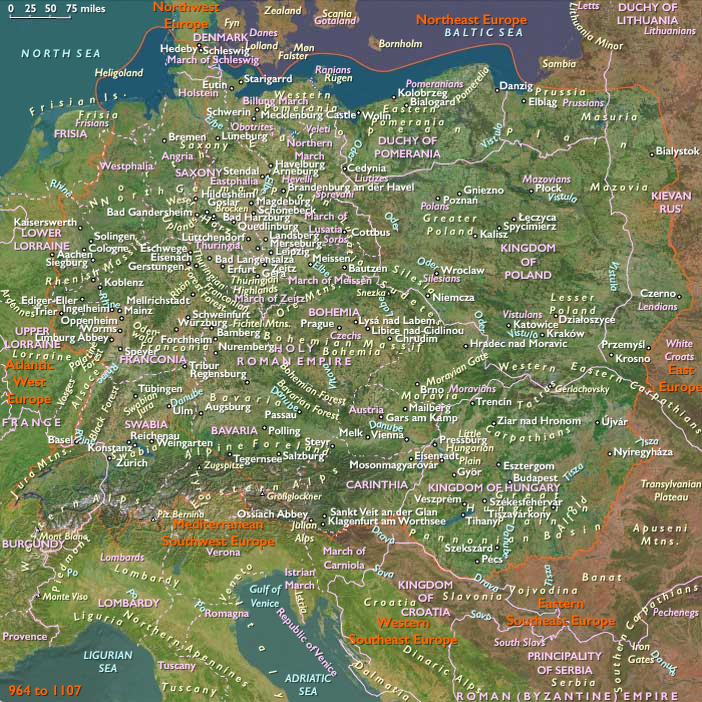
Subregions
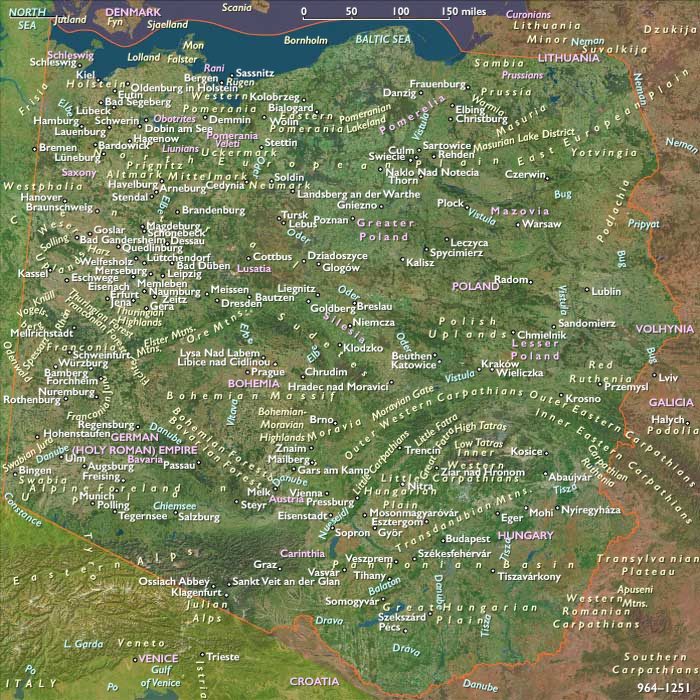
Related Events
Filter results
Showing 10 events out of 36 total
Greatest artists like Leonardo da Vinci, Brunelleschi, Botticelli, Michelangelo, Giotto, Donatello, Titian and Raphael produce inspired works—their paintwork is more realistic-looking than had been created by Medieval artists and their marble statues rival and sometimes surpass those of Classical Antiquity.
Humanist historian Leonardo Bruni also splits the history in the antiquity, Middle Ages and modern period.
The ideas and ideals of the Renaissance soon spread into Northern Europe, France, England and much of Europe.
In the meantime, the discovery of the Americas, the new routes to Asia discovered by the Portuguese and the rise of the Ottoman Empire, all factors that erode the traditional Italian dominance in trade with the East, cause a long economic decline in the peninsula.
Atlantic Southwest Europe (1396–1539 CE): Estuaries, Shipyards, and the First Oceanic Empires
Geographic & Environmental Context
The subregion of Atlantic Southwest Europe includes continental Portugal and Spain’s Atlantic façade from the Gulf of Cádiz to the Bay of Biscay—the Tagus, Sado, Mondego, Douro, and Minho estuaries; Portugal’s Alentejo and Algarve coasts; Spain’s Guadalquivir–Cádiz seaboard; and the Cantabrian–Galician rías (A Coruña, Vigo, Gijón, Santander) and Basque capes (Bilbao–San Sebastián). These shorelines and river corridors bound maritime towns to grain-and-vine interiors and iron-rich uplands.
Climate & Environmental Shifts
The Little Ice Age brought cooler winters, stormier seas, and variable rains:
-
Iberian west & south coasts: more frequent Atlantic gales and bar shifts at estuary mouths (Douro, Tagus, Guadalquivir), alternately silting and scouring channels.
-
Northwest (Galicia–Asturias–Cantabria): heavy rainfall and rough seas; rich upwelling sustained fisheries.
-
Interior hinterlands: periodic droughts hit Alentejo and Andalusian cereal zones; frosts checked vines and olives in bad years; good years yielded ample wheat, wine, and oil.
Subsistence & Settlement
-
Rural belts: Wheat, rye, barley, olives, and vines; cork oak montado in Alentejo; gardens and orchards along river terraces.
-
Fisheries: Sardine and tunny on the Portuguese and Andalusian shelves; cod and whale began to matter for Basque fleets in the early 16th century. Saltworks (Aveiro, Setúbal, Cádiz) underwrote fish preservation and trade.
-
Ports & river towns: Lisbon (Tagus) and Porto (Douro); Seville and Cádiz (Guadalquivir–Cádiz); A Coruña–Vigo (rías), Santander, Bilbao and San Sebastián on the Bay of Biscay; Viana do Castelo, Figueira da Foz, Setúbal along Portugal’s coast. Urban workshops produced sails, rope, barrels, and victuals for ocean-going fleets.
Technology & Material Culture
-
Shipbuilding & navigation: The caravel (lateen rig, shoal-draft) matured on Portugal’s south coast; rounder naos carried freight across oceans. Magnetic compass, sternpost rudder, astrolabe, cross-staff, portolan charts, and toleta de marteloio tables improved blue-water navigation.
-
Maritime institutions: In Portugal, the Order of Christ’s revenues (successor to the Templars) and the crown’s Casa da Guiné and later Casa da Índia in Lisbon centralized Atlantic/Indian trade. Basque iron and timber supported Biscayan yards.
-
Urban & courtly arts: Manueline architecture (rope, coral, armillary motifs) crowned Lisbon/Belém; Mudéjar–Plateresque blended in Andalusia; guild crafts (textiles, leather, ceramics) supplied ships and cities.
Movement & Interaction Corridors
-
Estuary arteries: The Tagus, Douro, and Guadalquivir funneled grain, wine, oil, salt fish, and hides from interior plains to oceanic convoys; return flows brought spices, gold, and slaves by the early 1500s.
-
Atlantic lanes: Portugal’s Volta do Mar looped down the African coast and home via mid-ocean westerlies; Andalusian–Cantabrian coasting linked Biscay iron and salt fish to southern shipyards and markets.
-
Pilgrimage & fairs: Santiago de Compostela drew pilgrims through Galician ports; Lisbon and Seville fairs knit merchants from Italy, Flanders, and the Maghreb.
-
Imperial routes (first phase): After 1498, spice fleets sailed India–Lisbon; after 1492, Castilian fleets used the Guadalquivir–Seville corridor to the Caribbean.
Cultural & Symbolic Expressions
-
Religious life: Cathedrals and confraternities structured urban devotion; seafarers’ brotherhoods honored Our Lady of Good Voyage; shrines dotted headlands and capes (e.g., Cape St. Vincent).
-
Court and chronicle: Portuguese chronicles (Gomes Eanes de Zurara) celebrated exploration; Iberian courts patronized cartography and cosmography.
-
Communal identities: Fisher guilds, ship carpenters, ropewalkers, coopers, and salt-pan communities developed strong customs and saints’ days; Basque whalers forged distinctive sea rituals.
Environmental Adaptation & Resilience
-
Risk-spreading portfolios: Mixed farming (cereal–vine–olive), stock-raising, and salt-fish curing buffered bad harvests; riverine mills and terraces stabilized yields.
-
Harbor works: Jetties and dredging (Lisbon, Porto, Seville) fought bar siltation; salt granaries and fish warehouses bridged lean seasons.
-
Maritime provisioning: Biscayan and Portuguese fleets salted fish and whale meat; victualing yards stockpiled biscuit, wine, oil, and salted pork for oceanic voyages.
Technology & Power Shifts (Conflict Dynamics)
-
Iberian realignments: The Conquest of Ceuta (1415) opened Portugal’s North African gateway and Atlantic thrust; the War of the Castilian Succession (1475–1479)—including the Battle of Toro (1476)—ended with the Treaty of Alcáçovas (1479), fixing early Atlantic spheres between Castile and Portugal. The Treaty of Tordesillas (1494) divided extra-European worlds meridionally.
-
Oceanic breakout: Vasco da Gama’s voyage (1497–1499) linked the Tagus to India; Pedro Álvares Cabral (1500) reached Brazil; Portugal’s Estado da Índia took shape after the Battle of Diu (1509) and the Capture of Malacca (1511), routing Eastern spices to Lisbon.
-
Castile’s Atlantic: From 1492, Columbus’s voyages (out of Palos/Cádiz) opened Caribbean routes; Seville’s Casa de la Contratación (from 1503) regulated fleets.
-
Privateering & defense: Biscay–Galician coasts armed against English, Breton, and Norman raiders; corsair warfare flickered in the Bay of Biscay and off the Algarve.
Transition
By 1539 CE, Atlantic Southwest Europe had transformed from a cluster of estuarine towns into the launchpad of two oceanic empires. Lisbon and Seville–Cádiz rose as global entrepôts; Biscayan and Galician ports provisioned fleets and pioneered whaling and Atlantic cod. Inland cereals, vines, and olives still fed the system, but caravel and nao had redrawn horizons—binding Iberian estuaries to Africa, Asia, and the Americas, and setting the stage for a sixteenth century of maritime hegemony and imperial rivalry.
Atlantic Southwest Europe (1396–1407 CE): Consolidation of Portuguese Independence, Castilian Governance Stability, and Navarrese Diplomatic Continuity
Between 1396 and 1407 CE, Atlantic Southwest Europe—including Galicia, northern and central Portugal, Asturias, Cantabria, and northern Spain south of the Franco-Spanish border (43.05548° N, 1.22924° W)—entered a period of consolidation, characterized by stable governance in Portugal under the House of Aviz, continued stability and administrative coherence in Castile under the Trastámara dynasty, and sustained diplomatic pragmatism in Navarre. This era decisively established the political and cultural foundations that would underpin subsequent Iberian developments throughout the 15th century.
Political and Military Developments
Portuguese Governance Consolidation under King John I
In Portugal, King John I (1385–1433 CE) decisively solidified the independence and legitimacy of the recently established Aviz dynasty following the critical victory at Aljubarrota (1385 CE). His effective governance emphasized administrative reforms, strong frontier security, and diplomatic stability, significantly enhancing Portuguese national identity and sovereignty. By 1407, Portugal was firmly positioned for future maritime expansion and exploration, particularly under the growing influence of his son, Prince Henry the Navigator.
Castilian Stability and Royal Authority under Henry III
Castile, governed by the youthful yet capable King Henry III "the Sufferer" (1390–1406 CE), sustained robust political stability, administrative reforms, and territorial coherence. Henry III decisively strengthened royal authority, reduced aristocratic infighting, and expanded diplomatic ties within Iberia and beyond, laying stable foundations for Castilian prosperity and regional identity in subsequent decades.
Following Henry III’s death in 1406, his son, the young King John II of Castile (1406–1454 CE), inherited a politically stable kingdom, although his minority triggered the beginnings of future internal tensions.
Navarrese Diplomatic Continuity under Charles III "the Noble"
Navarre, under the prudent and widely respected King Charles III "the Noble" (1387–1425 CE), decisively continued policies of diplomatic pragmatism and careful neutrality. His effective governance emphasized internal stability, economic prudence, and balanced diplomacy with Castile, Aragón, and France. Charles III’s policies significantly preserved Navarre’s territorial integrity, governance stability, and northern Iberian geopolitical coherence.
Economic Developments
Steady Agricultural Prosperity and Territorial Management
The region experienced stable agricultural productivity, supported by careful land management, diversified cultivation (grain, olives, vineyards, citrus fruits, almonds), livestock husbandry, artisanal production, and mining operations (notably gold and silver from Galicia and Asturias). These activities decisively reinforced rural economic resilience, demographic stability, and sustained prosperity.
Maritime Commerce and Trade Expansion
Portuguese maritime trade notably expanded through key ports such as Lisbon, Porto, Braga, and Coimbra, strengthening commercial networks with northern Europe (England, Flanders, Normandy, Brittany). Galicia, especially through ports such as A Coruña, maintained robust maritime trade, significantly reinforcing regional economic stability and international commercial links.
Pilgrimage Economy and Cultural Exchange
Pilgrimage activity toward Santiago de Compostela remained vibrant, sustaining significant regional economic vitality through hospitality industries, artisanal trade, infrastructure development, and cultural exchanges. This continued pilgrimage significantly reinforced Galicia’s economic resilience, cultural prominence, and international recognition.
Cultural and Religious Developments
Portuguese Cultural Flourishing and Intellectual Patronage
Under King John I, Portuguese intellectual and cultural life flourished significantly, driven by royal patronage and growing scholarly traditions. Educational institutions, literary production, and artistic initiatives significantly shaped Portuguese linguistic standardization, national identity, and intellectual heritage, laying foundations for future humanist influences.
Castilian Intellectual and Cultural Continuity
Castilian cultural and educational traditions remained robust, decisively reinforced by royal patronage during Henry III’s stable reign. Intellectual initiatives and religious institutions sustained literary production, educational advancement, and cultural continuity, shaping Castilian identity and laying early groundwork for future humanist developments.
Galician Cultural Resilience and Ecclesiastical Patronage
Galicia decisively maintained cultural prominence, strongly supported by ecclesiastical patronage from Santiago de Compostela’s cathedral and monastic communities. Continued manuscript preservation, educational activities, architectural projects, and artistic patronage significantly reinforced Galician cultural identity and international visibility.
Persistent Cultural Syncretism and Local Traditions
Orthodox Christianity consistently integrated indigenous Iberian and Celtic traditions, especially in rural Galicia and northern Portugal. This persistent cultural syncretism decisively reinforced regional identities, social cohesion, and cultural resilience during a stable yet formative era.
Civic Identity and Governance
Portuguese National Unity and Governance Stability
King John I decisively reinforced Portuguese national unity, governance stability, and territorial integrity under the Aviz dynasty. Effective administration and civic unity significantly solidified Portuguese national sovereignty and historical trajectory, laying essential foundations for maritime exploration and economic expansion.
Castilian Governance Stability and Regional Identity
Castile decisively maintained governance stability, territorial coherence, and regional identity under Henry III, significantly shaping Iberian geopolitical stability. Effective governance structures and strengthened royal authority facilitated economic prosperity, civic unity, and enduring political stability.
Navarrese Regional Autonomy and Diplomatic Stability
Navarre skillfully preserved regional autonomy, diplomatic neutrality, and stable governance under Charles III. Strategic diplomacy decisively maintained territorial integrity, internal coherence, and northern Iberian geopolitical stability throughout this formative era.
Notable Regional Groups and Settlements
-
Portuguese: Solidified national identity, governance stability, and cultural vitality under King John I, decisively establishing Portugal’s enduring medieval legacy and laying the groundwork for future exploration.
-
Castilians: Maintained decisive governance stability, territorial integrity, and reinforced regional identity under Henry III, significantly influencing Iberian geopolitical stability and future developments.
-
Galicians: Continued vibrant economic prosperity, cultural prominence, and ecclesiastical patronage, decisively reinforced by pilgrimage traditions and maritime commerce.
-
Basques (Navarre): Preserved regional autonomy, diplomatic neutrality, and stable governance under Charles III, significantly shaping northern Iberian political coherence.
Long-Term Significance and Legacy
Between 1396 and 1407 CE, Atlantic Southwest Europe:
-
Consolidated Portuguese political autonomy, economic stability, and cultural flourishing under the House of Aviz, decisively setting the stage for Portugal’s Age of Discovery.
-
Sustained Castilian governance stability, administrative coherence, and regional identity under Henry III, significantly influencing Iberian stability and territorial integrity.
-
Maintained Navarrese diplomatic pragmatism, territorial autonomy, and internal governance stability under Charles III, decisively influencing northern Iberian geopolitical coherence.
-
Experienced resilient agricultural prosperity, maritime commerce expansion, pilgrimage-driven economic vitality, and cultural continuity, profoundly shaping regional historical trajectories.
This era decisively shaped regional identities, governance structures, economic continuity, and cultural resilience, laying critical foundations for Atlantic Southwest Europe’s historical trajectory through the 15th century and beyond.
Atlantic Southwest Europe: Foundations of Change (1396–1407)
The period 1396 to 1407 marked the opening of the Upper Late Medieval Age in Atlantic Southwest Europe, a region encompassing northern and central Portugal, Galicia, Asturias, Cantabria, northern León and Castile, as well as northern Navarre, northern Rioja, and the Basque Country. This era set significant precedents in political consolidation, early maritime exploration, regional economic shifts, and cultural exchange, providing the basis for later Iberian prominence.
Political and Military Developments
- Portugal: King João I (House of Aviz) established stable governance after victory at Aljubarrota (1385), strengthening royal authority and paving the way for Portugal’s future as a maritime empire.
- Northern Castile and León: After Enrique III's death (1406), a regency crisis emerged, increasing local autonomy, especially in Basque territories and northern Rioja.
- Navarre: King Charles III ("the Noble," r.1387–1425) maintained diplomatic neutrality, protecting Navarrese independence and preserving local fueros (customary laws) in the face of external pressures, especially from Castile and France.
Economic and Maritime Expansion
- Early Maritime Exploration: Portuguese maritime activity intensified under João I, with Prince Henry ("the Navigator") starting exploratory missions along the African coast in the early 1400s, laying groundwork for Portugal’s future imperial expansion.
- Trade and Commerce: Coastal cities, notably Lisbon, grew wealthier, benefiting from increased trade in maritime commodities and regional exchange, stimulating urban growth.
Cultural and Social Developments
- Court Culture and Humanism: João I’s patronage of the arts fostered early Portuguese humanism, with an emphasis on literature, music, and architecture.
- Cultural Exchange: Pilgrimage routes through northern Iberia, notably the Camino de Santiago, continued to act as vibrant channels for cultural exchange, influencing artistic and architectural developments in the region.
Significance and Legacy
This formative period (1396–1407) shaped the trajectory of Atlantic Southwest Europe by setting precedents for political stability, maritime enterprise, and cultural enrichment, directly contributing to Portugal’s later golden age and solidifying regional identities in northern Spain.
Atlantic Southwest Europe: Consolidation and Exploration (1408–1419)
From 1408 to 1419, Atlantic Southwest Europe experienced continued political stabilization, increased regional autonomy, intensified maritime exploration, and cultural maturation. These developments were particularly significant in northern Portugal, Galicia, Asturias, northern Castile and León, northern Navarre, northern Rioja, and the Basque Country. This era marked critical advances toward Iberian expansion, notably Portuguese maritime ambitions, which laid the groundwork for the forthcoming Age of Discovery.
Political and Military Developments
-
Portugal:
- Under King João I (1385–1433), Portugal strengthened its internal governance. João focused on centralizing royal authority, enhancing noble loyalty, and solidifying the newly founded Aviz dynasty.
- Portuguese military efforts consolidated control over strategic coastal and inland areas, stabilizing northern regions and ensuring political unity.
-
Northern Castile and León:
- Under the regency of Queen Catherine of Lancaster and Ferdinand of Antequera (1406–1416), local power structures emerged, empowering regional nobility, particularly within Basque and northern Riojan territories.
- Ferdinand's eventual election as King of Aragon (1412) realigned regional alliances and further complicated political dynamics in northern Castile.
-
Navarre:
- King Charles III continued his diplomatic neutrality, ensuring Navarre’s stability amid competing Castilian and French interests. His policy safeguarded local autonomy and encouraged economic development, fostering a peaceful and prosperous period.
Economic and Maritime Expansion
-
Portuguese Maritime Exploration:
- Prince Henry "the Navigator" intensified his exploration along the Atlantic coast of Africa, with notable discoveries including Madeira (1418–19) and subsequent colonization. These expeditions significantly enhanced Portugal’s position as a leader in maritime exploration.
-
Trade and Economic Development:
- Maritime commerce thrived, especially in Lisbon and Porto, driven by increased trade in sugar, spices, and textiles, reinforcing Portugal's growing prominence as a commercial power.
- Northern Spanish coastal towns—particularly Bilbao and Santander—benefited from intensified maritime trade, strengthening regional economic autonomy.
Cultural and Social Developments
-
Rise of Portuguese Humanism:
- João I’s court cultivated humanist ideals, promoting the intellectual pursuits of his children, especially Prince Duarte and Prince Henry, laying foundations for a distinctive Portuguese Renaissance.
-
Basque and Northern Iberian Identity:
- Basque territories, Rioja, and northern Navarre maintained distinct identities, reinforced through local fueros and traditions. Their cultural autonomy contributed to a sustained sense of regional distinctiveness, despite broader Castilian influences.
-
Pilgrimage and Cultural Exchange:
- The Camino de Santiago pilgrimage route remained influential, fostering cultural exchange, artistic growth, and economic benefits across Galicia, Asturias, León, and northern Castilian towns.
Significance and Legacy
The era of 1408–1419 reinforced the political stabilization initiated previously, accelerated maritime expansion that would shape global history, and cultivated a rich cultural and social milieu. Portugal emerged clearly as a maritime pioneer, while the Basque, Navarrese, and northern Spanish territories reinforced their autonomy, laying important foundations for future political, economic, and cultural developments across Atlantic Southwest Europe.
Atlantic Southwest Europe: Maritime Expansion and Internal Tensions (1432–1443)
Between 1432 and 1443, Atlantic Southwest Europe entered a transformative period, marked by intensified Portuguese maritime exploration, internal political struggles in Castile, and efforts by regional entities such as Navarre and the Basque territories to assert autonomy. Economic growth accelerated due to overseas discoveries, yet internal tensions and localized conflicts tested regional stability and influenced the cultural landscape.
Political and Military Developments
-
Portugal:
- Under King Duarte I (r. 1433–1438), Portugal continued maritime exploration initiated by João I and Prince Henry the Navigator, despite Duarte’s short reign and internal divisions following his death.
- Duarte’s premature death triggered a regency crisis, with his brother, Infante Pedro, Duke of Coimbra, serving as regent (1439–1448), reinforcing Portugal’s commitment to exploration and internal reform.
-
Northern Castile and León:
- King Juan II of Castile (r. 1406–1454) faced growing conflict between powerful nobles, notably between the factions led by Álvaro de Luna and the Infantes of Aragón, significantly impacting political stability in the northern provinces.
- The Basque territories and northern Rioja capitalized on Castilian internal strife to preserve local autonomy, solidifying their distinctive fueros and customs.
-
Navarre:
- Queen Blanche I of Navarre (r. 1425–1441) continued her father’s diplomatic neutrality but faced rising pressure from Castile and Aragón. Her death in 1441 led to a succession crisis, ultimately resolved by the ascension of her son, Charles, Prince of Viana, whose contested rule invited further regional instability.
Economic and Maritime Expansion
-
Portuguese Maritime Leadership:
- Continued expeditions along the African coast resulted in increased trade, particularly in gold and slaves, enriching coastal cities like Lisbon and Porto and fostering an emerging Atlantic economic system.
- Settlement and cultivation in Madeira expanded significantly, becoming a prosperous source of sugar and Madeira wine, thereby enhancing Portugal’s Atlantic trade dominance.
-
Trade and Urban Prosperity:
- Northern coastal cities, including Bilbao and Santander, maintained flourishing trade with England, France, and the Low Countries, ensuring regional economic prosperity despite Castilian internal tensions.
- The Basque fishing and shipbuilding industries expanded, driven by robust international demand and increased maritime activity.
Cultural and Social Developments
-
Humanism and Renaissance Influence:
- Portuguese scholars, sponsored by Infante Pedro and Prince Henry, continued developing maritime science, navigation techniques, and cartography, significantly contributing to Europe's growing intellectual and scientific heritage.
- Literary and humanistic influences from Italy and France permeated the courts of Portugal and Navarre, stimulating cultural refinement.
-
Local Autonomy and Identity:
- Northern Navarre, the Basque Country, and northern Rioja reinforced regional identities and fueros in response to broader political uncertainties, enhancing cultural resilience.
- Galicia and Asturias sustained vibrant pilgrimage traditions and cultural exchanges around Santiago de Compostela, preserving their importance as cultural hubs.
Significance and Legacy
The era of 1432–1443 proved critical in consolidating Portugal's maritime supremacy, significantly altering Europe's global position through its burgeoning Atlantic empire. Simultaneously, internal conflicts in Castile contrasted sharply with growing regional stability and cultural confidence in Basque, Navarrese, and Galician territories. These years set the foundation for further maritime expansion and shaped enduring patterns of autonomy, identity, and economic prosperity that would influence Atlantic Southwest Europe profoundly in subsequent decades.
Atlantic Southwest Europe (1444–1455 CE): Portuguese Maritime Dominance and Humanist Flourishing, Castilian Political Tensions under John II, and Navarrese Diplomatic Realignment
Between 1444 and 1455 CE, Atlantic Southwest Europe—including Galicia, northern and central Portugal, Asturias, Cantabria, and northern Spain south of the Franco-Spanish border (43.05548° N, 1.22924° W)—experienced accelerated Portuguese maritime expansion and cultural renewal through Renaissance humanism, increasing internal tensions within Castile’s aristocracy under the later reign of King John II, and careful diplomatic realignment in Navarre. These developments significantly influenced regional governance stability, economic prosperity, cultural exchanges, and decisively set the stage for the full Iberian Renaissance in subsequent decades.
Political and Military Developments
Portuguese Maritime Dominance and Overseas Expansion
Under the youthful yet ambitious King Afonso V (1438–1481 CE) and continued guidance from Prince Henry the Navigator, Portuguese maritime exploration expanded significantly. Portuguese explorers reached Cape Verde (1444) and later extended influence down Africa’s western coast, establishing trading posts and fortifications. By 1455, Portugal decisively dominated Atlantic exploration and trade, setting a strong foundation for global empire-building.
Castilian Aristocratic Tensions under John II
Castile, under the later reign of King John II (1406–1454 CE), experienced heightened internal aristocratic conflicts, particularly involving powerful noble families and factions vying for influence. Despite these tensions, John II’s administration decisively preserved Castilian territorial coherence and governance structures. His death in 1454 resulted in the accession of his son, Henry IV (1454–1474 CE), whose reign began with challenges inherited from these internal aristocratic struggles.
Navarrese Diplomatic Realignment under John II of Aragón
In Navarre, following Queen Blanche I’s death in 1441, her husband, John II of Aragón (1425–1479 CE as co-ruler) decisively assumed sole governance. His rule involved careful diplomatic realignment, increasingly emphasizing ties with Aragón. Despite tensions with Navarrese nobility over internal administration, he preserved Navarre’s territorial autonomy and regional stability through cautious diplomatic maneuvering with Castile, Aragón, and France.
Economic Developments
Agricultural Prosperity and Rural Stability
Agricultural productivity remained strong, decisively supported by diversified crops—grain, olives, vineyards, citrus fruits, almonds—and robust livestock production. Mining activities (notably gold and silver in Galicia and Asturias) and artisanal crafts significantly reinforced regional economic resilience and demographic stability.
Portuguese Maritime Trade and Atlantic Commerce
Portuguese maritime trade decisively flourished through the ports of Lisbon, Porto, Braga, and Coimbra, increasingly dominating Atlantic commerce routes. Trading posts along Africa’s coast and the exploration of the Cape Verde islands significantly enhanced Portugal’s economic prosperity and maritime influence. Galicia, particularly through ports like A Coruña, continued vibrant trade, reinforcing regional economic resilience.
Pilgrimage Economy and Regional Vitality
Pilgrimage routes to Santiago de Compostela continued to support sustained regional economic vitality through hospitality industries, artisanal commerce, infrastructure projects, and cultural exchanges. Persistent pilgrimage activity significantly reinforced Galicia’s economic stability and international recognition.
Cultural and Religious Developments
Portuguese Renaissance and Humanist Flourishing
Portugal decisively advanced in Renaissance humanist scholarship under King Afonso V. Increasingly robust cultural exchanges with Italian city-states and northern Europe deepened humanist influences on literature, education, architecture, philosophy, and scientific inquiry. Portuguese intellectual life flourished through courtly patronage, scholarly institutions, and maritime exploration literature, laying critical foundations for Portugal’s mature Renaissance era.
Castilian Cultural Continuity and Early Humanist Influence
Despite internal political tensions, Castilian culture remained vibrant, decisively influenced by early humanist contacts, especially from Italy. Intellectual exchanges and scholarly patronage shaped Castilian literature, educational reforms, and philosophical inquiry, laying essential groundwork for the later Spanish Renaissance.
Galician Cultural and Ecclesiastical Patronage
Galicia maintained significant cultural prominence, decisively supported by ecclesiastical authorities of Santiago de Compostela and monastic communities. Scholarly initiatives, manuscript preservation, artistic patronage, and architectural projects continued, reinforcing Galicia’s cultural identity and international visibility.
Persistent Cultural Syncretism and Local Traditions
Orthodox Christianity consistently integrated indigenous Iberian and Celtic traditions, particularly in rural Galicia and northern Portugal. Persistent cultural syncretism decisively reinforced regional identities, social cohesion, and cultural resilience during this transformative era of maritime expansion and humanist flourishing.
Civic Identity and Governance
Portuguese Civic Unity and Global Ambitions
Portugal decisively reinforced civic unity, national identity, and governance stability under King Afonso V and Prince Henry the Navigator. Maritime explorations and overseas ambitions significantly shaped Portuguese civic identity and laid foundations for global empire-building and cultural flourishing.
Castilian Governance Resilience amid Internal Tensions
Despite internal aristocratic tensions during John II’s later reign, Castile decisively maintained territorial integrity, governance stability, and regional coherence. Effective administration structures significantly preserved Castilian civic identity and set conditions for future governance consolidation under Henry IV.
Navarrese Regional Autonomy and Diplomatic Stability
Navarre decisively preserved regional autonomy, diplomatic stability, and governance coherence under John II of Aragón. Careful diplomatic maneuvering significantly maintained territorial integrity, internal coherence, and northern Iberian geopolitical stability.
Notable Regional Groups and Settlements
-
Portuguese: Experienced decisive maritime dominance, economic expansion, and cultural renewal through Renaissance humanist influences under King Afonso V, significantly shaping Portugal’s historical trajectory and future global influence.
-
Castilians: Maintained decisive governance stability, territorial integrity, and cultural continuity despite internal political tensions under John II, significantly influencing Iberian political and intellectual developments.
-
Galicians: Sustained vibrant economic prosperity, cultural vitality, and ecclesiastical prominence, significantly reinforced by pilgrimage activity and maritime commerce.
-
Basques (Navarre): Preserved regional autonomy, diplomatic neutrality, and stable governance under John II of Aragón, significantly shaping northern Iberian political coherence.
Long-Term Significance and Legacy
Between 1444 and 1455 CE, Atlantic Southwest Europe:
-
Achieved decisive Portuguese maritime expansion, global commercial dominance, and deepening Renaissance humanist scholarship, significantly setting foundations for Portugal’s subsequent global empire and cultural flourishing.
-
Maintained Castilian governance resilience, territorial integrity, and cultural continuity despite internal aristocratic struggles, laying important groundwork for the later Spanish Renaissance.
-
Preserved Navarrese diplomatic prudence, territorial autonomy, and governance stability under John II of Aragón, significantly influencing northern Iberian geopolitical coherence.
-
Experienced sustained agricultural prosperity, expanded maritime commerce, pilgrimage-driven economic vitality, and vibrant cultural renewal, profoundly shaping regional historical trajectories.
This transformative era decisively shaped regional identities, governance structures, economic continuity, cultural resilience, and intellectual foundations, profoundly influencing Atlantic Southwest Europe’s trajectory toward the full flowering of the Iberian Renaissance.
Atlantic Southwest Europe: Dynastic Ambitions and Maritime Expansion (1456–1467)
Between 1456 and 1467, Atlantic Southwest Europe was marked by Portugal’s intensified maritime expansion, continued political turbulence in Castile, and persistent dynastic struggles in Navarre. This era deepened Portugal’s integration into global trade networks, while Castile’s internal conflicts and Navarrese succession crises continued to shape regional stability and identity.
Political and Military Developments
-
Portugal:
- King Afonso V (r. 1438–1481) pursued aggressive expansion in North Africa, conquering strategic Moroccan coastal cities such as Alcácer Ceguer (1458) and Arzila (1471 preparations begun), reinforcing Portugal’s growing overseas empire and maritime strength.
- Internally, royal power stabilized, allowing Portugal to invest greater resources in naval technology, cartography, and maritime exploration under the sponsorship of Prince Henry the Navigator until his death (1460).
-
Northern Castile and León:
- The troubled reign of King Enrique IV (r. 1454–1474) deepened divisions within Castile, notably in northern regions such as Galicia and the Basque provinces, where noble families increasingly asserted regional autonomy amidst weakened central control.
- Enrique’s contested marriage and disputed succession gave rise to political factions that undermined royal authority, eventually leading to civil unrest and the preliminary steps toward civil war.
-
Navarre:
- Political tension persisted under King John II of Aragon’s controversial interference in Navarrese affairs, culminating in conflicts with his son Charles, Prince of Viana, whose mysterious death in 1461 provoked rebellion and turmoil.
- Navarre increasingly became a pawn in broader Iberian political struggles, destabilizing governance while strengthening regional identities and fueling future conflicts.
Economic and Maritime Expansion
-
Portuguese Maritime Dominance:
- Portugal consolidated its maritime empire, significantly profiting from Atlantic trade networks and the African gold and slave trade, which transformed Lisbon and Porto into prosperous, internationally renowned ports.
- Advances in shipbuilding and navigation enabled more ambitious voyages, underpinning Portugal’s economic expansion and establishing foundations for future global dominance.
-
Trade in Northern Spain:
- Basque ports such as Bilbao, San Sebastián, and Santander maintained strong commercial links to northern Europe, particularly England and Flanders, benefiting economically despite ongoing political instability within Castile.
- The export of wool, iron, and fish from the Basque territories and northern Castile continued robustly, reinforcing the economic vitality of these semi-autonomous regions.
Cultural and Social Developments
-
Advancement of Humanism:
- Portuguese courts increasingly patronized scholars, mapmakers, and explorers, significantly contributing to Renaissance humanism. Influential cartographers such as Fra Mauro and navigators trained in Portuguese nautical schools pushed forward European geographic understanding.
- Cultural and artistic influences from Italy and Flanders enriched royal and noble courts across northern Iberia, particularly in Portugal, fostering a vibrant cultural milieu.
-
Local Autonomy and Regional Identities:
- Basque, Galician, and Navarrese communities continued to defend their traditional legal privileges and cultural practices, reinforcing regional identities amidst Castile’s political weakness.
- Religious pilgrimages, particularly to Santiago de Compostela, remained significant, promoting cultural interchange and scholarly activity along well-traveled routes connecting Iberia with broader European intellectual networks.
Significance and Legacy
The period 1456–1467 was crucial for Atlantic Southwest Europe’s long-term trajectory. Portugal's strategic investments in maritime expansion established the framework for its future global empire, while Castilian political instability set the stage for later decisive civil conflicts. Concurrently, regional autonomy and cultural resilience in the Basque territories and Navarre solidified identities that would deeply influence subsequent political developments and regional interactions.
Atlantic Southwest Europe (1456–1467 CE): Portuguese Global Ambitions and Renaissance Flourishing, Castilian Political Instability under Henry IV, and Navarrese Diplomatic Complexity
Between 1456 and 1467 CE, Atlantic Southwest Europe—including Galicia, northern and central Portugal, Asturias, Cantabria, and northern Spain south of the Franco-Spanish border (43.05548° N, 1.22924° W)—experienced continued Portuguese global maritime expansion and cultural flourishing under Renaissance humanism, intensifying political tensions and governance instability in Castile under King Henry IV, and complex diplomatic maneuvering in Navarre under John II of Aragón. These developments decisively shaped regional political structures, economic prosperity, cultural exchange, and set the stage for the transformative Iberian Renaissance.
Political and Military Developments
Portuguese Maritime Ambitions and Global Influence
Under the dynamic reign of King Afonso V (1438–1481 CE), Portugal’s global maritime ambitions decisively accelerated. Explorations under royal sponsorship continued down the African coast, notably reaching Sierra Leone (1462). Portuguese navigators expanded strategic trading networks and established colonial settlements, significantly consolidating Portugal’s maritime dominance and global influence.
Castilian Governance Instability under Henry IV
Castile, under the reign of King Henry IV (1454–1474 CE), suffered intensified internal political instability, aristocratic conflicts, and weak royal authority. Noble factions increasingly challenged Henry IV’s governance, culminating in open rebellion during the Farsa de Ávila (1465), a symbolic deposition. Despite profound governance instability, Castile retained territorial integrity and resilient administrative institutions, although regional power struggles significantly disrupted internal stability.
Navarrese Diplomatic Complexity under John II of Aragón
Navarre, governed by John II of Aragón (1425–1479 CE), experienced increased diplomatic complexity and internal tensions, especially due to disputes with powerful Navarrese nobility and succession issues involving his children, notably the Prince of Viana. Nevertheless, John II maintained Navarre’s territorial autonomy and diplomatic stability through careful negotiation, significantly influencing regional coherence amid broader Iberian instability.
Economic Developments
Agricultural Resilience and Economic Prosperity
The region decisively maintained agricultural productivity and economic prosperity, bolstered by diversified crops—including grain, vineyards, olives, citrus fruits, almonds—and robust livestock production. Mining (particularly gold and silver in Galicia and Asturias) and artisanal crafts significantly supported economic stability and demographic resilience.
Portuguese Maritime Commerce and Global Trade Networks
Portuguese maritime commerce flourished decisively through Lisbon, Porto, Braga, and Coimbra, dominating Atlantic trade routes and expanding commerce with West Africa and northern Europe (England, Flanders, Normandy, Brittany). Expansion into West African markets decisively enhanced Portugal’s economic prosperity and maritime dominance. Galicia, particularly through ports such as A Coruña, maintained strong trade activity, reinforcing regional economic resilience.
Pilgrimage Economy and Regional Stability in Galicia
The pilgrimage to Santiago de Compostela decisively supported regional economic stability through hospitality industries, artisanal commerce, infrastructure projects, and cultural exchanges. Persistent pilgrimage significantly reinforced Galicia’s economic resilience, cultural prominence, and international visibility.
Cultural and Religious Developments
Portuguese Renaissance Flourishing under Afonso V
Under King Afonso V, Portugal decisively advanced Renaissance humanist scholarship, education, literature, and artistic patronage, fueled by extensive global maritime interactions. Increased contacts with Italy, northern Europe, and newly explored African territories deepened humanist influences, enriching Portuguese intellectual life, scientific inquiry, cartography, architecture, and early colonial administration, significantly shaping Portugal’s mature Renaissance era.
Castilian Intellectual Continuity amid Governance Tensions
Despite governance instability under Henry IV, Castilian culture remained robust, significantly influenced by increasing contacts with Renaissance Italy. Early humanist influences advanced literary, philosophical, and educational reforms, laying foundational elements for Castile’s subsequent cultural renewal.
Galician Cultural Resilience and Ecclesiastical Patronage
Galicia decisively maintained vibrant cultural prominence, strongly supported by Santiago de Compostela’s ecclesiastical institutions and monastic communities. Scholarly endeavors, manuscript preservation, artistic patronage, and architectural projects continued, reinforcing Galicia’s cultural identity and international reputation.
Persistent Cultural Syncretism and Local Traditions
Orthodox Christianity consistently integrated indigenous Iberian and Celtic traditions, particularly in rural Galicia and northern Portugal. Persistent cultural syncretism decisively reinforced regional identities, social cohesion, and cultural resilience during this transformative period.
Civic Identity and Governance
Portuguese Civic Unity and Global Aspirations
Portugal decisively reinforced civic unity, national identity, and stable governance under King Afonso V. Maritime exploration significantly shaped Portuguese collective ambitions, laying critical foundations for Portugal’s global empire, economic prosperity, and cultural prominence.
Castilian Civic Identity amid Governance Instability
Despite significant internal political struggles under Henry IV, Castile decisively preserved civic unity, territorial integrity, and institutional resilience. Aristocratic factionalism challenged royal authority but ultimately strengthened Castilian regional identity and administrative institutions through adversity.
Navarrese Regional Autonomy and Diplomatic Stability
Under John II of Aragón, Navarre decisively preserved territorial autonomy, diplomatic stability, and internal governance coherence despite increasing complexity. Skillful diplomatic maneuvering significantly maintained regional stability and northern Iberian geopolitical coherence.
Notable Regional Groups and Settlements
-
Portuguese: Experienced decisive global maritime expansion, economic prosperity, and Renaissance cultural flourishing under Afonso V, significantly shaping Portugal’s historical trajectory and future global influence.
-
Castilians: Maintained territorial integrity, institutional resilience, and cultural continuity despite governance instability under Henry IV, significantly influencing Iberian political and intellectual developments.
-
Galicians: Sustained vibrant economic resilience, cultural vitality, and ecclesiastical prominence, significantly reinforced by pilgrimage activity and maritime commerce.
-
Basques (Navarre): Preserved regional autonomy, diplomatic neutrality, and stable governance under John II of Aragón, significantly influencing northern Iberian political coherence.
Long-Term Significance and Legacy
Between 1456 and 1467 CE, Atlantic Southwest Europe:
-
Achieved significant Portuguese maritime dominance, economic expansion, and Renaissance cultural flourishing, decisively setting foundations for Portugal’s subsequent global empire and cultural prominence.
-
Experienced intensified Castilian political instability and aristocratic struggles under Henry IV but preserved territorial integrity, governance resilience, and early humanist influences, significantly shaping the foundations for future stability and Renaissance cultural renewal.
-
Maintained Navarrese diplomatic complexity, territorial autonomy, and governance stability under John II of Aragón, significantly influencing northern Iberian geopolitical coherence.
-
Experienced sustained agricultural prosperity, expanding maritime commerce, pilgrimage-driven economic stability, and vibrant cultural resilience, profoundly shaping regional historical trajectories.
This transformative era decisively shaped regional identities, governance structures, economic continuity, cultural resilience, and intellectual foundations, profoundly influencing Atlantic Southwest Europe’s trajectory toward the full Iberian Renaissance.
Atlantic Southwest Europe: Struggles for Succession and Maritime Triumphs (1468–1479)
From 1468 to 1479, Atlantic Southwest Europe witnessed significant political upheaval driven by dynastic conflicts in Castile, consolidation of royal power in Portugal, and persistent internal disputes within Navarre. Simultaneously, maritime achievements further solidified Portugal’s status as an emerging global naval and commercial power.
Political and Military Developments
- Portugal: King Afonso V (r. 1438–1481) intensified military efforts in Morocco, culminating in the capture of Arzila and Tangier in 1471, solidifying Portugal’s foothold in North Africa and positioning it as a prominent Atlantic maritime power. Domestically, the Portuguese monarchy enjoyed relative stability, reinforcing royal authority and centralization that laid groundwork for future maritime exploration under his son João, who became increasingly influential in policy.
- Northern Castile and León: The contentious succession struggle escalated dramatically following the death of Enrique IV (1474). His daughter, Joanna la Beltraneja, supported by Portugal’s Afonso V, contested the throne against Enrique’s half-sister, Isabella of Castile, sparking the destructive War of the Castilian Succession (1475–1479). The Basque territories, Galicia, and northern Rioja were severely impacted by the conflict, with local nobles divided in allegiance, leading to intermittent warfare and economic disruption.
- Navarre: Navarre endured ongoing instability under Leonor I (1479), whose brief reign reflected continuing succession crises and foreign interference, particularly from neighboring Castile and Aragon, exacerbating internal divisions and undermining effective governance. Persistent political uncertainty deepened Navarre's vulnerability, making it increasingly susceptible to external manipulation.
Economic and Maritime Expansion
- Portuguese Maritime Success: Portugal’s capture of key Moroccan port cities in 1471 significantly boosted trade in gold, ivory, spices, and slaves, enriching Lisbon as a critical European economic hub and stimulating merchant wealth and international commerce. Advances in navigation continued, with improved cartographic knowledge and ship design further enabling Portugal’s pioneering role in European exploration of the Atlantic and African coasts.
- Economic Disruptions in Northern Iberia: In Castile, particularly northern regions including Basque ports and Galicia, commerce and agriculture suffered from the prolonged civil war, although the robust maritime trade in wool and iron persisted despite disruptions, due to well-established northern trading networks. Navarre’s internal turmoil negatively impacted local trade, weakening the region’s commercial stability, though its strategic location kept it involved in broader European trade routes.
Cultural and Social Developments
- Portuguese Courtly Culture: Lisbon's royal court continued patronizing intellectual pursuits, fostering Renaissance humanism and attracting prominent scholars and artists, elevating Portugal’s cultural prestige within Europe. Chroniclers like Gomes Eanes de Zurara actively documented Portuguese maritime conquests, contributing significantly to Europe’s collective knowledge of Africa and the wider Atlantic world.
- Cultural Identity Amidst Conflict: Despite political instability, the Basque Country and Galicia strengthened their local identities, preserving distinct legal traditions (fueros) and language amid centralizing pressures from Castile’s emerging monarchy. Pilgrimage routes, particularly to Santiago de Compostela, remained vibrant conduits for cultural and scholarly exchanges despite disruptions from military conflicts.
Significance and Legacy
The era 1468–1479 decisively shaped the future of Atlantic Southwest Europe. Portugal's military successes cemented its reputation as a preeminent maritime empire, while Castile's dynastic conflicts resolved in favor of Isabella, whose victory set the foundation for unified Spanish monarchy. Navarre’s political fragility highlighted broader Iberian power dynamics, foreshadowing its later absorption by neighboring powers. Economically, culturally, and politically, these developments profoundly influenced subsequent regional histories, driving Portugal toward global expansion and setting the stage for Spain's consolidation as a unified kingdom.
Years: 1007 - 1007
Locations
People
Groups
- Polytheism (“paganism”)
- Prussians, Old, or Baltic (Western Balts)
- Hungarian people
- Polabian Slavs (West Slavs)
- Christianity, Chalcedonian
- Papal States (Republic of St. Peter)
- Lusatia, Margraviate of
- German, or Ottonian (Roman) Empire
- Poland, Principality of
- Lutici (West Slavic Polabian tribe)
- Poles (West Slavs)
- Meissen, March of
- Magdeburg, Archbishopric of
- Hungary, Kingdom of
Topics
Commodoties
Subjects
Regions
Subregions