
Mehmed had ordered his general, Suleiman Pasha, …
Years: 1474 - 1474
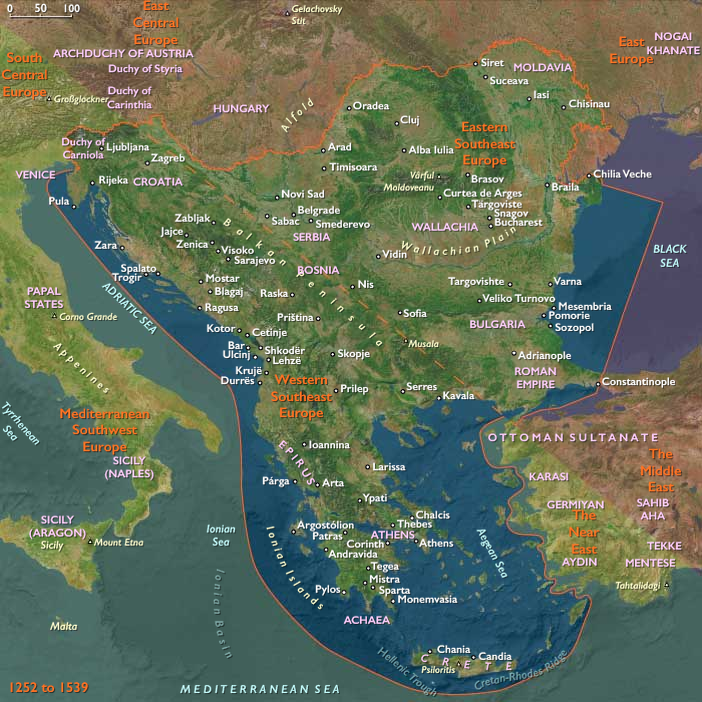
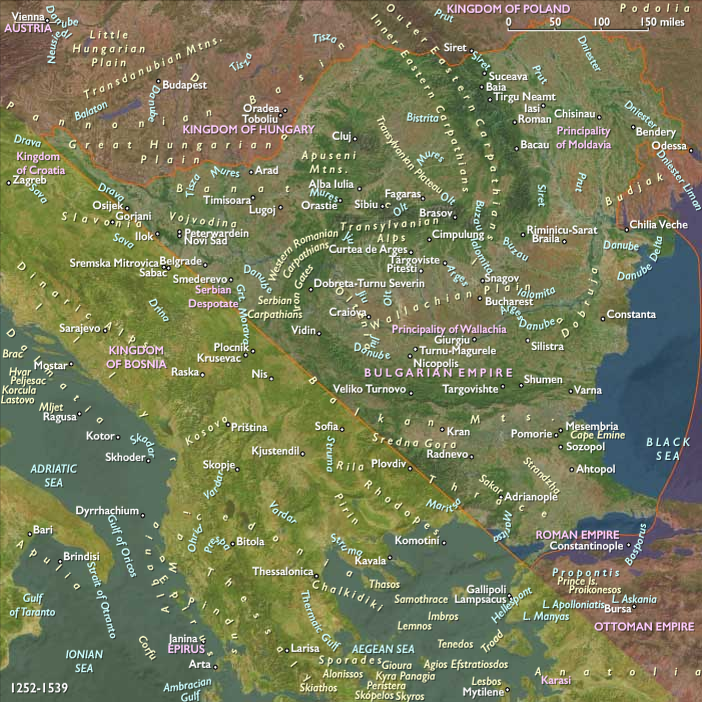
Mehmed had ordered his general, Suleiman Pasha, to end the siege of Venetian-controlled Shkodër, to assemble his troops in Sofia, and from there to advance with additional troops towards Moldavia.
For these already exhausted Ottoman troops, who had besieged the city from May 17 to August 15, the transit from Shkodër to Moldavia is a month's journey through bad weather and difficult terrain.
According to to the Polish chronicler Jan Długosz, Suleiman was also ordered that after inflicting defeat on Stephen, he was to advance towards Poland, set camp for the winter, then invade Hungary in spring, and unite his forces with the army of the Sultan.
The Ottoman army consists ofjanissaries and heavy infantry, which are supported by the heavy cavalry sipahis and by the light cavalry (akinci), who would scout ahead.
There are also Tatar cavalry and other troops (such as the Timariots) from vassal states.
Twenty thousand Bulgarian peasants are also included in the army; their main tasks are to clear the way for the rest of the army by building bridges over waters and removing snow from the roads, and to drive supply wagons.
In total, the Ottoman cavalry numbered thirty thousand.
In September 1474, the Ottoman army gathers in Sofia, and from here, …
Locations
People
- Basarab IV cel Tânăr
- Basarab Laiotă cel Bătrân
- Casimir IV Jagiellon
- Hadım Suleiman Pasha
- Matthias Corvinus
- Mehmed II
- Radu cel Frumos
- Stephen III of Moldavia
- Vlad the Impaler
Groups
- Oghuz Turks
- Bulgarians (South Slavs)
- Papal States (Republic of St. Peter)
- Romanians
- Genoa, (Most Serene) Republic of
- Hungary, Kingdom of
- Moldavia, Principality of
- Tatars
- Poland of the Jagiellonians, Kingdom of
- Wallachia, Principality of
- Ottoman Empire
Topics
Commodoties
Subjects
Regions
Subregions
Years: 1474 - 1474
Locations
People
- Basarab IV cel Tânăr
- Basarab Laiotă cel Bătrân
- Casimir IV Jagiellon
- Hadım Suleiman Pasha
- Matthias Corvinus
- Mehmed II
- Radu cel Frumos
- Stephen III of Moldavia
- Vlad the Impaler
Groups
- Oghuz Turks
- Bulgarians (South Slavs)
- Papal States (Republic of St. Peter)
- Romanians
- Genoa, (Most Serene) Republic of
- Hungary, Kingdom of
- Moldavia, Principality of
- Tatars
- Poland of the Jagiellonians, Kingdom of
- Wallachia, Principality of
- Ottoman Empire
Topics
Commodoties
Subjects
Regions
Subregions