
South Central Europe (49,293 – 28,578 …
Years: 49293BCE - 28578BCE
South Central Europe (49,293 – 28,578 BCE) Upper Pleistocene I — Glacial Valleys, Loess Forelands, and Cave Lifeways
Geographic and Environmental Context
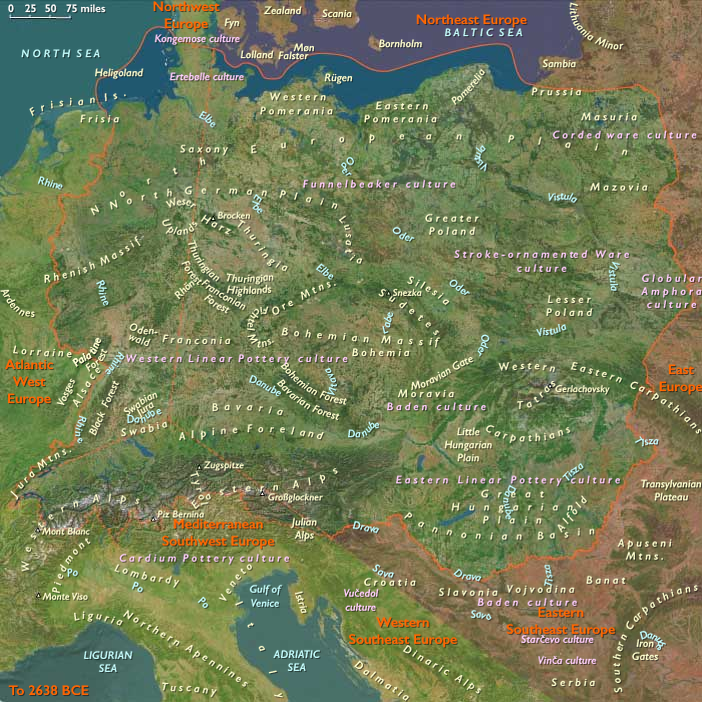
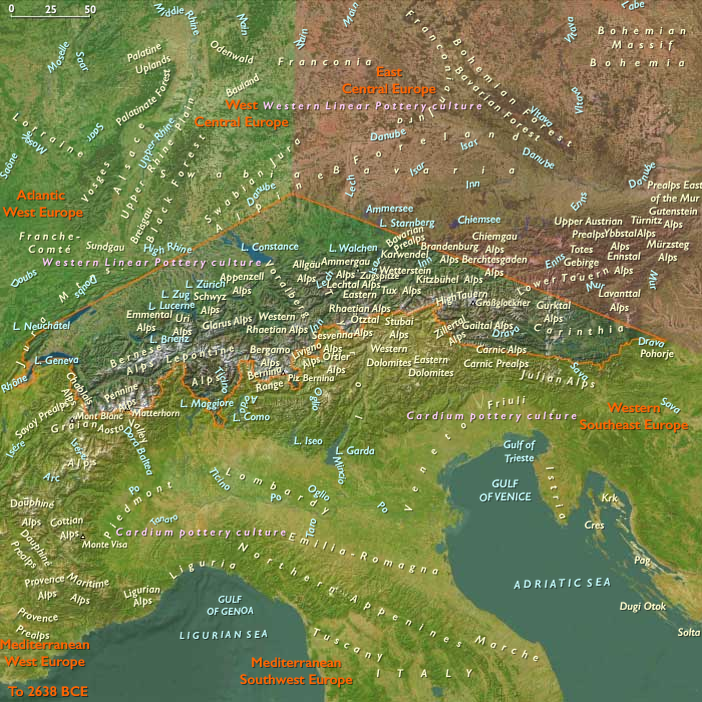
Western Southeast Europe includes southern and western Austria (including Carinthia; excluding Salzburg), Liechtenstein, Switzerland (excluding Basel and the eastern Jura), southeastern Swabia (southeastern Baden-Württemberg), and southwestern Bavaria.-
Anchors: Inn–Salzach terraces, Tyrolean valleys, Swiss Plateau cave belts, Valais rock shelters, Rheintal benches, Drava–Carinthia forelands.
-
Alpine glaciers dominated; loess accumulated on forelands; river terraces provided dry footing.
Climate & Environmental Shifts
-
Last Glacial Maximum: cold, arid, windy; strong seasonal contrasts; heavy snowpack in high ranges.
Subsistence & Settlement
-
Foragers hunted ibex, chamois, red deer, horse, and marmot around valley mouths and passes.
-
Caves/rockshelters (Swiss Plateau, Valais) and terrace camps alternated seasonally.
Technology & Material Culture
-
Aurignacian–Gravettian–Magdalenian successions: blade/microblade kits; antler points; eyed needles; portable art.
-
Ornaments (teeth, shell); ochre burials.
Movement & Interaction Corridors
-
Rhône–Valais–Great St. Bernard, Reuss–Ticino–St. Gotthard, Inn–Brenner–Adige, and Rheintal–Lake Constance formed key glacial corridors.
Cultural & Symbolic Expressions
-
Portable engravings and cave art; ritual hearth renewal at seasonal bases.
Topics
Commodoties
Subjects
Regions
Subregions
Related Events
Showing 10 events out of 69706 total
Years: 49293BCE - 28578BCE
Topics
Commodoties
Subjects
Regions
Subregions