
Middle Africa (2,637 – 910 BCE) …
Years: 2637BCE - 910BCE
Middle Africa (2,637 – 910 BCE) Bronze and Early Iron — Bantu Dispersals and Metallurgy
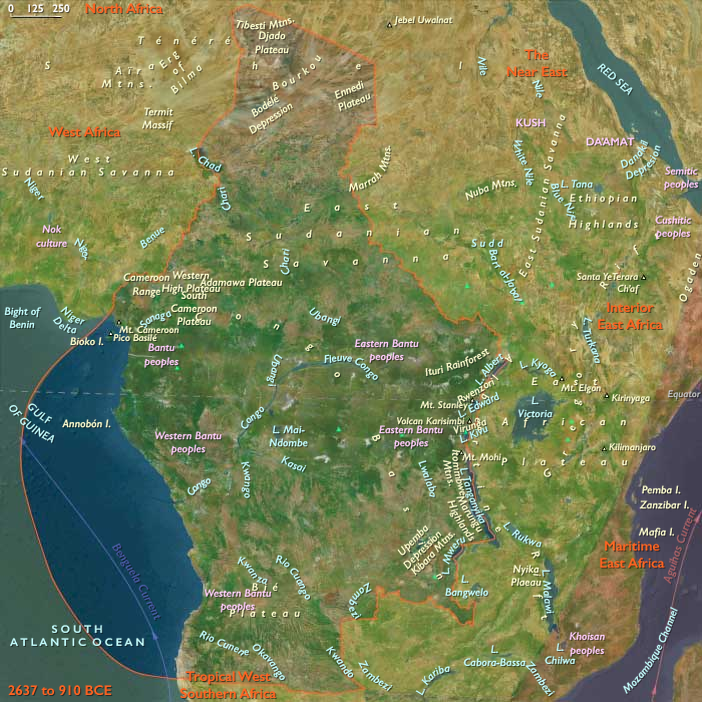
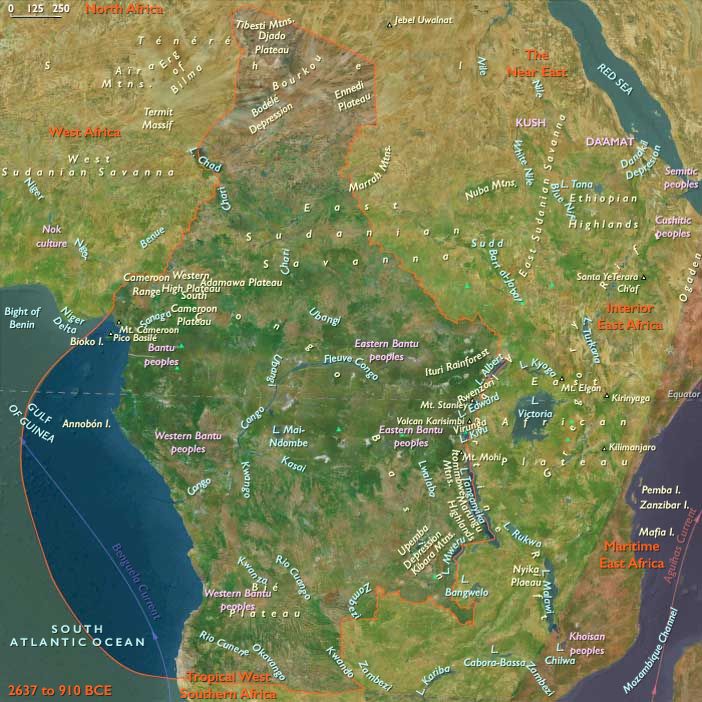
Geographic and Environmental Context
The broad equatorial–central belt of Africa including:
-
Chad and Lake Chad Basin,
-
the Central African Republic (Ubangi–Sangha region),
-
Cameroon (highlands, Adamawa Plateau, coastal plains),
-
Equatorial Guinea (islands and coast),
-
São Tomé e Príncipe,
-
Gabon,
-
the Republic of the Congo (Brazzaville),
-
the Democratic Republic of the Congo (Congo Basin, Kasai, Katanga, Ituri),
-
Angola.
Anchors: Lake Chad, Chari–Logone delta, Adamawa Plateau, Sangha–Ubangi junction, Cameroon Highlands, São Tomé e Príncipe volcanic isles, Congo River mainstem, Kasai–Katanga copperbelt, Ituri rainforest, Angolan escarpment.
-
Congo Basin, Kasai–Katanga copperbelt, Angola highlands.
Climate & Environmental Shifts
-
Rainfall fluctuated; lakes shrank periodically.
Subsistence & Settlement
-
Farming villages expanded; yams, millet, oil palm staples.
-
Bantu herding communities with cattle/pigs spread through forests and savannas.
Technology & Material Culture
-
Iron smelting appeared by 1st millennium BCE (Nsukka/Cameroon).
-
Copper mining in Katanga belt.
Movement & Interaction Corridors
-
Congo River canoe routes moved iron, beads, food.
-
Lake Chad Basin tied into Saharan trade.
Cultural & Symbolic Expressions
-
Ancestral veneration; iron incorporated into ritual.
-
Rock art in Angola depicts cattle, hunters.
Environmental Adaptation & Resilience
-
Agro-pastoral–iron complex buffered instability.
Transition
By 910 BCE, Bantu-speaking iron-farmers occupied much of Middle Africa.
Commodoties
Subjects
Regions
Subregions
Years: 2637BCE - 910BCE
Commodoties
Subjects
Regions
Subregions