
Mediterranean Southwest Europe (964 – 1107 CE): …
Years: 964 - 1107
Mediterranean Southwest Europe (964 – 1107 CE): Taifa Spain, Norman Sicily, and the Italian Communes
Geographic and Environmental Context
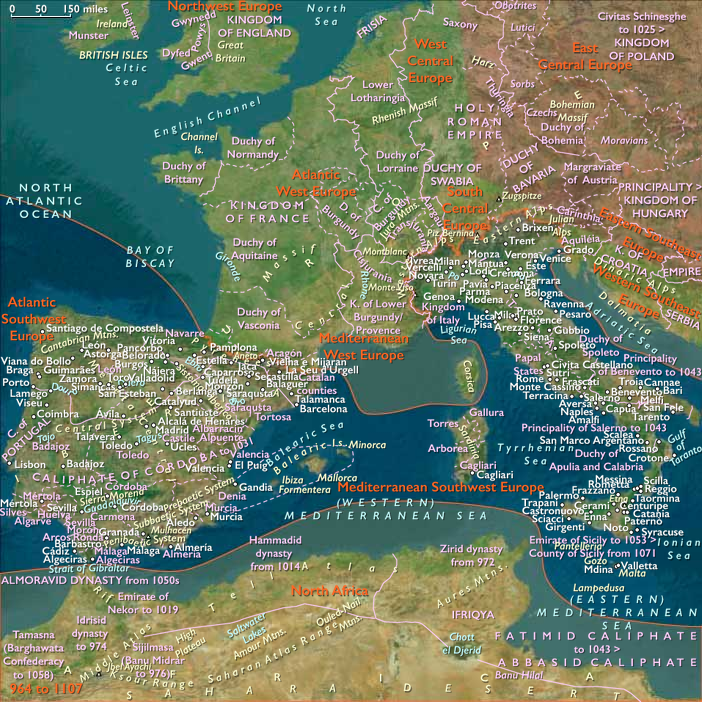
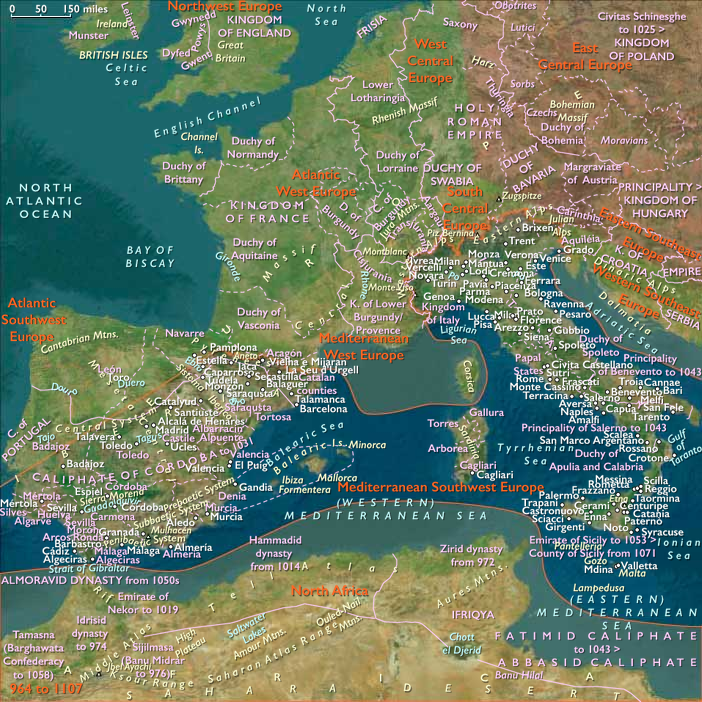
Mediterranean Southwest Europe includes Portugal’s Algarve and Alentejo; Spain’s Extremadura, Andalusia, Murcia, Valencia, Castile/La Mancha, southeastern Castile and León, Madrid, southeastern Rioja, southeastern Navarra, Aragon, Catalonia, and the Balearic Islands; Andorra; all of Italy including Venice, Sicily, and Sardinia; and Malta.
-
Anchors: the Andalusian taifas (Seville, Zaragoza, Valencia), the Ebro corridor and Catalan march, Lisbon/Algarve–Alentejo as frontier, the Castile/La Mancha–Madrid plateau edge, the Balearics under Muslim control, Venice and the Adriatic, Pisa/Genoa on the Ligurian coast, Apulia–Naples, and Sicily–Malta shifting to Norman hands, with Sardinia under Pisan–Genoese influence.
Climate and Environmental Shifts
-
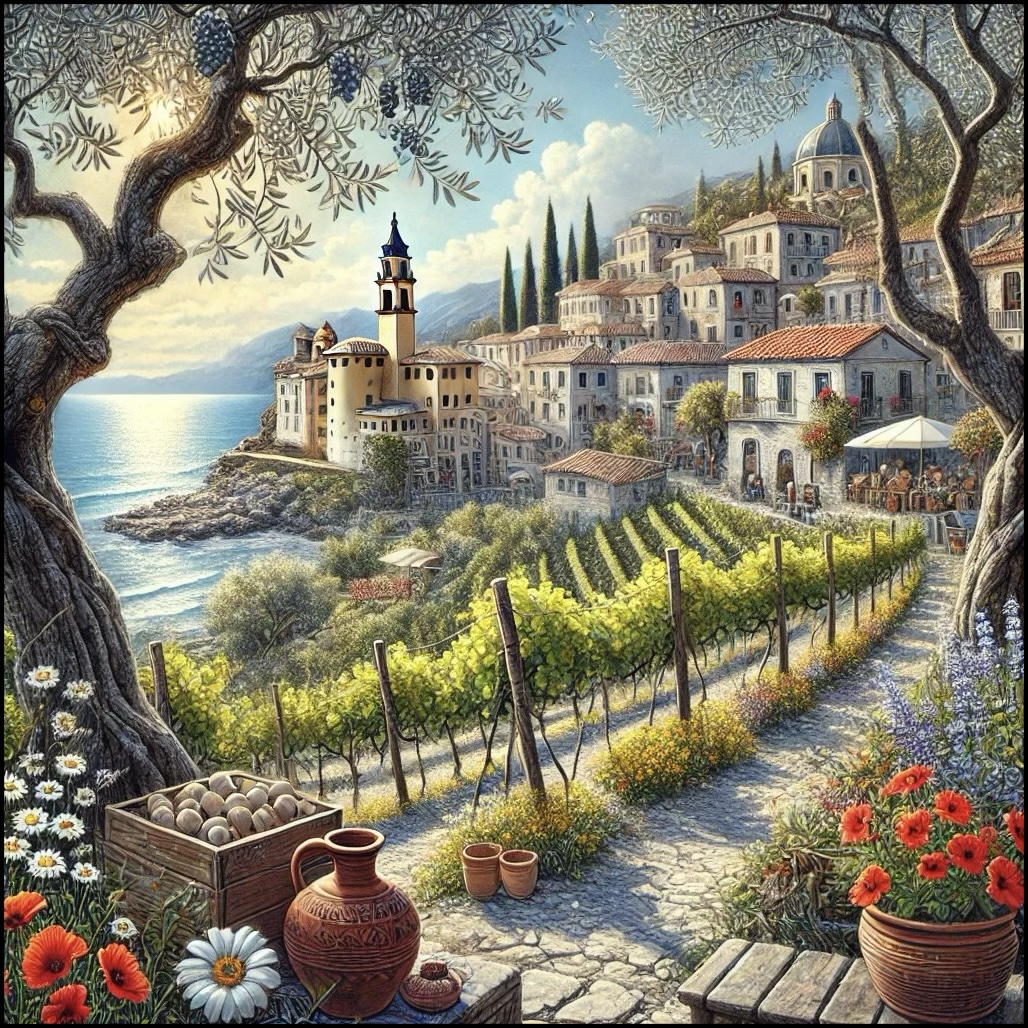
Warm, stable conditions continued; vine and olive belts from Andalusia to Tuscany prospered.
Societies and Political Developments
-
Al-Andalus fragmented into taifas (after 1031); Seville, Valencia, Zaragoza competed until Almoravid intervention (1086).
-
León–Castile, Aragon, Navarre, Catalonia advanced the Reconquista; Toledo fell to Alfonso VI (1085).
-
Norman conquest of Sicily (1061–1091) created a tri-lingual kingdom (Latin–Greek–Arabic); Malta joined the Norman sphere.
-
Italy: Venice, Genoa, Pisa matured as communes; Venice led Adriatic commerce and crusade logistics on the eve of 1096.
-
Sardinia: Pisa and Genoa contested the judicati.
Economy and Trade
-
Taifa luxury crafts (textiles, carved stucco), Valencian irrigation; Venetian, Genoese, Pisan fleets dominated Levant and western Med routes; Sicilian sugar/citrus expanded under Norman irrigation.
Subsistence and Technology
-
Andalusi waterworks; Italian shipyards (lateen rigs, standardized hulls); urban notarial systems in Venice and Genoa.
Movement and Interaction Corridors
-
Ebro–Tagus–Guadalquivir trunks; Pyrenean passes (Somport) linking Aragon–Catalonia to Andorra; Adriatic lanes radiating from Venice; Tyrrhenian circuits Sardinia–Sicily–Naples–Rome.
Belief and Symbolism
-
Islamic, Mozarabic, and Latin cultures intertwined in Iberia; Norman Sicily’s royal chapel (Palatine prototypes) symbolized syncretism; crusading ethos rose in Italian ports.
Long-Term Significance
By 1107, Venice and sister communes dominated sea-lanes; Norman Sicily was a Mediterranean hinge; Iberian monarchies pressed south against taifas and Almoravids.
Mediterranean Southwest Europe (with civilization) ©2024-25 Electric Prism, Inc. All rights reserved.
People
Groups
- Berber people (also called Amazigh people or Imazighen, "free men", singular Amazigh)
- Jews
- Moors
- Islam
- al-Andalus (Andalusia), Muslim-ruled
- Al-Garb Al-Andalus
- Mozarabs
- Venice, Duchy of
- Papal States (Republic of St. Peter)
- Aragón, or Zaca, County of
- Barcelona, County of
- Malta
- Sicily, Emirate of
- Logudoro, Giudicato of
- Arborea, Giudicato of
- Córdoba, (Umayyad) Caliphate of
- Ifriqiya, Fatimid Caliphate of
- Kalbids
- Normans
- Amalfi, Duchy of
- Holy Roman Empire
- Italy, Kingdom of (Holy Roman Empire)
- Gallura, Giudicato of
- Castillian people
- Italy, Catepanate of
- Castile, County of
- Ifriqiyah, Zirid Dynasty of
- Pisa, (first) Republic of
- Genoa, (Most Serene) Republic of
- Badajoz, Taifa of
- Almería, Muslim statelet, or taifa, of
- Denia, Muslim statelet, or taifa, of
- Valencia, Muslim statelet, or taifa, of
- Toledo, (Muslim statelet, or taifa, of)
- Granada, (Zirid) Muslim statelet, or taifa, of
- Zaragoza, Muslim statelet, or taifa, of
- Cagliari, Giudicato of
- Sevilla, (Abbadid) Muslim statelet, or taifa, of
- Castile, Kingdom of
- Aragón, Kingdom of
- Ifriqiyah, Zirid Dynasty of
- Christians, Roman Catholic
- Capua, Norman Principality of
- Apulia, Norman Duchy of
- Almoravid dynasty
- Arborea, Giudicato of
- Sicily, County of
- Amalfi, Duchy of
- Valencia, Muslim statelet, or taifa, of
- Apulia, Norman Duchy of
- Castile, Kingdom of
- Aragón, Kingdom of
Topics
- Reconquista, the
- Medieval Warm Period (MWP) or Medieval Climate Optimum
- al-Andalus, Fitna of
- Norman Conquest of Southern Italy
- Crusade, First
- Crusades, The
Commodoties
- Domestic animals
- Grains and produce
- Textiles
- Ceramics
- Strategic metals
- Sweeteners
- Beer, wine, and spirits
Subjects
Regions
Subregions
Years: 964 - 1107
Mediterranean Southwest Europe (with civilization) ©2024-25 Electric Prism, Inc. All rights reserved.
People
Groups
- Berber people (also called Amazigh people or Imazighen, "free men", singular Amazigh)
- Jews
- Moors
- Islam
- al-Andalus (Andalusia), Muslim-ruled
- Al-Garb Al-Andalus
- Mozarabs
- Venice, Duchy of
- Papal States (Republic of St. Peter)
- Aragón, or Zaca, County of
- Barcelona, County of
- Malta
- Sicily, Emirate of
- Logudoro, Giudicato of
- Arborea, Giudicato of
- Córdoba, (Umayyad) Caliphate of
- Ifriqiya, Fatimid Caliphate of
- Kalbids
- Normans
- Amalfi, Duchy of
- Holy Roman Empire
- Italy, Kingdom of (Holy Roman Empire)
- Gallura, Giudicato of
- Castillian people
- Italy, Catepanate of
- Castile, County of
- Ifriqiyah, Zirid Dynasty of
- Pisa, (first) Republic of
- Genoa, (Most Serene) Republic of
- Badajoz, Taifa of
- Almería, Muslim statelet, or taifa, of
- Denia, Muslim statelet, or taifa, of
- Valencia, Muslim statelet, or taifa, of
- Toledo, (Muslim statelet, or taifa, of)
- Granada, (Zirid) Muslim statelet, or taifa, of
- Zaragoza, Muslim statelet, or taifa, of
- Cagliari, Giudicato of
- Sevilla, (Abbadid) Muslim statelet, or taifa, of
- Castile, Kingdom of
- Aragón, Kingdom of
- Ifriqiyah, Zirid Dynasty of
- Christians, Roman Catholic
- Capua, Norman Principality of
- Apulia, Norman Duchy of
- Almoravid dynasty
- Arborea, Giudicato of
- Sicily, County of
- Amalfi, Duchy of
- Valencia, Muslim statelet, or taifa, of
- Apulia, Norman Duchy of
- Castile, Kingdom of
- Aragón, Kingdom of
Topics
- Reconquista, the
- Medieval Warm Period (MWP) or Medieval Climate Optimum
- al-Andalus, Fitna of
- Norman Conquest of Southern Italy
- Crusade, First
- Crusades, The
Commodoties
- Domestic animals
- Grains and produce
- Textiles
- Ceramics
- Strategic metals
- Sweeteners
- Beer, wine, and spirits
Subjects
Regions
Subregions