
Mediterranean Southwest Europe (81–70 BCE): Civil Strife …
Years: 81BCE - 70BCE
Mediterranean Southwest Europe (81–70 BCE): Civil Strife and the Sertorian and Servile Wars
The period 81–70 BCE is defined by continuing political turbulence and civil conflict within the Roman Republic, marked notably by the ambitious challenges to Sulla’s conservative constitutional order and two significant military conflicts: the Sertorian War in Iberia and the Third Servile War in Italy.
Lepidus' Rebellion (78–77 BCE)
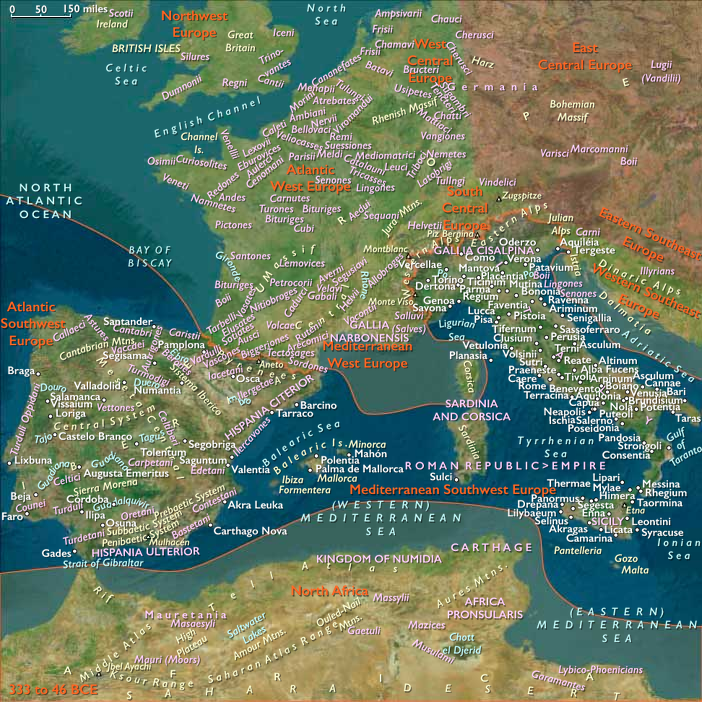
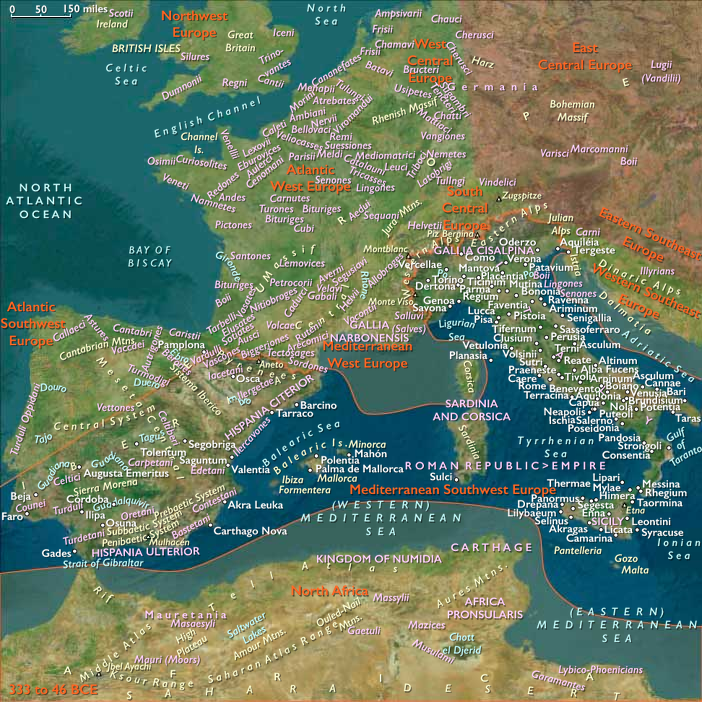
Following Sulla's resignation from the dictatorship in 79 BCE, political tensions resurface swiftly. Marcus Aemilius Lepidus, initially a beneficiary of Sulla’s regime, positions himself against the conservative faction. Elected consul in 78 BCE with the support of the influential commander Pompey, Lepidus advocates popular reforms, including returning confiscated land to dispossessed Italians, thereby threatening Sulla’s constitutional legacy. This stance ignites conflict with his consular colleague, Quintus Lutatius Catulus, leading to armed confrontation. Lepidus marches on Rome in 77 BCE, but is decisively defeated by Catulus on the Campus Martius and retreats to exile in Sardinia, where he dies shortly thereafter.
Sertorian War (80–72 BCE)
Concurrent with internal Roman strife, the Sertorian War erupts in Iberia (80–72 BCE). Quintus Sertorius, a gifted general and charismatic leader of the Marian faction, establishes a stronghold in Hispania. Allied with local Iberian tribes, Sertorius effectively challenges Roman rule through adept guerrilla warfare, establishing a significant rival government. Despite his military successes, Sertorius is assassinated by his subordinate, Marcus Perperna, in 72 BCE. Perperna quickly falls to the military prowess of Pompey, concluding the rebellion and restoring Roman dominance over Hispania.
Third Servile War (73–71 BCE)
In Italy, the Republic faces the Third Servile War (73–71 BCE), commonly known as Spartacus’ Revolt. Initiated by the Thracian gladiator Spartacus, this uprising represents the most severe and alarming slave rebellion in Roman history, directly threatening the Italian heartland. Spartacus amasses a formidable force of escaped slaves, repeatedly defeating Roman armies dispatched to crush the insurrection. The conflict deeply unsettles the Roman political establishment and populace alike.
The Roman response crystallizes under Marcus Licinius Crassus, who mobilizes a large, disciplined force and defeats Spartacus decisively in southern Italy in 71 BCE. The revolt ends brutally, with the mass crucifixion of captured insurgents along the Appian Way, reaffirming Roman authority and sending an unmistakable warning against future rebellions.
Cultural Developments: Architectural Innovations
Amidst these conflicts, significant cultural developments continue. Notably, Roman architecture and art flourish. The Sanctuary of Fortuna Primigenia at Praeneste is significantly redeveloped, epitomizing Hellenistic influence in Roman architecture with its complex terraced design. Simultaneously, the Temple of Portunus (formerly known as the Temple of Fortuna Virilis) exemplifies the blend of Greek aesthetics and Roman innovation in temple architecture. Built around 75 BCE, this pseudoperipteral temple features Ionic columns, influencing subsequent Roman and Renaissance architecture profoundly.
Legacy of the Era
The era 81–70 BCE underscores the continuing instability of the late Republic, revealing systemic vulnerabilities in the Roman state structure. The repeated civil conflicts and rebellions indicate Rome’s susceptibility to powerful military leaders and internal dissension, setting a precedent for future political upheavals and ultimately contributing to the gradual decline of Republican governance
People
- Lucius Cornelius Sulla
- Marcus Aemilius Lepidus (consul 78 BCE)
- Marcus Licinius Crassus
- Marcus Perperna Vento
- Pompey
- Quintus Lutatius Catulus (Capitolinus)
- Quintus Sertorius
- Spartacus
Groups
Topics
- Roman Republic, Crisis of the
- Sertorian War
- Servile War, Third (Gladiators' War or Spartacus, Revolt of)
Commodoties
Subjects
Regions
Subregions
Years: 81BCE - 70BCE
People
- Lucius Cornelius Sulla
- Marcus Aemilius Lepidus (consul 78 BCE)
- Marcus Licinius Crassus
- Marcus Perperna Vento
- Pompey
- Quintus Lutatius Catulus (Capitolinus)
- Quintus Sertorius
- Spartacus
Groups
Topics
- Roman Republic, Crisis of the
- Sertorian War
- Servile War, Third (Gladiators' War or Spartacus, Revolt of)
Commodoties
Subjects
Regions
Subregions