
Mediterranean Southwest Europe (940–951 CE): Consolidation of …
Years: 940 - 951
Mediterranean Southwest Europe (940–951 CE): Consolidation of the Caliphate of Córdoba and Continued Papal Turmoil
The era 940–951 CE in Mediterranean Southwest Europe is characterized by the strengthening and consolidation of the Caliphate of Córdoba under Abd al-Rahman III, continuing papal corruption and instability in Rome, and persistent cultural vibrancy across the region.
Abd al-Rahman III’s Caliphal Consolidation
In Al-Andalus, Caliph Abd al-Rahman III (r. 912–961 CE) significantly consolidates his power, reinforcing central authority after years of fragmentation. His effective administration restores political stability and facilitates remarkable cultural and economic prosperity. Córdoba flourishes as a prominent intellectual and commercial hub, rivaling leading cities of the contemporary medieval world.
Ongoing Papal Instability and the Saeculum Obscurum
In Rome, the papacy remains mired in the prolonged Saeculum obscurum, deeply influenced by powerful and corrupt Roman aristocratic families such as the Theophylacti. Papal authority remains compromised by ongoing internal scandals, political maneuvering, and nepotism, undermining Rome's religious and political standing across Europe.
Regional Autonomy in Italy
Italy continues its path of political fragmentation as local nobles and regional rulers maintain increasing autonomy, capitalizing on the weakened state of both Carolingian imperial authority and papal influence. Despite this decentralization, regional political and economic stability persist, supported by robust local governance and cultural institutions.
Cultural and Scholarly Persistence
The intellectual and cultural vitality of the region endures, notably in Iberia, where Mozarab and Jewish communities continue their influential roles. Lucena remains a prominent Jewish intellectual center, fostering significant scholarly and cultural achievements, while Mozarab communities maintain their role as intermediaries between Latin-Christian and Islamic traditions.
Technological Innovation and Economic Prosperity
The continuing use of the Catalan forge bolsters regional economic stability, enhancing iron production to support agricultural growth, military strength, and urban development. These technological advancements underpin the ongoing economic prosperity of Mediterranean Southwest Europe despite broader political uncertainties.
Legacy of the Era
The era 940–951 CE highlights the marked contrast between the thriving Caliphate of Córdoba and persistent papal turmoil in Italy. These developments continue shaping the region's complex medieval trajectory, laying the groundwork for further cultural and political transformations.
People
Groups
- Berber people (also called Amazigh people or Imazighen, "free men", singular Amazigh)
- Jews
- Moors
- Christianity, Chalcedonian
- Islam
- Al-Garb Al-Andalus
- al-Andalus (Andalusia), Muslim-ruled
- Mozarabs
- Banu Qasi
- Papal States (Republic of St. Peter)
- Muladi
- Córdoba, (Umayyad) Caliphate of
Commodoties
Subjects
Regions
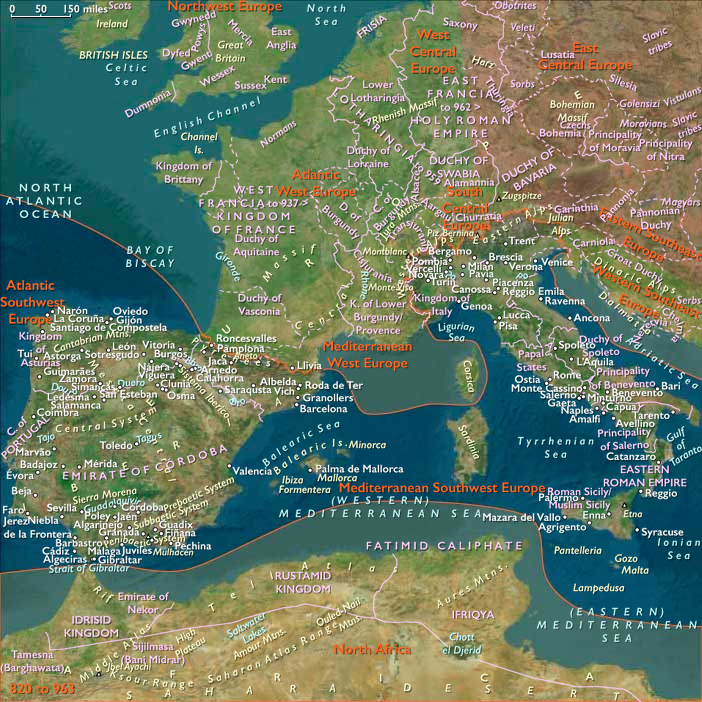
Subregions
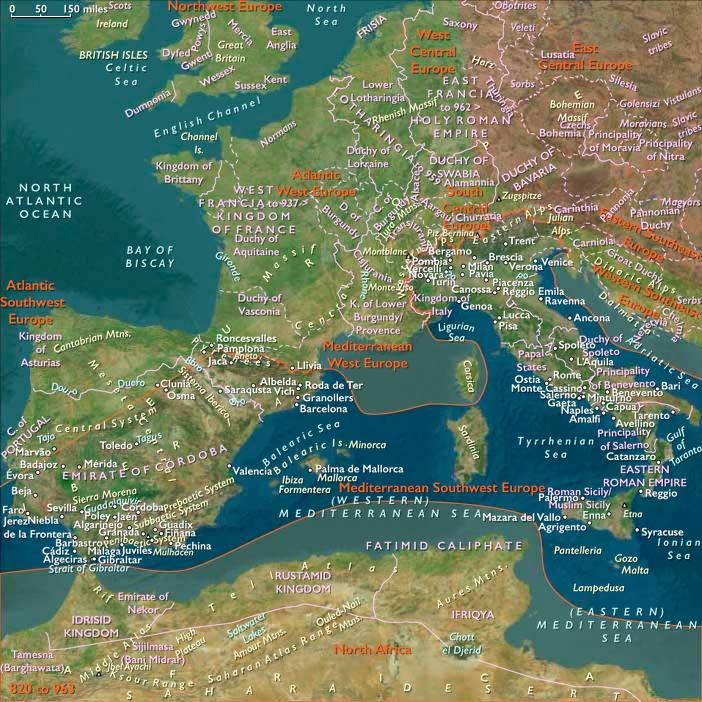
Related Events
Showing 10 events out of 13 total
Years: 940 - 951
People
Groups
- Berber people (also called Amazigh people or Imazighen, "free men", singular Amazigh)
- Jews
- Moors
- Christianity, Chalcedonian
- Islam
- Al-Garb Al-Andalus
- al-Andalus (Andalusia), Muslim-ruled
- Mozarabs
- Banu Qasi
- Papal States (Republic of St. Peter)
- Muladi
- Córdoba, (Umayyad) Caliphate of
Commodoties
Subjects
Regions
Subregions