
Mediterranean Southwest Europe (916–927 CE): Continued Papal …
Years: 916 - 927
Mediterranean Southwest Europe (916–927 CE): Continued Papal Decline, Andalusian Fragmentation, and Cultural Persistence
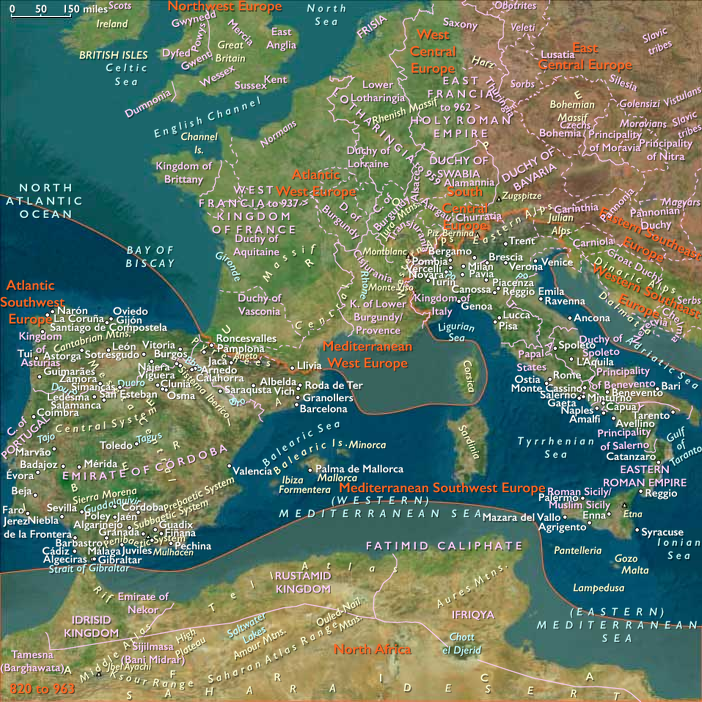
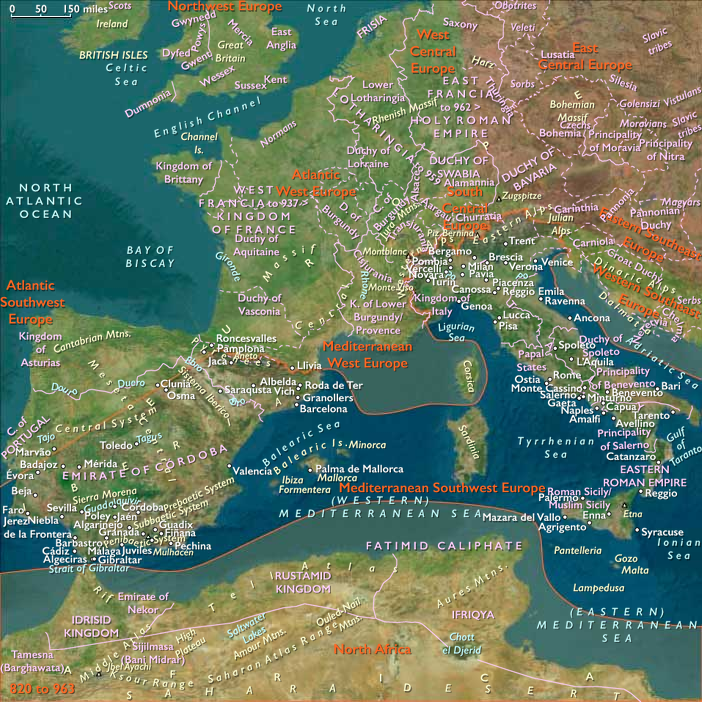
The era 916–927 CE in Mediterranean Southwest Europe is characterized by continuing papal instability under the influence of powerful Roman aristocrats, increasing fragmentation within Al-Andalus, and enduring cultural resilience among diverse religious communities.
Papal Turmoil and the Saeculum Obscurum
This period continues the Saeculum obscurum, a turbulent era initiated in 904 CE with Pope Sergius III, during which the papacy remains dominated by the powerful and corrupt Theophylacti family. Papal authority suffers significantly from scandals, factional struggles, and political manipulation, severely undermining Rome’s spiritual and political influence across Europe.
Andalusian Fragmentation and Regional Autonomy
In Al-Andalus, Emir Abd al-Rahman III (r. 912–961 CE) inherits a territory fragmented by regional rebellions and decentralized power structures. Despite ongoing internal strife, Abd al-Rahman III gradually asserts his authority, laying the foundations for future centralization and recovery. Powerful local families and independent governors continue to challenge central authority, though signs of renewed political consolidation begin to emerge.
Mozarab and Jewish Communities' Resilience
Mozarab communities retain their cultural identity, playing essential roles as intermediaries between Islamic and Christian cultures, preserving religious traditions, scholarship, and local administration. Lucena continues as a thriving center for Andalusian Jewry, maintaining vibrant intellectual and cultural activity that enriches Iberian society.
Continued Economic Prosperity and Technological Advancement
Technological advancements, notably the sustained use of the Catalan forge, continue driving economic stability and prosperity throughout the region. Enhanced iron production facilitates agricultural productivity, urban growth, and strengthened military capabilities, maintaining Mediterranean Southwest Europe's economic vitality despite broader political instability.
Legacy of the Era
The era 916–927 CE underscores continuing papal corruption and political instability, the slow yet determined recovery efforts within Al-Andalus, and enduring cultural resilience within Mozarab and Jewish communities. These developments significantly influence the evolving medieval landscape of Mediterranean Southwest Europe, laying foundations for future consolidation and cultural flourishing.
People
Groups
- Berber people (also called Amazigh people or Imazighen, "free men", singular Amazigh)
- Jews
- Moors
- Christianity, Chalcedonian
- Islam
- Al-Garb Al-Andalus
- al-Andalus (Andalusia), Muslim-ruled
- Mozarabs
- Banu Qasi
- Abbasid Caliphate (Kufa)
- Papal States (Republic of St. Peter)
- Córdoba, Umayyad Emirate of
- Muladi
Commodoties
Subjects
Regions
Subregions
Years: 916 - 927
People
Groups
- Berber people (also called Amazigh people or Imazighen, "free men", singular Amazigh)
- Jews
- Moors
- Christianity, Chalcedonian
- Islam
- Al-Garb Al-Andalus
- al-Andalus (Andalusia), Muslim-ruled
- Mozarabs
- Banu Qasi
- Abbasid Caliphate (Kufa)
- Papal States (Republic of St. Peter)
- Córdoba, Umayyad Emirate of
- Muladi
Commodoties
Subjects
Regions
Subregions