
Mediterranean Southwest Europe (904–915 CE): Saeculum Obscurum …
Years: 904 - 915
Mediterranean Southwest Europe (904–915 CE): Saeculum Obscurum and Papal Corruption
The era 904–915 CE in Mediterranean Southwest Europe is notably characterized by the beginning of the Saeculum obscurum ("Dark Age") in papal history, alongside continued political complexity and cultural dynamism in the region.
Saeculum Obscurum in the Papacy
The period beginning in 904 CE, marked by the installation of Pope Sergius III, initiates the infamous Saeculum obscurum, a sixty-year phase in which the papacy falls under significant influence from the powerful and corrupt aristocratic Roman family known as the Theophylacti and their relatives. This era, characterized by widespread corruption, nepotism, and political manipulation, profoundly undermines papal prestige and spiritual authority, with repercussions extending throughout Christendom.
Continued Political Fragmentation in Italy
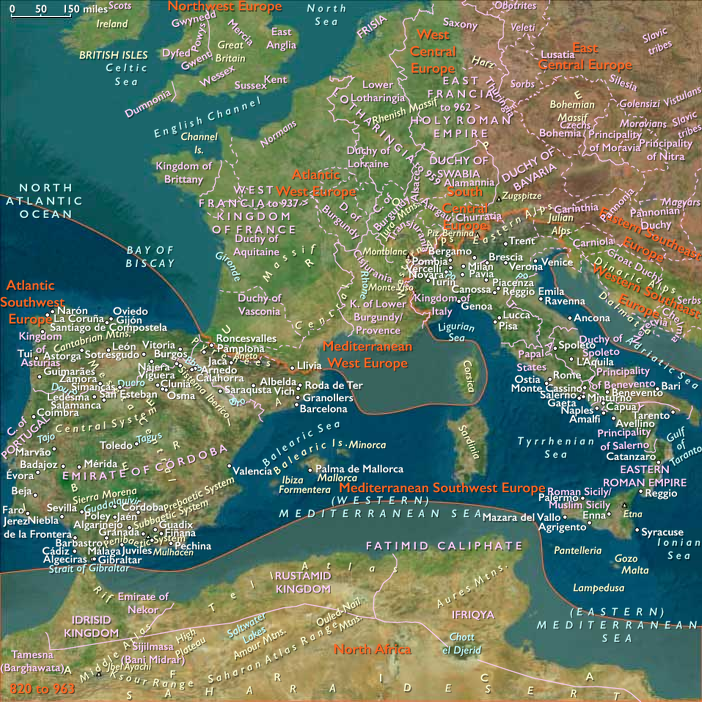
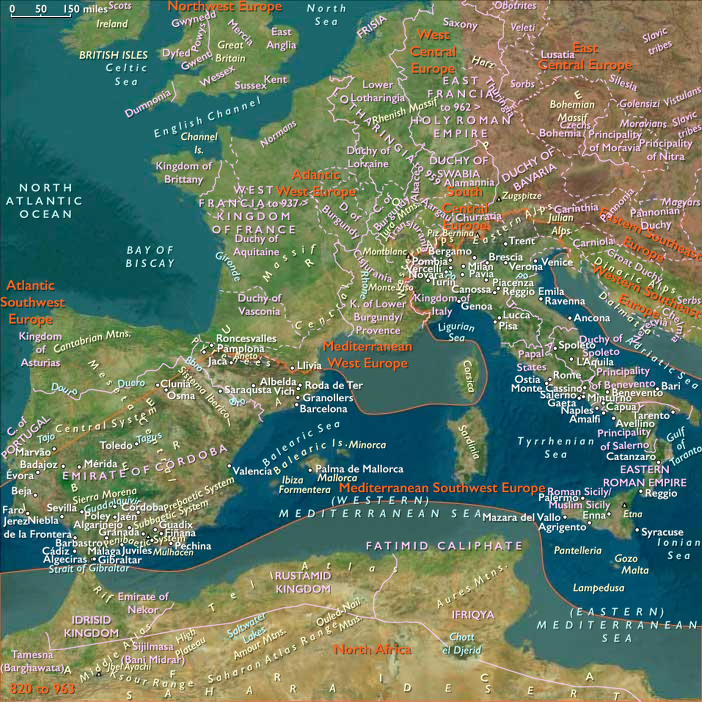
Italy remains politically fragmented, with local aristocratic families gaining prominence amid weakened Carolingian imperial authority. The compromised papacy, deeply entangled with aristocratic factions, contributes further to this political decentralization, reducing Rome's ability to assert coherent leadership across the Italian territories.
Internal Turmoil and Regional Autonomy in Al-Andalus
In Al-Andalus, Emir Abdallah ibn Muhammad (r. 888–912 CE) continues struggling with internal conflicts, rebellions, and regional autonomy. Powerful local families and governors retain semi-independent status, intensifying the decentralization and weakening the central Umayyad authority in Córdoba, although cultural and intellectual activity remains vibrant.
Mozarab and Jewish Cultural Resilience
Mozarab and Jewish communities persist in their cultural vitality, maintaining significant roles in urban life, scholarship, and commerce. Lucena, in particular, remains a leading Jewish intellectual center, continuing its rich scholarly tradition and fostering intercultural exchange.
Economic Stability and Technological Advances
Economic activity remains robust, supported by sustained technological innovations like the Catalan forge, which significantly enhance iron production. These developments underpin continued agricultural productivity, military effectiveness, and urban prosperity across Mediterranean Southwest Europe.
Legacy of the Era
The era 904–915 CE marks a dark chapter in papal history, overshadowed by the influence of the Theophylacti family, but simultaneously exhibits continued cultural resilience and economic stability throughout the region. These dynamics reflect the complexity of Mediterranean Southwest Europe's transition toward the central medieval period.
People
Groups
- Berber people (also called Amazigh people or Imazighen, "free men", singular Amazigh)
- Jews
- Moors
- Christianity, Chalcedonian
- Islam
- Al-Garb Al-Andalus
- al-Andalus (Andalusia), Muslim-ruled
- Mozarabs
- Banu Qasi
- Abbasid Caliphate (Kufa)
- Papal States (Republic of St. Peter)
- Córdoba, Umayyad Emirate of
- Muladi
Commodoties
Subjects
Regions
Subregions
Years: 904 - 915
People
Groups
- Berber people (also called Amazigh people or Imazighen, "free men", singular Amazigh)
- Jews
- Moors
- Christianity, Chalcedonian
- Islam
- Al-Garb Al-Andalus
- al-Andalus (Andalusia), Muslim-ruled
- Mozarabs
- Banu Qasi
- Abbasid Caliphate (Kufa)
- Papal States (Republic of St. Peter)
- Córdoba, Umayyad Emirate of
- Muladi
Commodoties
Subjects
Regions
Subregions