
Mediterranean Southwest Europe (880–891 CE): Andalusian Unrest, …
Years: 880 - 891
Mediterranean Southwest Europe (880–891 CE): Andalusian Unrest, Carolingian Fragmentation, and Cultural Continuity
The era 880–891 CE in Mediterranean Southwest Europe is characterized by ongoing internal unrest within Umayyad Al-Andalus, further fragmentation within Carolingian Italy, and sustained cultural vitality driven by religious and intellectual communities.
Internal Conflict and Muladi Rebellions in Al-Andalus
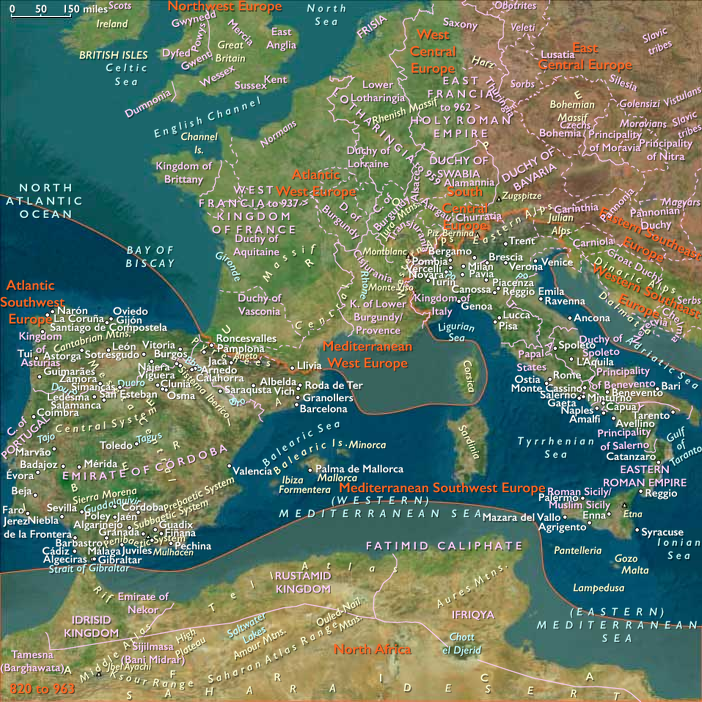
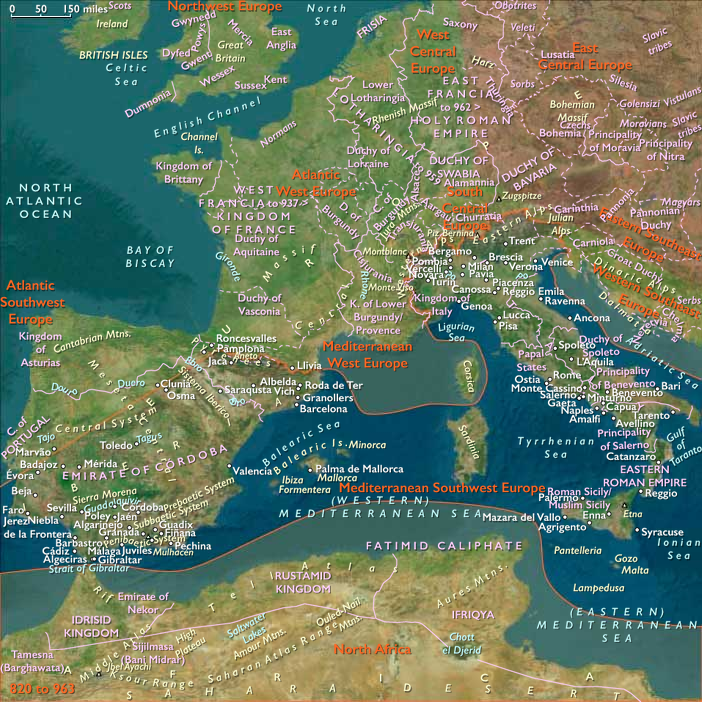
Under Emir Muhammad I (until 886 CE) and his successor Al-Mundhir (r. 886–888 CE), Al-Andalus continues experiencing significant internal unrest. Muladi (Muslims of Iberian descent) rebellions persist, reflecting widespread discontent with central Umayyad authority. Local dynasties, including the influential Banu Qasi family in Zaragoza, maintain a semi-independent stance, contributing to a climate of political instability.
Carolingian Fragmentation and Italian Autonomy
In Italy, Carolingian political authority further fragments following the death of Charles the Fat in 888 CE, leading to increased regional autonomy under local nobles. This fragmentation marks the decline of unified imperial control, reinforcing the political complexity that defines Italian territories in subsequent decades. Despite this, regional stability and cultural continuity persist, supported by strong ecclesiastical leadership.
Intellectual and Artistic Flourishing in Rome
Rome continues as a prominent center of intellectual life, benefiting from sustained cultural exchanges with the Byzantine East and Frankish courts. Artistic advancements, notably in wall painting, continue to evolve, exemplified by the sophisticated use of white highlighting techniques, as seen in contemporary Roman churches and monuments. Such artistic developments underscore Rome’s ongoing cultural and intellectual significance during this era.
Lucena’s Continued Jewish Cultural Leadership
In Iberia, the city of Lucena maintains its reputation as the center of Andalusian Jewry, reinforcing its position as an intellectual and religious hub. The city continues attracting scholars and students from across the Islamic world, further enriching its vibrant Jewish cultural life.
Economic Stability and Technological Progress
The regional economy benefits from continued advancements in technology, notably through widespread use of the Catalan forge. This enhanced iron production significantly boosts agricultural productivity, military readiness, and urban craftsmanship, providing a firm foundation for regional economic stability and growth.
Legacy of the Era
The era 880–891 CE highlights persistent political unrest in Al-Andalus, Carolingian fragmentation in Italy, and enduring cultural vitality driven by artistic innovations, Jewish intellectual life, and sustained economic progress. These developments collectively shape the diverse historical trajectory of Mediterranean Southwest Europe during the late ninth century.
People
Groups
- Berber people (also called Amazigh people or Imazighen, "free men", singular Amazigh)
- Jews
- Moors
- Christianity, Chalcedonian
- Islam
- Al-Garb Al-Andalus
- al-Andalus (Andalusia), Muslim-ruled
- Mozarabs
- Banu Qasi
- Abbasid Caliphate (Kufa)
- Papal States (Republic of St. Peter)
- Córdoba, Umayyad Emirate of
- Muladi
Commodoties
Subjects
Regions
Subregions
Years: 880 - 891
People
Groups
- Berber people (also called Amazigh people or Imazighen, "free men", singular Amazigh)
- Jews
- Moors
- Christianity, Chalcedonian
- Islam
- Al-Garb Al-Andalus
- al-Andalus (Andalusia), Muslim-ruled
- Mozarabs
- Banu Qasi
- Abbasid Caliphate (Kufa)
- Papal States (Republic of St. Peter)
- Córdoba, Umayyad Emirate of
- Muladi
Commodoties
Subjects
Regions
Subregions