
Mediterranean Southwest Europe (868–879 CE): Artistic Developments …
Years: 868 - 879
Mediterranean Southwest Europe (868–879 CE): Artistic Developments in Italy and Continued Andalusian Complexity
The era 868–879 CE in Mediterranean Southwest Europe is marked by significant artistic innovation in Italy, continued internal unrest within Al-Andalus, and vibrant cultural interactions across the region.
Artistic Innovations in Italian Wall Painting
During this period, Italian artists make notable advances in mural painting, particularly in the representation of the human figure. Painters develop intricate systems of white highlighting, enhancing visual depth and realism. Exemplary works from around 870 CE include the depiction of the Harrowing of Hell in the lower church of San Clemente, as well as murals in the Temple of Fortuna Virile in Rome. These artistic advancements reflect a broader ninth-century cultural revival in Italy, bridging classical traditions and medieval artistic sensibilities.
Persistent Muladi and Mozarab Unrest in Al-Andalus
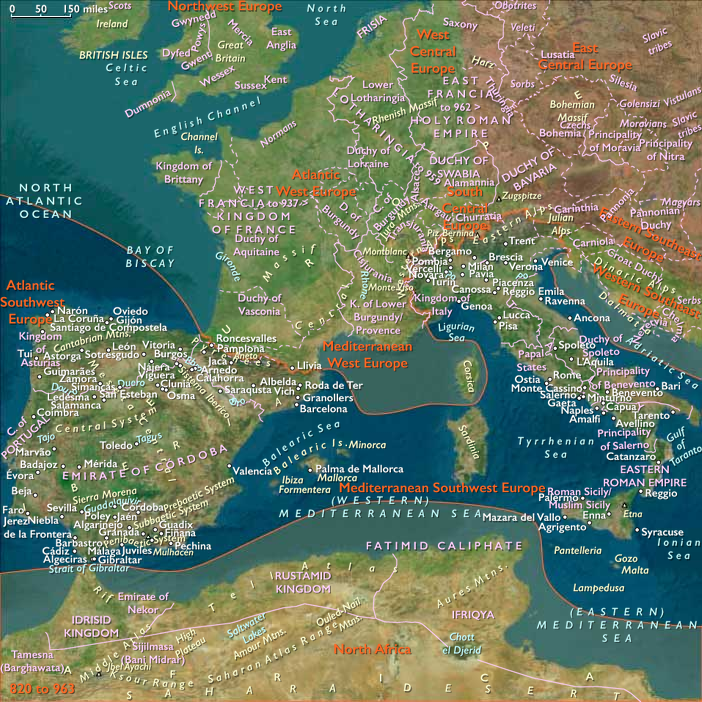
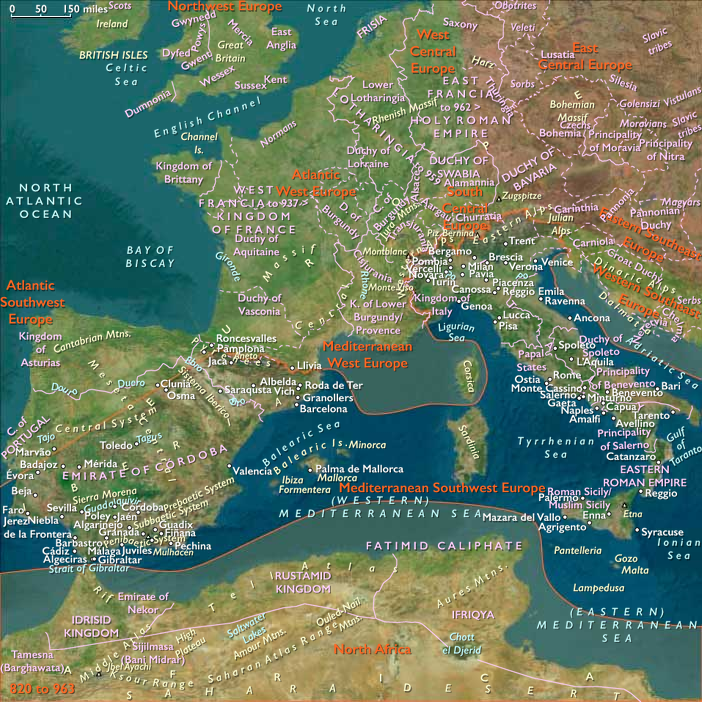
In Al-Andalus, internal instability continues under Emir Muhammad I (r. 852–886 CE). Muladi and Mozarab populations remain restive, frequently challenging central Umayyad authority. Local leaders and powerful families, such as the Banu Qasi, maintain alliances and rivalries, perpetuating complex political dynamics throughout Iberia.
Lucena and Jewish Cultural Vitality
The city of Lucena continues as a significant Jewish cultural center, maintaining its distinctive identity within Al-Andalus. Lucena's intellectual and scholarly life flourishes, further solidifying its reputation as a beacon of Andalusian Jewry and an influential hub of Jewish thought and learning.
Carolingian Stability Amid Fragmentation
Italy remains relatively stable politically under fragmented Carolingian rule, with continued influence from the papacy. Although broader imperial unity remains elusive, regional governance and ecclesiastical leadership sustain societal cohesion and intellectual life, particularly through interactions with the Byzantine East and Frankish realms.
Economic Continuity and Technological Advancements
Technological developments, especially the widespread use of the Catalan forge, continue to drive economic prosperity and stability. Enhanced iron production supports agricultural expansion, military preparedness, and urban craftsmanship, underpinning ongoing regional prosperity.
Legacy of the Era
The era 868–879 CE highlights notable artistic achievements in Italy, continuing political complexity in Al-Andalus, and vibrant cultural exchanges facilitated by Jewish and Mozarab communities. These developments contribute richly to Mediterranean Southwest Europe's dynamic medieval heritage.
People
Groups
- Berber people (also called Amazigh people or Imazighen, "free men", singular Amazigh)
- Jews
- Moors
- Christianity, Chalcedonian
- Islam
- Al-Garb Al-Andalus
- al-Andalus (Andalusia), Muslim-ruled
- Mozarabs
- Abbasid Caliphate (Kufa)
- Papal States (Republic of St. Peter)
- Córdoba, Umayyad Emirate of
- Muladi
Commodoties
Subjects
Regions
Subregions
Years: 868 - 879
People
Groups
- Berber people (also called Amazigh people or Imazighen, "free men", singular Amazigh)
- Jews
- Moors
- Christianity, Chalcedonian
- Islam
- Al-Garb Al-Andalus
- al-Andalus (Andalusia), Muslim-ruled
- Mozarabs
- Abbasid Caliphate (Kufa)
- Papal States (Republic of St. Peter)
- Córdoba, Umayyad Emirate of
- Muladi
Commodoties
Subjects
Regions
Subregions