
Mediterranean Southwest Europe (676–819 CE): Lombard Decline, …
Years: 676 - 819
Mediterranean Southwest Europe (676–819 CE): Lombard Decline, Islamic Iberia, and Carolingian Consolidation
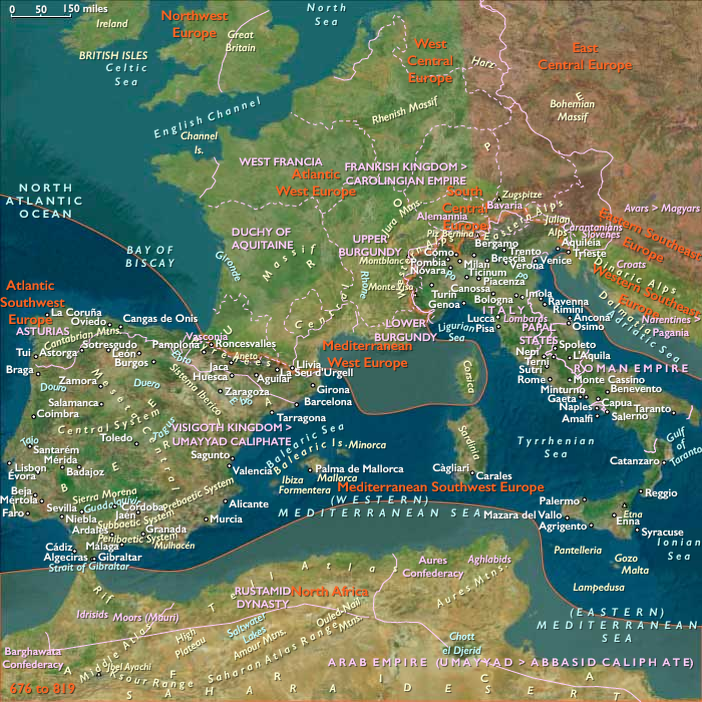
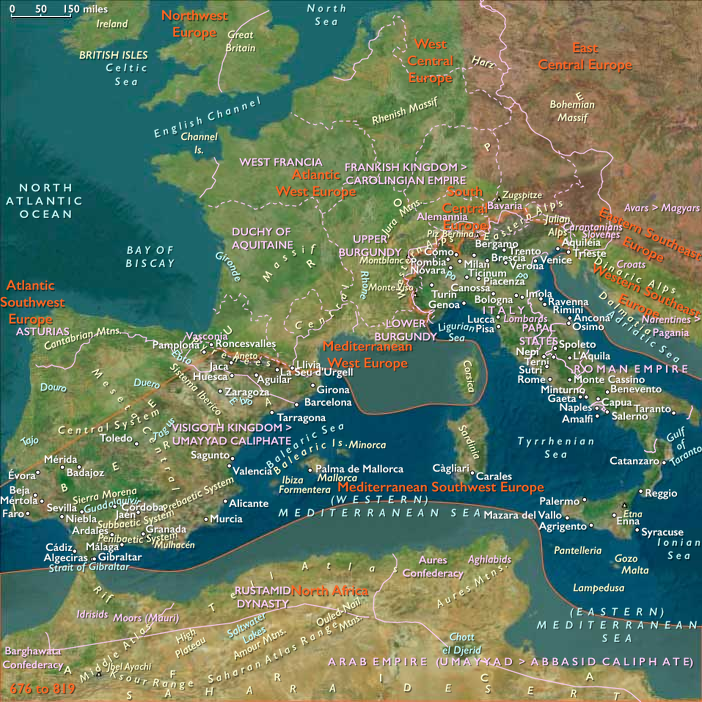
The age 675–819 CE in Mediterranean Southwest Europe is marked by dramatic geopolitical shifts, including the decline and eventual fall of the Lombard kingdom, the establishment of the Papal States, and the rise and flourishing of Al-Andalus under Islamic rule.
Lombard Decline and Carolingian Conquest
In the late eighth century, Lombard power in Italy wanes significantly, culminating in its complete absorption by Charlemagne and the expanding Frankish Empire. Charlemagne's conquest in 774 CE ends the Lombard Kingdom, integrating northern and central Italy into his empire and solidifying Frankish dominance.
Formation of the Papal States
The Franks, under Pepin the Short and later Charlemagne, play a critical role in establishing and reinforcing the temporal power of the papacy. Pepin’s historic "Donation" in 756 CE grants central Italian territories to the pope, founding the Papal States—a significant political entity governed directly by the papacy, which endures for centuries.
Al-Andalus under Umayyad Rule
Following the Islamic conquest of Visigothic Spain beginning in 711 CE, the Iberian Peninsula, now called Al-Andalus, initially comes under the religious and political authority of the Umayyad caliphs in Damascus. Governors, typically of Syrian origin, bring Byzantine-influenced administrative practices, establishing a sophisticated, urban-based aristocracy that includes many converted Visigothic nobles.
Berber Influence and Societal Transformation
Despite Arab political dominance, North African Berbers constitute the largest population group among the Islamic settlers, making up roughly twenty percent of the occupied territory. Berbers, known for their religious fervor and fundamentalism, significantly shape the religious and social character of Iberian Islam. Many settle widely throughout Spain, profoundly influencing its rural and urban communities.
Cultural Integration and Religious Pluralism
In Al-Andalus, widespread conversion to Islam occurs among both Visigothic elites and peasants, though pockets of Hispano-Roman Christianity persist, notably the Mozarab communities. These Christians, alongside a sizable Jewish minority—over five percent of the population—play significant roles in commerce, scholarship, and professional life, particularly in cities like Córdoba, Seville, and Toledo.
Independent Emirate of Córdoba
In 756 CE, the Umayyad dynasty in Damascus falls to the Abbasids, prompting Umayyad prince Abd al-Rahman I to flee to Spain, establishing an independent emirate in Córdoba. His rule (756–788 CE) marks the beginning of a vibrant political entity that thrives culturally, intellectually, and economically, unmatched in contemporary Europe.
Muslim Colonization and Agricultural Development
In Lusitania, Muslim settlement initially takes root but is hindered by unsuitable agricultural conditions north of the Tagus River, especially along the Rio Douro. Preference emerges for the drier, familiar regions southward, particularly the Algarve, where Muslim agricultural practices and settlements leave lasting imprints. The Muslim aristocracy revitalizes urban life, while rural landscapes see a mix of small Muslim farmers and converted Visigothic peasants.
Technological Advances in Metallurgy
Technological innovations, notably the development of the Catalan forge in Iberia around this time, significantly enhance iron production capabilities, transforming medieval economic and military capacities throughout Europe. This advancement facilitates greater agricultural productivity and improved military strength, underpinning regional prosperity.
Legacy of the Age
The era 676–819 CE reshapes Mediterranean Southwest Europe through profound geopolitical, religious, and cultural transformations. The fall of Lombard Italy and rise of the Papal States alter the region’s political structures, while the flourishing of Al-Andalus establishes a vibrant, multicultural Islamic society. These developments set enduring patterns for medieval European history, influencing cultural and political trajectories for centuries to come.

Mediterranean Southwest Europe (with civilization) ©2024-26 Electric Prism, Inc. All rights reserved.
People
Groups
- Berber people (also called Amazigh people or Imazighen, "free men", singular Amazigh)
- Jews
- Moors
- Christianity, Chalcedonian
- Baetica (Visigothic province)
- Tarraconensis (Visigothic province)
- Lusitania (Visigothic province)
- Carthaginensis (Visigothic province)
- Visigothic Kingdom of Spain
- Rome, Duchy of
- Tuscia, (Lombard) Duchy of
- Lombards (Italy), Kingdom of the
- Friuli, (Lombard) duchy of
- Spoleto, Lombard Duchy of
- Benevento, Lombard Duchy of
- Tridentum, (Lombard) duchy of
- Islam
- Umayyad Caliphate (Damascus)
- Al-Garb Al-Andalus
- al-Andalus (Andalusia), Muslim-ruled
- Mozarabs
- Roman Empire, Eastern: Isaurian dynasty
- Umayyad Caliphate (Harran)
- Abbasid Caliphate (Kufa)
- Francia (Carolingians)
- Papal States (Republic of St. Peter)
- Córdoba, Umayyad Emirate of
- Abbasid Caliphate (Baghdad)
Topics
- Umayyad Conquest of Hispania
- Abbasid Revolution of 747-50
- Charlemagne, Conquests of
- Charlemagne's Defeat of Desiderius
Commodoties
Subjects
Regions
Subregions
Years: 676 - 819
Mediterranean Southwest Europe (with civilization) ©2024-26 Electric Prism, Inc. All rights reserved.
People
Groups
- Berber people (also called Amazigh people or Imazighen, "free men", singular Amazigh)
- Jews
- Moors
- Christianity, Chalcedonian
- Baetica (Visigothic province)
- Tarraconensis (Visigothic province)
- Lusitania (Visigothic province)
- Carthaginensis (Visigothic province)
- Visigothic Kingdom of Spain
- Rome, Duchy of
- Tuscia, (Lombard) Duchy of
- Lombards (Italy), Kingdom of the
- Friuli, (Lombard) duchy of
- Spoleto, Lombard Duchy of
- Benevento, Lombard Duchy of
- Tridentum, (Lombard) duchy of
- Islam
- Umayyad Caliphate (Damascus)
- Al-Garb Al-Andalus
- al-Andalus (Andalusia), Muslim-ruled
- Mozarabs
- Roman Empire, Eastern: Isaurian dynasty
- Umayyad Caliphate (Harran)
- Abbasid Caliphate (Kufa)
- Francia (Carolingians)
- Papal States (Republic of St. Peter)
- Córdoba, Umayyad Emirate of
- Abbasid Caliphate (Baghdad)
Topics
- Umayyad Conquest of Hispania
- Abbasid Revolution of 747-50
- Charlemagne, Conquests of
- Charlemagne's Defeat of Desiderius
Commodoties
Subjects
Regions
Subregions