
Mediterranean Southwest Europe (808–819 CE): Carolingian Stability, …
Years: 808 - 819
Mediterranean Southwest Europe (808–819 CE): Carolingian Stability, Moorish Iberian Prosperity, and Cultural Interactions
The era 808–819 CE in Mediterranean Southwest Europe is marked by continued Carolingian political stability in Italy, economic and cultural prosperity in Moorish Iberia, and ongoing ecclesiastical influence throughout the region.
Carolingian Consolidation and Italian Stability
Under the leadership of Charlemagne (until his death in 814 CE) and subsequently his son, Louis the Pious, the Carolingian Empire maintains firm political and administrative control in Italy. Charlemagne’s systematic governance reforms and effective integration of former Lombard territories sustain political cohesion and stability, reinforcing northern and central Italy's role within the broader Carolingian framework.
Flourishing Moorish Iberia under the Umayyads
In Iberia, the Umayyad Emirate, especially under Emir al-Hakam I (r. 796–822 CE), continues to experience significant economic and cultural prosperity. Córdoba solidifies its position as a leading center of Islamic culture, scholarship, and architecture, with the continued enhancement of the Great Mosque of Córdoba symbolizing the region’s vibrant cultural landscape.
Mozarab Communities and Cross-Cultural Exchange
Mozarab communities continue to play a pivotal role, enriching Iberian culture through ongoing interactions between Latin-Christian and Islamic traditions. Their contributions remain influential in urban centers such as Toledo, Córdoba, and Seville, reflecting the complex cultural exchanges shaping Iberia during this period.
Ecclesiastical Leadership and Cultural Continuity
The papacy retains its central role as a stabilizing force and mediator among competing political powers. Ecclesiastical leaders uphold doctrinal authority, foster regional stability, and support intellectual and cultural continuity, reinforcing the integral role of the Church in shaping regional identity and governance.
Economic and Technological Advancements
Economic vitality persists, driven by sustained improvements in agriculture, craftsmanship, and technology, notably through advanced ironworking techniques such as those provided by the Catalan forge. These developments underpin broader economic growth, supporting urban prosperity and enhancing regional trade networks.
Legacy of the Era
The era 808–819 CE reflects enduring Carolingian stability, continued Moorish cultural flourishing, and vibrant cross-cultural interactions facilitated by Mozarab communities. These factors significantly influence the trajectory of Mediterranean Southwest Europe, laying essential foundations for subsequent medieval developments.
People
Groups
- Berber people (also called Amazigh people or Imazighen, "free men", singular Amazigh)
- Moors
- Christianity, Chalcedonian
- Rome, Duchy of
- Islam
- Al-Garb Al-Andalus
- al-Andalus (Andalusia), Muslim-ruled
- Mozarabs
- Roman Empire, Eastern: Isaurian dynasty
- Abbasid Caliphate (Kufa)
- Francia (Carolingians)
- Papal States (Republic of St. Peter)
- Córdoba, Umayyad Emirate of
Commodoties
Subjects
Regions
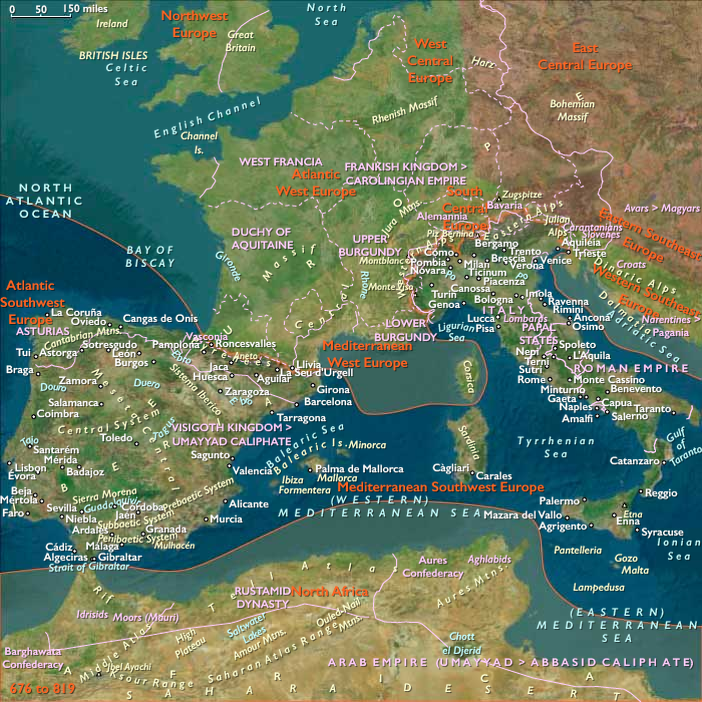
Subregions
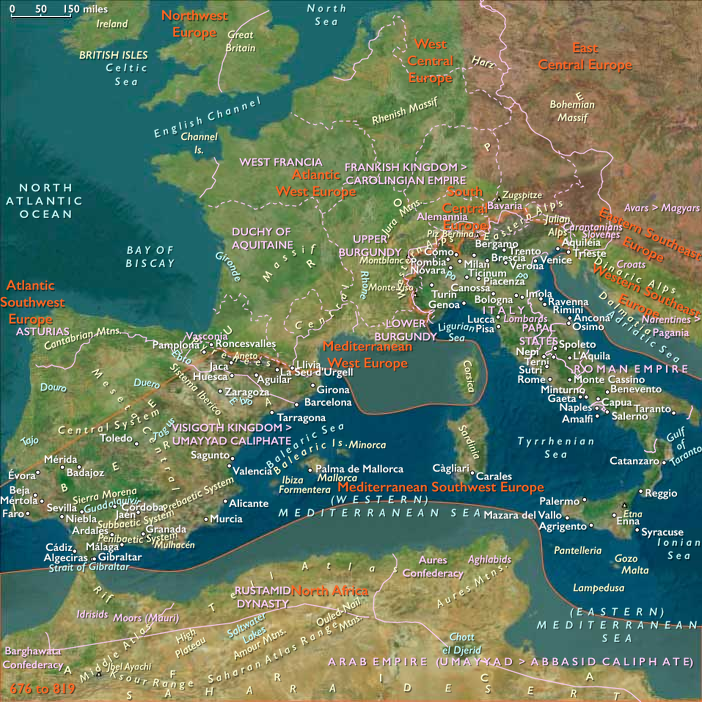
Years: 808 - 819
People
Groups
- Berber people (also called Amazigh people or Imazighen, "free men", singular Amazigh)
- Moors
- Christianity, Chalcedonian
- Rome, Duchy of
- Islam
- Al-Garb Al-Andalus
- al-Andalus (Andalusia), Muslim-ruled
- Mozarabs
- Roman Empire, Eastern: Isaurian dynasty
- Abbasid Caliphate (Kufa)
- Francia (Carolingians)
- Papal States (Republic of St. Peter)
- Córdoba, Umayyad Emirate of
Commodoties
Subjects
Regions
Subregions