
Mediterranean Southwest Europe (772–783 CE): Charlemagne's Conquest …
Years: 772 - 783
Mediterranean Southwest Europe (772–783 CE): Charlemagne's Conquest and the End of Lombard Rule
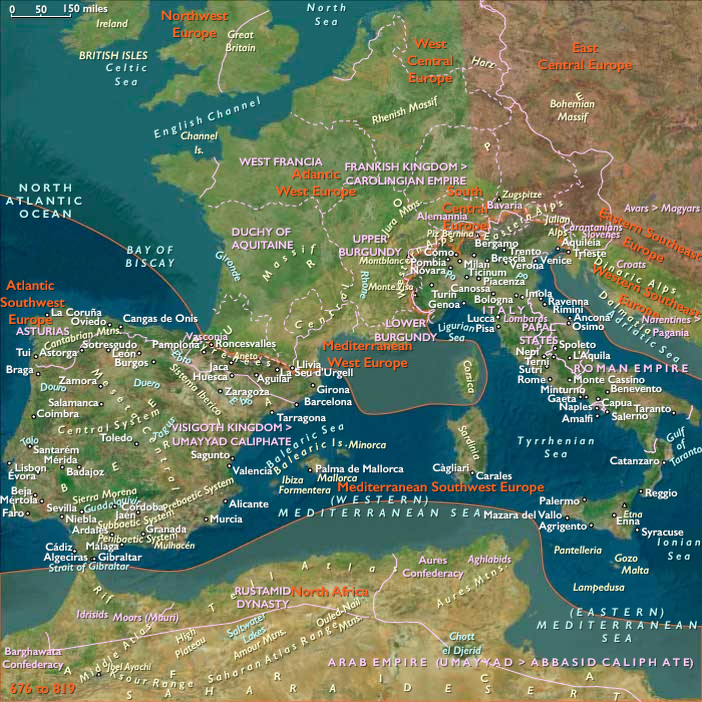
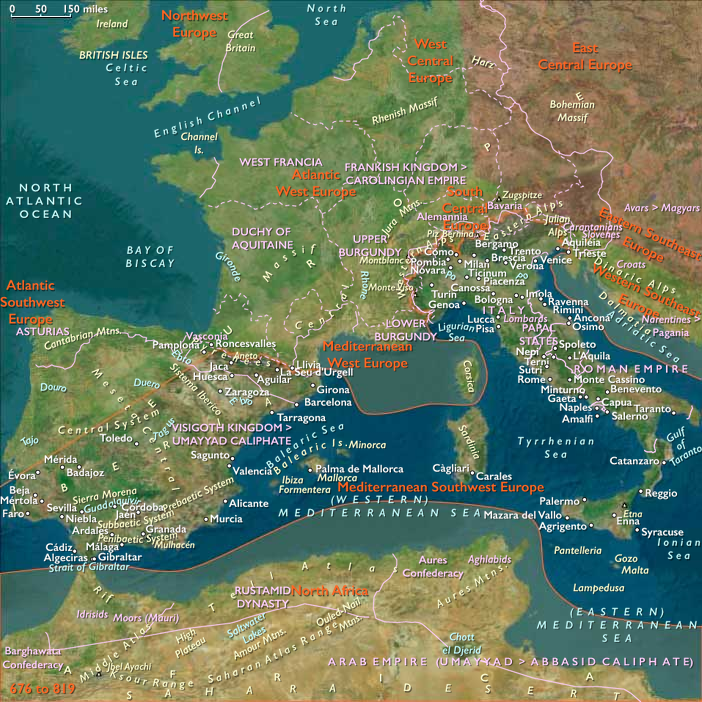
The era 772–783 CE in Mediterranean Southwest Europe is dominated by Charlemagne’s decisive conquest of the Lombard Kingdom, fundamentally altering Italy's political landscape and setting the stage for a new imperial epoch under Frankish rule.
Charlemagne's Lombard Campaign
In 774 CE, Charlemagne, King of the Franks, successfully completes his campaign against the Lombards by capturing their capital, Pavia. His victory results in the deposition of Lombard King Desiderius and marks the definitive end of independent Lombard power in Italy. Charlemagne assumes the title King of the Lombards, integrating the Lombard territories into his expanding Frankish empire.
End of Lombard Autonomy and Regional Realignment
With Charlemagne’s conquest, the political autonomy the Lombards had enjoyed for over two centuries effectively ceases. The integration of the Lombard kingdom into Charlemagne’s dominion reshapes Italy’s political structure, reducing the influence of local Lombard elites and enhancing Frankish administrative control.
Strengthened Papal-Frankish Alliance
The conquest further consolidates the historic alliance between the papacy and the Frankish monarchy, initiated by Pepin the Short. Charlemagne reaffirms papal territorial claims, reinforcing the temporal authority of the Papal States and solidifying a powerful political and religious partnership central to medieval European politics.
Continued Mozarab Cultural Evolution in Iberia
In Iberia, Mozarab communities persist under stable Islamic governance, particularly in cultural hubs like Córdoba, Seville, and Toledo. These communities continue adapting culturally, blending their Latin-Christian traditions with the Arabic and Islamic influences of their Moorish rulers, further enriching the Iberian cultural landscape.
Technological and Economic Development
Technological advancements, particularly in metallurgy following the introduction of the Catalan forge, continue to enhance regional economic productivity. Increased iron production supports broader economic prosperity, facilitating improvements in agriculture, military technology, and craftsmanship throughout the region.
Legacy of the Era
The era 772–783 CE marks a transformative moment in Mediterranean Southwest Europe. Charlemagne’s conquest ends Lombard rule, reshapes Italy’s political map, and fortifies the papal-Frankish alliance. These developments lay the groundwork for the emergence of the Carolingian Empire, profoundly influencing the region’s medieval trajectory.
People
Groups
- Berber people (also called Amazigh people or Imazighen, "free men", singular Amazigh)
- Moors
- Christianity, Chalcedonian
- Rome, Duchy of
- Tuscia, (Lombard) Duchy of
- Lombards (Italy), Kingdom of the
- Friuli, (Lombard) duchy of
- Spoleto, Lombard Duchy of
- Benevento, Lombard Duchy of
- Tridentum, (Lombard) duchy of
- Islam
- Umayyad Caliphate (Damascus)
- Francia (mayors of the palaces of Austrasia and Neustria)
- Roman Empire, Eastern: Non-dynastic
- al-Andalus (Andalusia), Muslim-ruled
- Al-Garb Al-Andalus
- Mozarabs
- Abbasid Caliphate (Kufa)
- Francia (Carolingians)
- Papal States (Republic of St. Peter)
- Córdoba, Umayyad Emirate of
Topics
Commodoties
Subjects
Regions
Subregions
Years: 772 - 783
People
Groups
- Berber people (also called Amazigh people or Imazighen, "free men", singular Amazigh)
- Moors
- Christianity, Chalcedonian
- Rome, Duchy of
- Tuscia, (Lombard) Duchy of
- Lombards (Italy), Kingdom of the
- Friuli, (Lombard) duchy of
- Spoleto, Lombard Duchy of
- Benevento, Lombard Duchy of
- Tridentum, (Lombard) duchy of
- Islam
- Umayyad Caliphate (Damascus)
- Francia (mayors of the palaces of Austrasia and Neustria)
- Roman Empire, Eastern: Non-dynastic
- al-Andalus (Andalusia), Muslim-ruled
- Al-Garb Al-Andalus
- Mozarabs
- Abbasid Caliphate (Kufa)
- Francia (Carolingians)
- Papal States (Republic of St. Peter)
- Córdoba, Umayyad Emirate of
Topics
Commodoties
Subjects
Regions
Subregions