
Mediterranean Southwest Europe (664–675 CE): Lombard Expansion, …
Years: 664 - 675
Mediterranean Southwest Europe (664–675 CE): Lombard Expansion, Byzantine Resistance, and Regional Shifts
The era 664–675 CE in Mediterranean Southwest Europe is marked by continued Lombard territorial expansion, significant Byzantine resistance to these incursions, and ongoing ecclesiastical and administrative adjustments that shape regional dynamics.
Lombard Expansion into Southern Italy
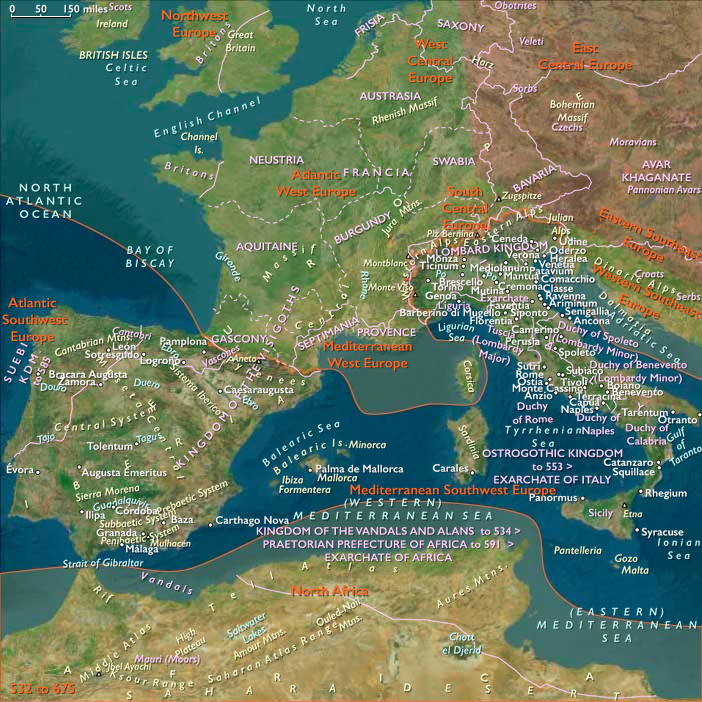
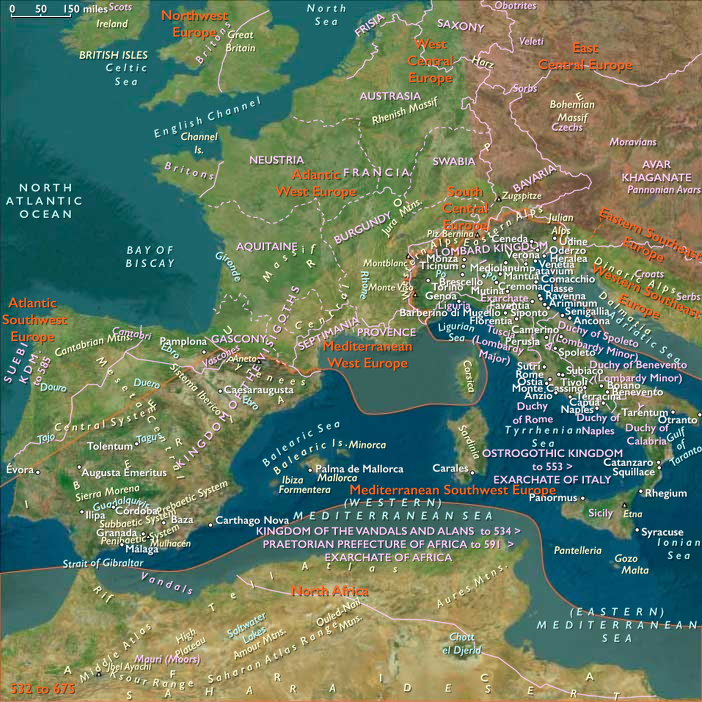
In this era, the Lombards extend their influence further into southern Italy, notably capturing Taranto, a strategically important coastal city. This conquest underlines the growing strength and ambition of the Lombard duchies in the southern peninsula, particularly the Duchy of Benevento. The expansion of Lombard control into Apulia and surrounding regions significantly challenges remaining Byzantine territories, reshaping the geopolitical balance in southern Italy.
Persistent Byzantine Resistance and Administrative Adaptations
Despite losing Taranto and other inland territories, the Byzantine Exarchate of Ravenna maintains determined resistance, securing key coastal enclaves and reinforcing strategic urban centers. Byzantine authorities reorganize defenses and diplomatic strategies, aiming to halt further Lombard incursions and preserve the Rome-to-Ravenna corridor, critical for communication and administrative cohesion.
Ecclesiastical Stability and Papal Authority
During this era, the papacy under Pope Vitalian (r. 657–672 CE) and his successor Adeodatus II (r. 672–676 CE) continues efforts to assert spiritual authority and ecclesiastical stability amidst political fragmentation. The papal office provides crucial continuity, guiding doctrinal consistency and fostering cultural resilience, even as secular governance becomes increasingly fragmented.
Regional Geopolitical Shifts and Broader Mediterranean Context
The Lombard capture of Taranto illustrates broader shifts occurring throughout the Mediterranean basin, particularly as early Islamic expansion continues to affect maritime trade and security. Mediterranean Southwest Europe increasingly experiences external pressures that indirectly affect internal dynamics, compelling local rulers and Byzantine officials alike to adapt strategically to maintain their territories and influence.
Legacy of the Era
The era 664–675 CE significantly reshapes southern Italy’s political and territorial landscapes. Lombard territorial gains underscore their sustained regional dominance, while Byzantine efforts to resist further losses demonstrate resilience amid growing challenges. Ecclesiastical institutions remain pivotal, preserving continuity and stability as political and territorial shifts continue to define the transition toward a distinctly medieval European order.
People
Groups
- Christianity, Chalcedonian
- Rome, Duchy of
- Lombards (Italy), Kingdom of the
- Spoleto, Lombard Duchy of
- Benevento, Lombard Duchy of
- Ravenna, Exarchate of
- Roman Empire, Eastern: Heraclian dynasty
Subjects
Regions
Subregions
Related Events
Showing 10 events out of 56290 total
Years: 664 - 675
People
Groups
- Christianity, Chalcedonian
- Rome, Duchy of
- Lombards (Italy), Kingdom of the
- Spoleto, Lombard Duchy of
- Benevento, Lombard Duchy of
- Ravenna, Exarchate of
- Roman Empire, Eastern: Heraclian dynasty
Subjects
Regions
Subregions