
Mediterranean Southwest Europe (520–531 CE): Stabilization, Cultural …
Years: 520 - 531
Mediterranean Southwest Europe (520–531 CE): Stabilization, Cultural Flourishing, and Regional Prosperity
The era 520–531 CE in Mediterranean Southwest Europe is marked by stabilization, consolidation, and cultural renewal following significant political upheavals. The Visigothic Kingdom, now centered firmly in Iberia under King Amalaric (r. 511–531 CE), achieves internal reorganization, while in Italy, the Ostrogothic Kingdom under Theodoric the Great (r. 493–526 CE) reaches its cultural and economic zenith.
Visigothic Consolidation in Iberia
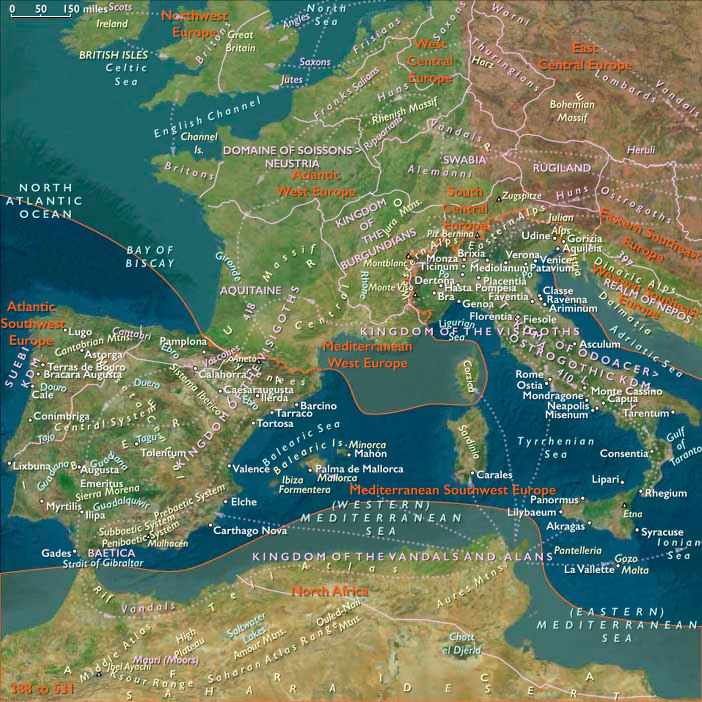
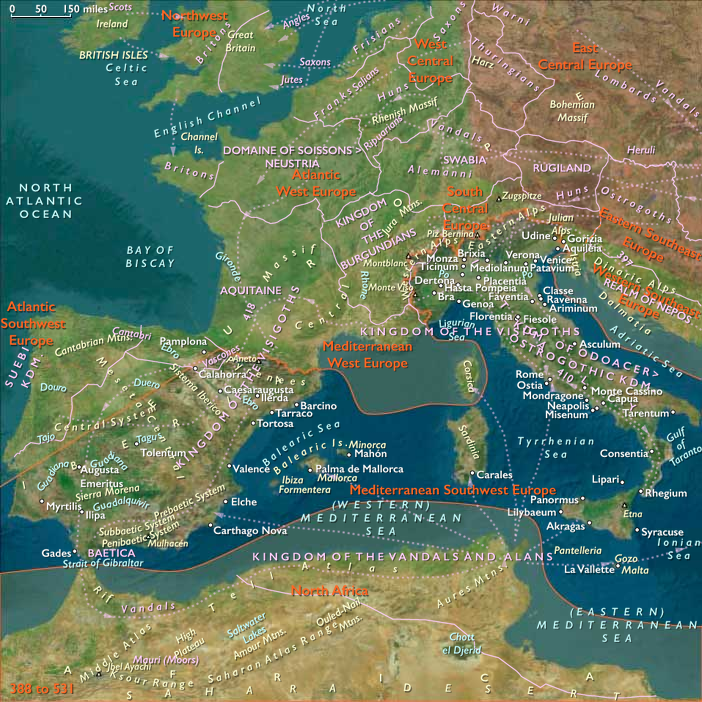
Following the severe territorial losses after the Battle of Vouillé (507 CE), Amalaric effectively stabilizes the Visigothic realm, consolidating its authority primarily within the Iberian Peninsula. The Visigoths solidify their administrative structures, blending Roman governance traditions with Gothic leadership, fostering internal stability despite external pressures from Frankish neighbors to the north.
Peak of Ostrogothic Prosperity under Theodoric
In Italy, Theodoric the Great continues to preside over a period of significant peace and prosperity. Under his governance, Italy experiences renewed economic growth, supported by efficient administrative reforms, a revitalized agricultural sector, and expanded trade networks across the Mediterranean. Theodoric's rule is distinguished by his tolerance and balanced policy toward both Gothic and Roman populations, fostering societal cohesion.
Cultural Flourishing in Ravenna and Italy
Theodoric's court in Ravenna emerges as a premier cultural center, producing remarkable artistic and architectural achievements. Iconic structures such as the Basilica of Sant’Apollinare Nuovo and Theodoric’s Mausoleum, both constructed around this time, showcase the synthesis of classical Roman techniques and emerging medieval aesthetics. These edifices, celebrated for their exceptional mosaics and innovative architecture, symbolize the cultural vibrancy of Ostrogothic Italy.
Economic Continuity and Regional Prosperity
Throughout the region, local economies demonstrate resilience and adaptability. Trade and agriculture remain robust, benefiting from the period of relative stability. Continued infrastructure improvements initiated by Theodoric, including road restorations and public works, further facilitate economic prosperity, reinforcing urban vitality and regional interconnectivity.
Christian Ecclesiastical Influence and Continuity
Christianity remains central to social, cultural, and educational life. The Church, deeply integrated into local governance structures, continues to provide stability and continuity amid changing political landscapes. Bishops and ecclesiastical leaders wield significant influence, fostering a cohesive community identity and sustaining Roman cultural traditions.
Legacy of Stability and Cultural Integration
The era 520–531 CE represents a significant period of stability, reorganization, and cultural integration within Mediterranean Southwest Europe. The Visigothic and Ostrogothic kingdoms establish enduring political and cultural legacies, laying essential foundations for the medieval societies that will follow.
People
Groups
- Christianity, Arian
- Ostrogoths, Realms of the
- Visigothic Kingdom of Toulouse
- Christianity, Chalcedonian
Subjects
Regions
Subregions
Related Events
Showing 10 events out of 58185 total
Years: 520 - 531
People
Groups
- Christianity, Arian
- Ostrogoths, Realms of the
- Visigothic Kingdom of Toulouse
- Christianity, Chalcedonian
Subjects
Regions
Subregions