
Mediterranean Southwest Europe (484–495 CE): Theodoric’s Conquest, …
Years: 484 - 495
Mediterranean Southwest Europe (484–495 CE): Theodoric’s Conquest, Ostrogothic Kingdom, and Vandal Administration
The era 484–495 CE in Mediterranean Southwest Europe is defined by the decisive emergence of the Ostrogothic Kingdom under Theodoric the Great, the definitive removal of Odoacer, and a major shift from Roman to Gothic authority in Italy.
Theodoric's March into Italy
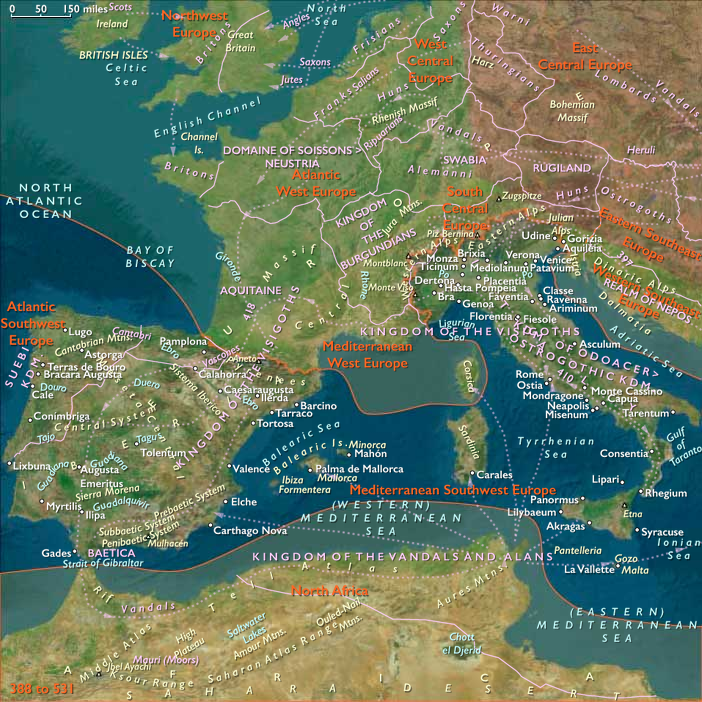
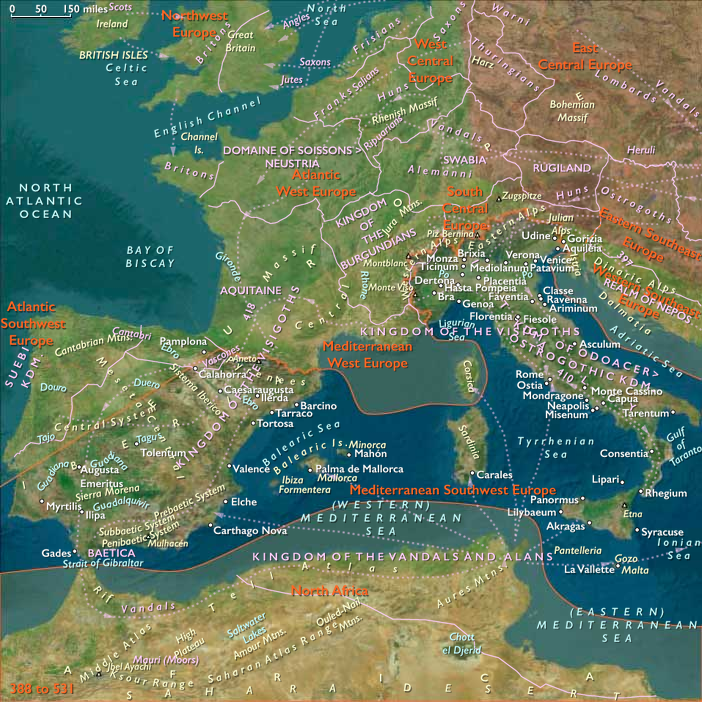
By the late 480s, Theodoric, leader of the Ostrogoths, prepares his campaign into Italy. Historical sources vary regarding whether this action is prompted by Emperor Zeno or Theodoric himself. Nonetheless, in 489 CE, Theodoric invades Italy, challenging Odoacer, the Germanic ruler who had previously deposed Romulus Augustulus.
Rapid Ostrogothic Victories
Theodoric swiftly gains major victories, forcing Odoacer into retreat at Ravenna and capturing key cities like Verona and Milan. In Milan, Theodoric is warmly welcomed by civic and ecclesiastical leaders, as well as Odoacer’s former troops, including his commander-in-chief Tufa, who briefly joins Theodoric before betraying him.
Gothic Solidarity and Ravenna Siege
Facing renewed resistance in 490 CE, Theodoric receives vital support from Visigothic King Alaric II, highlighting rare Gothic unity. Theodoric resumes his offensive, besieging Ravenna for about two years (490–493 CE) and successfully imposes a blockade with naval forces.
Peace Agreement and Odoacer’s Death
In 493 CE, a peace agreement mediated by John, Bishop of Ravenna, results in a short-lived joint rule agreement between Theodoric and Odoacer. This arrangement ends abruptly when Theodoric personally kills Odoacer at a banquet shortly thereafter.
Establishment of the Ostrogothic Kingdom
With Odoacer's death, Theodoric establishes the Ostrogothic Kingdom, ruling from Ravenna. Combining Roman administrative methods and Gothic leadership, this kingdom represents a significant shift, lasting until 553 CE.
Vandal Administration in Sardinia
Concurrent with Ostrogothic developments, the Vandals in Sardinia maintain a structured administrative system closely resembling Roman governance. Sardinia is governed by a praeses, a trusted member of the royal family stationed in Caralis, overseeing both civil and military matters. This official is supported by numerous auxiliary officers, including procurators, tax collectors, and real estate managers known as conductors.
The island’s territory is subdivided between crown possessions and lands allocated to Vandal warriors. Strong Vandal garrisons remain in Sardinia and Corsica, ensuring secure maritime routes between North Africa and the Mediterranean. Some local Sardinian-Roman landowners retain their estates by making lump-sum payments. Meanwhile, the mountainous central-eastern region of Barbagia continues as a semi-independent duchy, maintaining the autonomy it had during the Roman period and continuing through the early Byzantine era.
Cultural Continuity and Christian Influence
Despite political upheavals, cultural life continues to thrive under strong Christian influence. Ravenna becomes renowned for its exceptional mosaics and ecclesiastical architecture, blending classical and early medieval styles.
Legacy of the Era
The era 484–495 CE marks a profound reshaping of Mediterranean Southwest Europe’s political landscape, firmly establishing Gothic dominance in Italy and Vandal administrative continuity in Sardinia. These developments set the stage for the distinctive cultural synthesis and political structures of the medieval period.
People
Groups
- Christianity, Nicene
- Ostrogoths, Realms of the
- Visigothic Kingdom of Toulouse
- Vandals and the Alans, Kingdom of the
- Sardinia, Vandal
- Roman Empire, Eastern: Leonid dynasty
- Odoacer (Italy), Kingdom of
Topics
Subjects
Regions
Subregions
Related Events
Showing 10 events out of 58465 total
Years: 484 - 495
People
Groups
- Christianity, Nicene
- Ostrogoths, Realms of the
- Visigothic Kingdom of Toulouse
- Vandals and the Alans, Kingdom of the
- Sardinia, Vandal
- Roman Empire, Eastern: Leonid dynasty
- Odoacer (Italy), Kingdom of
Topics
Subjects
Regions
Subregions