
Mediterranean Southwest Europe (417–406 BCE): Sicilian Conflicts …
Years: 417BCE - 406BCE
Mediterranean Southwest Europe (417–406 BCE): Sicilian Conflicts and Peloponnesian Reverberations
The era 417–406 BCE in Mediterranean Southwest Europe is marked by heightened tensions and pivotal conflicts in Sicily influenced by wider Greek geopolitical dynamics, ongoing developments within the Roman Republic, and sustained interactions among Carthaginians, Greeks, and indigenous populations across the broader region.
Sicilian Rivalries and the Athenian Expedition
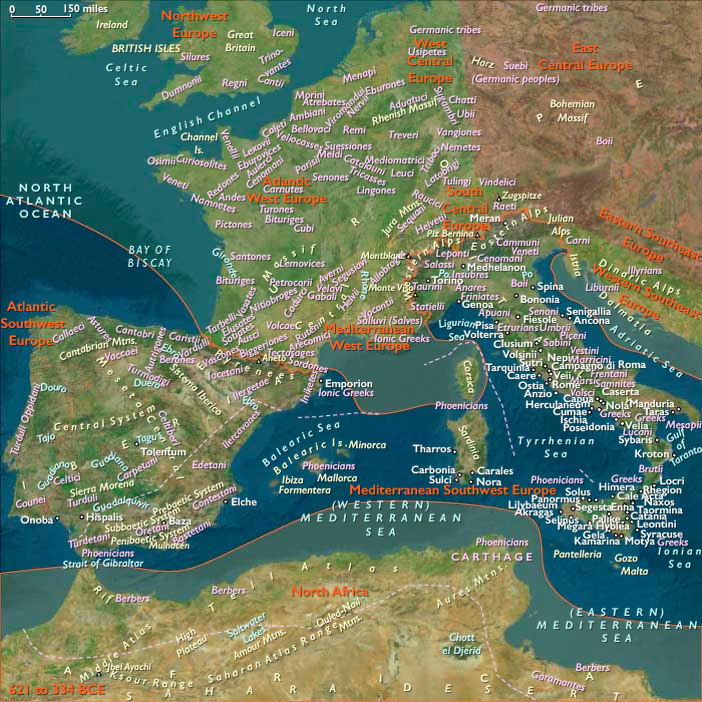
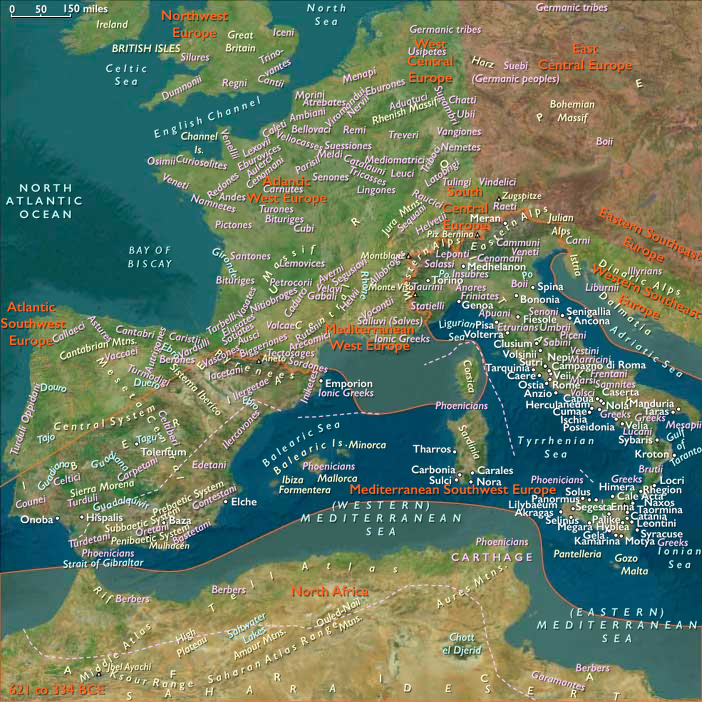
The enduring rivalry between two significant Sicilian cities, Dorian-Greek Selinus and Ionian-Greek Segesta, escalates dramatically during this period. In 416 BCE, Selinus defeats Segesta, seizing its territory and prompting Segesta to appeal for external aid. Initially turned away by Carthage, Segesta successfully solicits assistance from Athens, setting in motion a substantial Athenian military intervention—the infamous Sicilian Expedition (415–413 BCE).
The Sicilian Expedition results in catastrophic failure for Athens. Facing the formidable defenses of Syracuse, Athens suffers a devastating defeat, losing two hundred ships and thousands of soldiers—crippling its military power and dramatically shifting the balance of the Peloponnesian War. This defeat emboldens Sparta and its Persian allies, marking a decisive turning point against Athenian dominance in the Mediterranean.
Second Sicilian War: Carthage and Syracuse
Following another defeat at the hands of Selinus in 411 BCE, Segesta submits to Carthaginian authority, significantly shifting local allegiances. Carthage, now actively involved, dispatches Hannibal Mago to aid Segesta, leading to a decisive victory against Selinus in 410 BCE. Attempts at diplomatic resolution between Carthage, Segesta, Selinus, and Syracuse fail, culminating in Hannibal Mago’s larger military expedition to Sicily and initiating the Second Sicilian War between Carthage and Syracuse.
Roman Republic: Institutional Reforms and Alliances
Amid regional turmoil, the Roman Republic undergoes notable institutional developments. Rome's social structure evolves as the tribunus plebis—tribune of the plebeians—gains prominence, significantly enhancing plebeian representation in governance. The formation of the Foedus Cassianum in 493 BCE, an alliance of mutual defense between Rome and the Latin League, continues to strengthen Roman political and military alliances, enabling Rome to consolidate influence in central Italy despite external conflicts and internal social challenges.
Artistic and Cultural Developments
The Etruscans, although facing political and military pressures, continue to flourish artistically. Fine Etruscan metalwork and sculpture—exemplified by iconic works like the bronze Capitoline She-Wolf—remain prominent, illustrating ongoing cultural sophistication and technical excellence in artistic production. Such works underscore the enduring cultural legacy of the Etruscans, even as their political dominance wanes.
Broader Regional Dynamics
Throughout Mediterranean Southwest Europe, indigenous populations, Carthaginians, Greeks, and Romans engage in complex interactions shaped by trade, alliances, and military confrontations. The power struggles in Sicily reflect broader shifts across the Mediterranean, highlighting how local conflicts can ripple through wider geopolitical landscapes. Carthaginian involvement in Sicily particularly underscores growing Carthaginian influence in western Mediterranean politics and commerce.
Legacy of the Era
The era 417–406 BCE significantly shapes the geopolitical and cultural landscape of Mediterranean Southwest Europe. The disastrous Athenian defeat in Sicily redefines Greek political dynamics, Carthaginian assertiveness in Sicily reshapes regional power balances, and Roman internal developments strengthen the foundations of republican governance, setting the stage for further expansion and regional influence.
People
Groups
- Sicily, classical
- Italy, classical
- Carthage, Kingdom of
- Greeks, Classical
- Segesta, (Elymian-Ionian Greek) city-state of
- Magna Graecia
- Selinus, (Dorian Greek) city-state of
- Roman Republic
- Athenian Empire (Delian League)
Topics
- Iron Age Europe
- Greek colonization
- Roman-Etruscan Wars, Early
- Sicilian Expedition
- Sicilian War, Second, or Second Carthaginian-Syracusan War
Subjects
Regions
Subregions
Related Events
Showing 10 events out of 65105 total
Years: 417BCE - 406BCE
People
Groups
- Sicily, classical
- Italy, classical
- Carthage, Kingdom of
- Greeks, Classical
- Segesta, (Elymian-Ionian Greek) city-state of
- Magna Graecia
- Selinus, (Dorian Greek) city-state of
- Roman Republic
- Athenian Empire (Delian League)
Topics
- Iron Age Europe
- Greek colonization
- Roman-Etruscan Wars, Early
- Sicilian Expedition
- Sicilian War, Second, or Second Carthaginian-Syracusan War
Subjects
Regions
Subregions