
Mediterranean Southwest Europe (357–346 BCE): Dynastic Struggles …
Years: 357BCE - 346BCE
Mediterranean Southwest Europe (357–346 BCE): Dynastic Struggles in Syracuse and Etruscan Artistic Flourishing
The era 357–346 BCE in Mediterranean Southwest Europe is defined by political upheaval in Syracuse, as well as continued cultural and artistic vitality among the Etruscans, marking an intersection of intense political drama and sustained artistic tradition.
Syracuse: Dynastic Conflict and the Rise and Fall of Dion
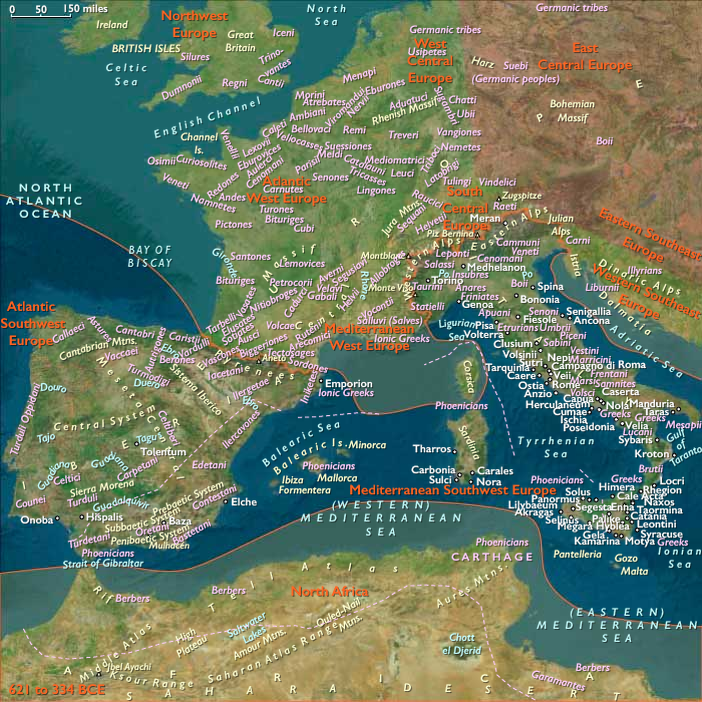
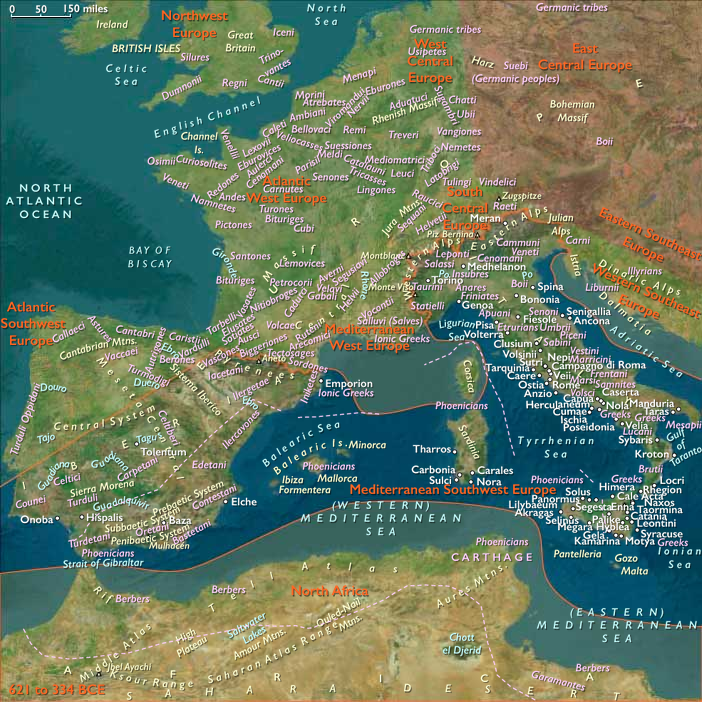
Following a decade of relative peace under Dionysius the Younger, the Syracusan autocracy is violently disrupted when his exiled uncle Dion, in 357 BCE, gathers an army of fifteen hundred mercenaries on the island of Zacynthus and returns to Sicily to challenge the ruling regime. Dion's arrival ignites a short but brutal civil conflict that results in Dionysius the Younger’s rapid expulsion. Welcomed joyfully by the people of Syracuse, Dion initially assumes control, forcing Dionysius to flee to the southern Italian city of Locri.
Yet Dion’s rule proves unstable. Shortly after establishing authority, he is again banished amid political rivalries, only to be recalled once more in a continuing struggle for power. His turbulent leadership comes to an abrupt end when, in 354 BCE, he is assassinated by an Athenian conspirator, plunging Syracuse into a renewed period of civil war. These internal conflicts severely weaken Syracuse, undermining its regional prominence and leaving it vulnerable to ongoing power struggles.
Etruscan Artistic Flourishing: The "Ficoroni Cista"
Despite political turmoil in Sicily, Etruscan culture continues to thrive artistically in central Italy, highlighted by the creation of the renowned "Ficoroni Cista" around 350 BCE. This extraordinary bronze container, notable for its intricately adorned lid with ornamental figures, represents the sophisticated craftsmanship of Etruscan artists, though some historians suggest the possibility of its production in Rome. Originally intended for an Etruscan tomb, the cista reflects the cultural and artistic interplay between Rome and Etruria during this period.
The Ficoroni Cista stands as a significant testament to Etruscan artistic excellence and cultural resilience, even as Etruscan political and military power faces ongoing challenges from Rome and neighboring peoples.
Legacy of the Era
The era 357–346 BCE underscores critical dynastic struggles in Syracuse, highlighting the vulnerabilities and complexities of Greek colonial governance, while concurrently demonstrating enduring Etruscan cultural vitality through continued artistic production. These developments shape Mediterranean Southwest Europe’s historical trajectory, influencing future political alignments and cultural interactions across Italy and Sicily.
People
Groups
Subjects
Regions
Subregions
Related Events
Showing 10 events out of 64716 total
Years: 357BCE - 346BCE
People
Groups
Subjects
Regions
Subregions