
Mediterranean Southwest Europe (345–334 BCE): Conflicts in …
Years: 345BCE - 334BCE
Mediterranean Southwest Europe (345–334 BCE): Conflicts in Sicily, the Latin War, and the Samnite Wars
The era 345–334 BCE in Mediterranean Southwest Europe is marked by continued conflicts in Sicily, significant shifts in Rome’s internal political structure, the critical Latin War, and early phases of Rome's prolonged conflict with the Samnites.
Timoleon’s Intervention in Sicily
Responding to appeals from Syracuse for assistance against ongoing internal strife and external threats from Sparta and Carthage, Timoleon of Corinth arrives in Sicily in 344 BCE. Swiftly gaining control of Syracuse by 343 BCE, Timoleon reestablishes democratic governance based on the laws of Diocles. He then decisively defeats the forces of Hicetas, tyrant of Leontini, and a Carthaginian army at the battle of the Crimissus. By 338 BCE, Carthage agrees to limit its influence in Sicily west of the Halycus (Platani) River, pledging no further support to local tyrants.
Roman Political and Territorial Transformations
In Rome, the Latin War (340–338 BCE) reshapes regional politics significantly. This conflict between the Roman Republic and the Latin League concludes with the league's dissolution and the extension of Roman influence throughout Latium. The territories of defeated Latin states become partially incorporated into Roman jurisdiction, with their peoples receiving varying degrees of citizenship and rights.
Further political transformations occur within Rome as plebeians gain increasingly influential positions. After 367 BCE, one of Rome’s two consuls is consistently drawn from the plebeian class, gradually enabling plebeian entry into the Senate.
The First Samnite War
The early stages of the First Samnite War (traditionally dated 343–341 BCE, though its historicity is debated), are sparked when the Samnites attack the Sidicini and subsequently threaten the powerful city-state of Capua in Campania. Capua appeals to Rome, resulting in Roman military intervention under consul Lucius Aemilius Mamercinus Privernas in 341 BCE. Rome initially ravages Samnite territory, leading the Samnites to sue for peace. The Romans withdraw after agreeing to renew their earlier treaty with the Samnites, marking the end of this brief conflict.
Cultural and Artistic Continuity
Artistic achievements continue during this period. The Ficoroni Cista, created around 350 BCE, exemplifies Etruscan craftsmanship, although possibly produced in Rome. Such artifacts demonstrate the enduring cultural vitality amidst political upheaval.
Legacy of the Era
The era 345–334 BCE significantly influences Mediterranean Southwest Europe, featuring critical shifts in Roman territorial control, decisive conflict resolution in Sicily, and foundational developments for future Roman expansion through internal reforms and external alliances. These events set crucial precedents for Rome’s ascendancy as a dominant Mediterranean power.
People
Groups
- Sicily, classical
- Italy, classical
- Corinth, City-State of
- Syracuse, Corinthian city-state of
- Etruria
- Latin League
- Roman Republic
- Sidicini
- Samnium
Topics
- Sicilian Wars, or Carthaginian-Syracusan Wars
- Sicilian War, Second, or Second Carthaginian-Syracusan War
- Samnite War, First
- Latin War
- Crimissus, Battle of the
Subjects
Regions
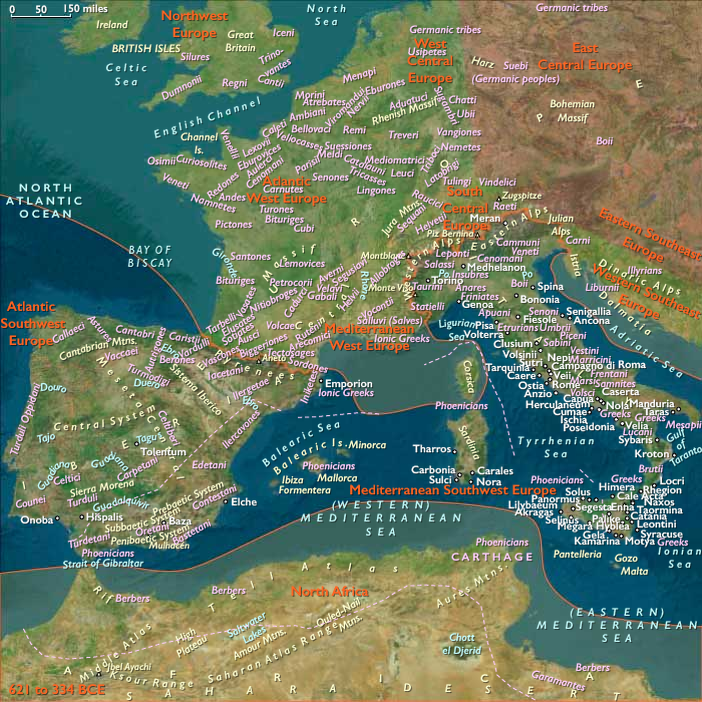
Subregions
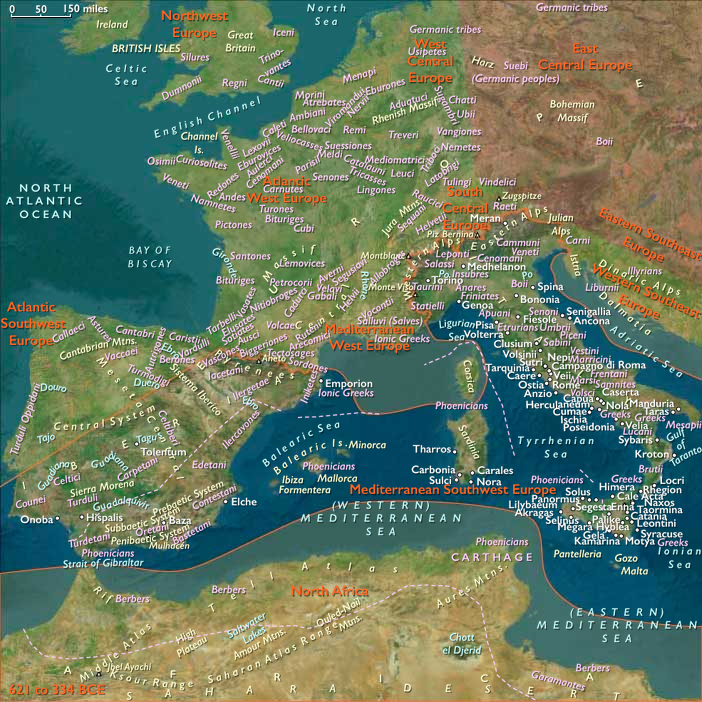
Related Events
Showing 10 events out of 64632 total
Years: 345BCE - 334BCE
People
Groups
- Sicily, classical
- Italy, classical
- Corinth, City-State of
- Syracuse, Corinthian city-state of
- Etruria
- Latin League
- Roman Republic
- Sidicini
- Samnium
Topics
- Sicilian Wars, or Carthaginian-Syracusan Wars
- Sicilian War, Second, or Second Carthaginian-Syracusan War
- Samnite War, First
- Latin War
- Crimissus, Battle of the
Subjects
Regions
Subregions