
Mediterranean Southwest Europe (321–310 BCE): Rome's Struggles …
Years: 321BCE - 310BCE
Mediterranean Southwest Europe (321–310 BCE): Rome's Struggles and Turning Point in the Second Samnite War
The era 321–310 BCE in Mediterranean Southwest Europe sees Rome initially suffer significant setbacks during the ongoing Second Samnite War, testing its political resilience and military capability. However, this period also marks a turning point, as Rome manages to recover and reassert its dominance, reshaping the geopolitical balance of power in central Italy.
Early Roman Setbacks
Throughout the early years of this era, Rome experiences severe defeats against the Samnites, significantly shaking its military confidence and threatening its regional alliances. The Samnites, successful in numerous engagements, bring Campania to the brink of abandoning its alliance with Rome. The Romans, acknowledging the gravity of their situation, negotiate peace agreements with certain Samnite towns to stem their losses and stabilize their positions.
Turning of the Tide
In 311 BCE, however, the conflict expands dramatically. As Rome is struggling to maintain its footing, several Etruscan city-states enter the war, joining the Samnites in opposition to Roman expansion. The Etruscan decision coincides with the expiration of a previously established forty-year peace agreement, significantly escalating the scope of the conflict.
Roman Resurgence and Strategic Shifts
Faced with this new alliance of adversaries, Rome mobilizes its resources and military strategy more effectively. After initial setbacks, Roman forces start achieving decisive victories against both the Samnites and their Etruscan allies. The war evolves into a broader struggle for control over much of Italy, showcasing Rome's resolve and military innovation.
Broader Regional Context
In this period, southern Iberia and the western Mediterranean islands remain largely stable politically, maintaining ongoing trade and cultural exchanges. However, the intensified warfare in Italy indirectly influences commercial and diplomatic activities throughout the region, particularly affecting interactions among Greek, Carthaginian, and indigenous Iberian communities.
Legacy of the Era
The era 321–310 BCE proves crucial for Mediterranean Southwest Europe, marking a significant pivot in the Second Samnite War. Rome’s ability to recover from earlier setbacks and effectively counter combined threats from the Samnites and Etruscans lays a strong foundation for its emerging dominance. These military and diplomatic developments foreshadow Rome's future expansion, reshaping regional alliances and power dynamics in the decades to follow.
Groups
Topics
Subjects
Regions
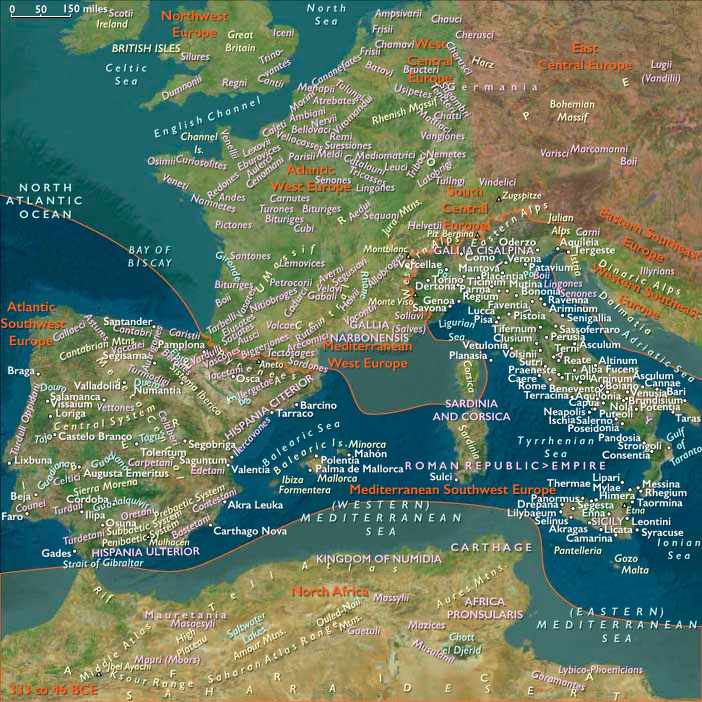
Subregions
Related Events
Showing 10 events out of 64277 total
Years: 321BCE - 310BCE
Groups
Topics
Subjects
Regions
Subregions