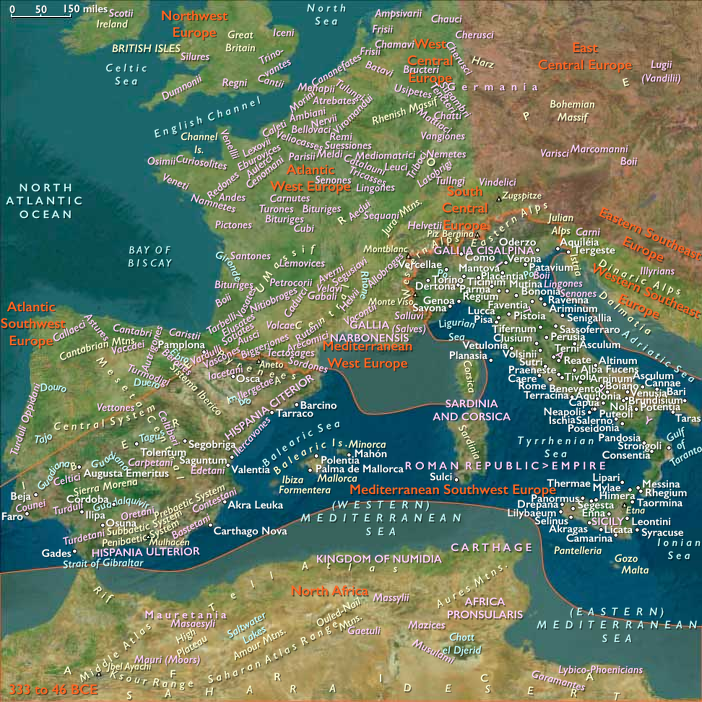
Mediterranean Southwest Europe (309–298 BCE): Rome's Consolidation …
Years: 309BCE - 298BCE
Mediterranean Southwest Europe (309–298 BCE): Rome's Consolidation and Renewed Conflict
The era 309–298 BCE witnesses Rome consolidating its dominance over central Italy following a series of crucial victories, effectively concluding the Second Samnite War and laying the groundwork for a new wave of regional conflicts.
Roman Triumph and Strategic Expansion
Between 311 and 304 BCE, Rome and its allies secure significant military victories against both the Samnites and their Etruscan allies. A major Roman victory occurs at Perusia (310 BCE), compelling the Etruscans to sue for peace by 308 BCE. The Romans grant peace to the Etruscans on severe terms, and by 304 BCE, Rome concludes peace with the Samnites as well. Although this agreement is stern, it does not completely break the Samnites' power, demanding inspections and establishing a tentative peace lasting until 298 BCE.
Infrastructure and Military Innovations
During these decisive years, Rome undertakes substantial infrastructural and military innovations. Notably, the Romans construct their first military roads—the Via Appia (begun in 312 BCE) and the Via Valeria (306 BCE). These vital roadways enhance Roman military mobility, enabling quicker and more effective responses to threats across Italy. Additionally, Rome expands its military levy significantly, as seen by increasing the number of annually elected military tribunes from six to sixteen.
Northern Expansion and Regional Dominance
In the latter stages of the war, Rome extends its influence into northern Etruria and Umbria, forcibly securing these regions as allies through successful campaigns. Hostilities with the Etruscans resume briefly in 302 BCE, resulting in Rome's capture of the Umbrian town of Nequinum (299 BCE). By 298 BCE, Rome finds itself fighting simultaneously on multiple fronts as tensions once again escalate into open conflict.
Sicilian Conflict and Carthaginian Challenges
Meanwhile, in Sicily, a desperate but strategically bold move by Agathocles of Syracuse significantly impacts the regional balance. Leading an expedition of fourteen thousand men to Africa in 310 BCE, Agathocles temporarily diverts Carthaginian forces from Sicily. His surprising victory outside Carthage forces a siege on the city itself, though ultimately, Carthage's impregnable walls resist the Greek siege. By 307 BCE, Carthage expels Greek forces from Northern Tunisia, compelling Agathocles to return to Sicily and negotiate peace. Although weakened, Syracuse maintains its position as a central Greek power on the island.
Legacy of the Era
The era 309–298 BCE profoundly shapes the trajectory of Mediterranean Southwest Europe. Rome emerges from the Second Samnite War stronger and more strategically adept, setting the stage for future conflicts and expansions. Concurrently, the dramatic conflicts in Sicily underline the volatility of regional powers, particularly highlighting the enduring rivalry between Carthage and Syracuse.
Years: 309BCE - 298BCE
People
Groups
- Carthage, Kingdom of
- Greeks, Classical
- Syracuse, Corinthian city-state of
- Etruria
- Roman Republic
- Samnium
Topics
- Sicilian Wars, or Carthaginian-Syracusan Wars
- Samnite War, Second, or Great
- Sicilian War, Third, or Third Carthaginian-Syracusan War
Subjects
Regions
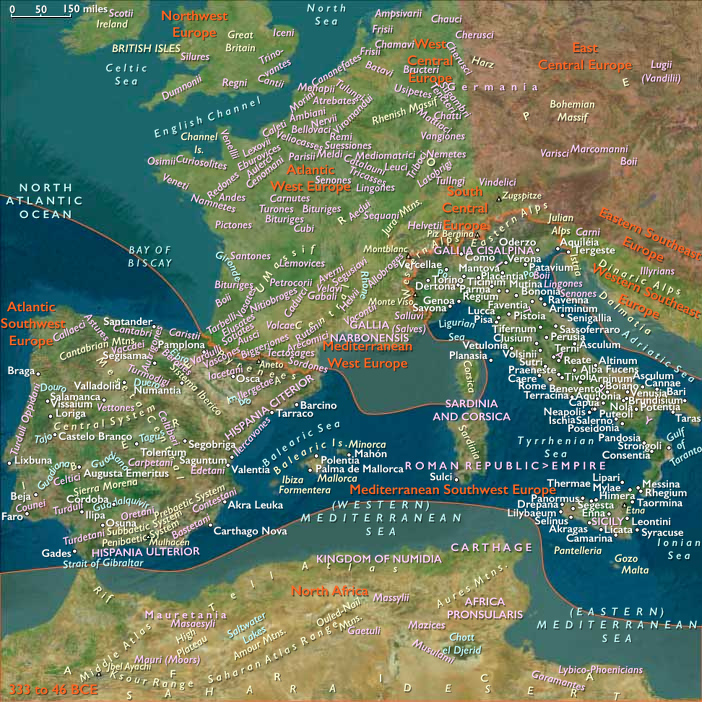
Subregions