
Mediterranean Southwest Europe (285–274 BCE): Pyrrhus and …
Years: 285BCE - 274BCE
Mediterranean Southwest Europe (285–274 BCE): Pyrrhus and Rome's Emergence as a Mediterranean Power
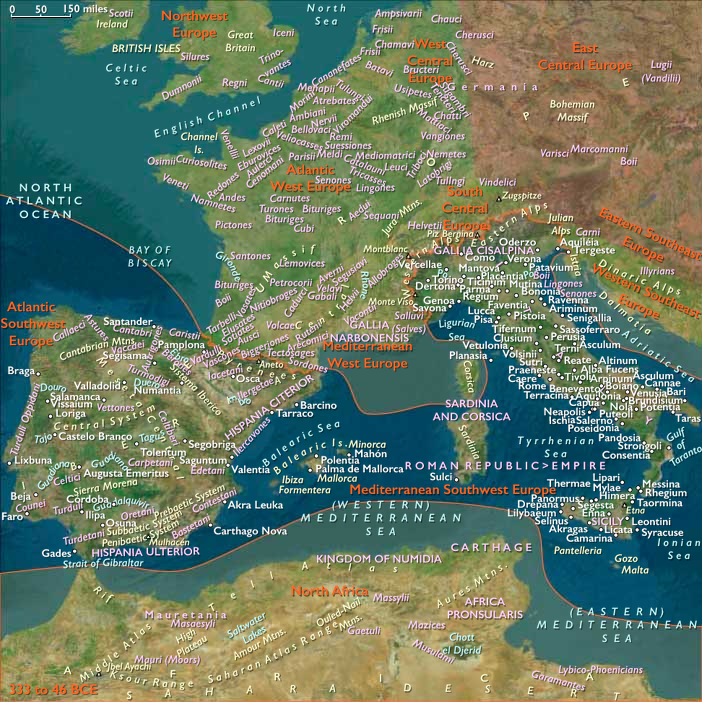
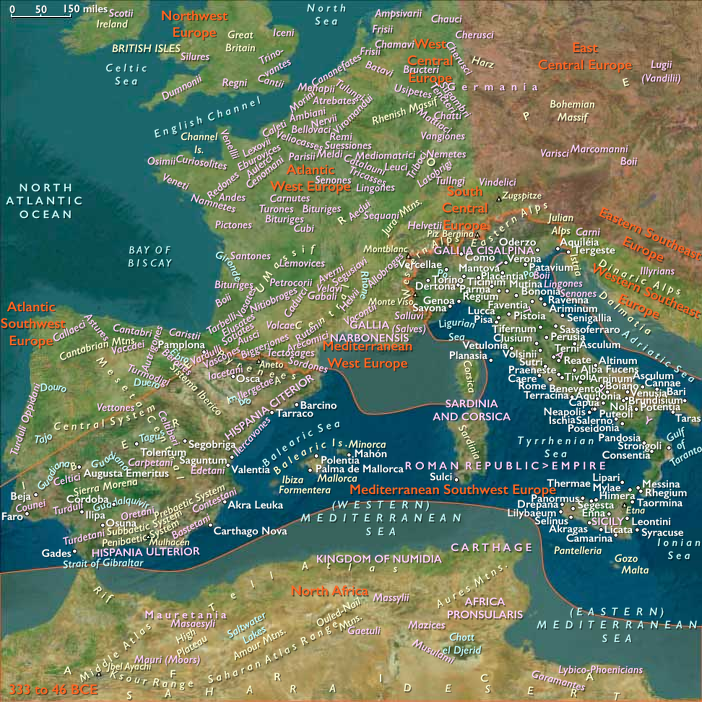
The era 285–274 BCE sees Rome consolidating its position in Italy, moving decisively against the Greek city-states of the south, and directly confronting the broader Hellenistic world through the intervention of Pyrrhus, king of Epirus.
Prelude to Conflict
Following its victory in the Third Samnite War (ending in 290 BCE), Rome dominates nearly all of the Italian Peninsula, excluding only the Greek cities of southern Italy and the Gallic territories in the Po Valley. Rome’s growing power sets the stage for its first significant conflict with the dominant Mediterranean powers: Carthage and the Hellenistic kingdoms.
The Pyrrhic War
A diplomatic dispute with the Greek city of Tarentum escalates into a naval clash, prompting Tarentum to seek aid from Pyrrhus of Epirus. Eager for military glory, Pyrrhus arrives in Italy in 280 BCE with a formidable army of approximately 25,000 soldiers. Initially successful, Pyrrhus secures several victories against Roman forces but suffers irreplaceable losses.
Rome, maintaining steadfast refusal to negotiate peace while Pyrrhus occupies Italian soil, displays resilience and adaptability. Despite winning battles, Pyrrhus recognizes the unsustainable cost of his victories—thus originating the phrase "Pyrrhic victory."
Battle of Beneventum and Pyrrhus' Withdrawal
The conflict culminates at the Battle of Beneventum (275 BCE). The engagement is tactically inconclusive, but strategically disastrous for Pyrrhus, whose forces, already depleted by sustained campaigning, can no longer continue effectively. Recognizing this untenable situation, Pyrrhus withdraws completely from Italy.
Roman Domination of Southern Italy
The aftermath of Pyrrhus' departure is swiftly exploited by Rome. The Greek colonies of southern Italy are quickly subdued, reorganized, and integrated under Roman dominion. This solidifies Rome’s control over the peninsula, marking the transformation from regional power to a significant player on the wider Mediterranean stage.
Strategic Implications for Carthage
Pyrrhus’ engagements in Sicily inadvertently reduce Carthaginian influence in the region, significantly altering the balance of power. Rome’s capability and willingness to confront major Mediterranean powers are now clearly demonstrated, setting the stage for future conflicts, notably the impending Punic Wars with Carthage.
Legacy of the Era
The years 285–274 BCE are crucial in Mediterranean history, as Rome emerges unmistakably as a power capable of contesting control of the Mediterranean Basin, reshaping geopolitical alignments for centuries to come.
People
Groups
- Carthage, Kingdom of
- Greeks, Classical
- Taras (Dorian Greek) city-state of
- Gauls
- Roman Republic
- Epirus, Kingdom of
Topics
Subjects
Regions
Subregions
Years: 285BCE - 274BCE
People
Groups
- Carthage, Kingdom of
- Greeks, Classical
- Taras (Dorian Greek) city-state of
- Gauls
- Roman Republic
- Epirus, Kingdom of
Topics
Subjects
Regions
Subregions